Blackouts Force Zambia and Zimbabwe Off the Sidelines and Into the Boldest Energy Financing Shake-Up in Decades
Mozel Chimuka, Agora Village, AfricaWorks | LUSAKA, 27 November 2025 — Eight or nine out of every ten reasons a power project fails in Zambia and Zimbabwe trace back to a single word: financing. For decades, the answer was always the same—foreign currency is unavailable, terms are not bankable, utilities will not guarantee payment, and local capital markets lack depth. Then the blackouts intensified, and in less than two years the sector produced what regulation and policy could not deliver in twenty: a USD 40m solar plant financed entirely domestically in local currency, a USD 30m hydro facility built on equity alone with no debt, pension funds structuring instruments to bypass statutory reserve requirements, and banks that spent careers avoiding risk suddenly declaring they cannot make money without taking it. The catalyst was not a new law or a donor conference or a breakthrough technology. It was the simple, unbearable mathematics of darkness—industries shuttering, businesses fleeing, and governments facing a legitimacy crisis that no amount of rhetoric could dim. Innovation, it turns out, does not require incentives when the alternative is collapse.
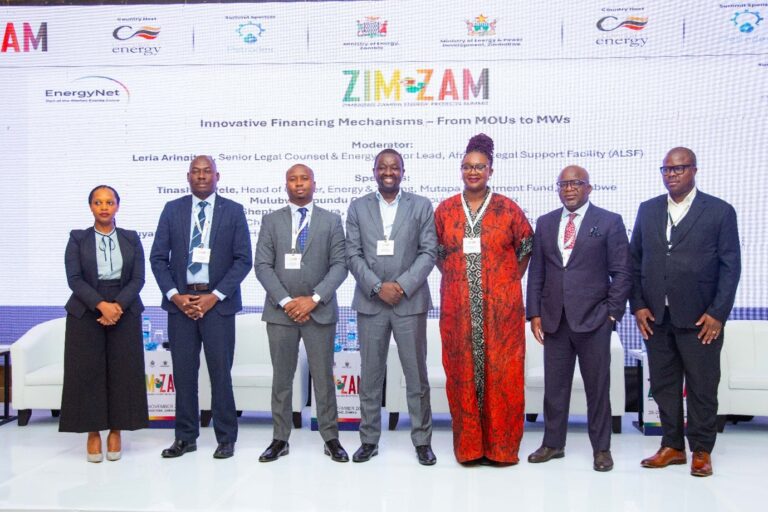
At the ZimZam Energy Summit held at the Radisson Blu Mosi-oa-Tunya in Livingstone, the practitioners responsible for closing these deals—bankers, developers, legal counsel, and sovereign fund managers—described a sector that has compressed what once took eight or nine years into timelines measured in months. Ms. Leria Arinaitwe, Senior Legal Counsel & Energy Sector Lead, African Legal Support Facility (ALSF), moderated the panel discussion themed “Innovative Financing Mechanisms,” noted that eight or even nine out of ten reasons projects stall surround financing. That reluctance by governments and utilities to take on contractual risk, she observed, has pushed the sector to innovate. The room was filled with people who had lived through protracted timelines and aborted negotiations. Now they were closing deals that would have been dismissed as fantasy two years earlier.
When the Dollar Problem Met Creative Desperation
“The appetite is for funding in foreign currency,” Mr. Kalaluka Itwi, Chief Financial Officer at Zambia National Commercial Bank (Zanaco), explained that the constraint is immediate: supply of US dollars is constrained. Zambia’s sovereign rating drives borrowing costs to 8% or 9%, making projects expensive before a single kilowatt is generated. Traditional commercial banks face fundamental mismatches. Mr. Luyanga Mufungulwa, who heads Corporate and Investment Banking at FNB Zambia, laid out the problem with precision: approximately 80% of bank deposits are short-term demand deposits. Extending fifteen-year credit against liabilities that can evaporate in weeks is institutional suicide.
Ms. Mulubwa Mpundu Chola, legal counsel for Petrodex Energy Trading, advocates keeping currency consistent across all contracts—aligning power purchase agreements, loan agreements, and revenue streams in the same denomination, typically dollars. But regulators are moving in the opposite direction. The Bank of Zambia has draft legislation requiring transactions in Zambian kwacha, creating unease where exchange rate volatility can erase margins overnight. The interest differential between local borrowing in the high teens and foreign currency borrowing at 8% to 9% perpetuates dollar preference.
Mr. Mufungulwa’s institution now prioritises the operational hedge: matching borrowing currency with revenue currency. Forward contracts lock in future exchange rates. Cross-currency swaps convert foreign borrowing into local obligations, eliminating exposure entirely. Even though these instruments exist, what is truly remarkable is that banks are deploying them at scale. Urgency has forced sophistication.
The Risk Appetite That Desperation Built
“Banks are risk averse,” said Mr. Itwi “But I think the time has come to move away from traditional banking, increase our risk appetite”. Without risk, you cannot make money. Zanaco has declared its intent to issue a USD 100m sustainability bond targeting impact finance. Mr. Victor Utedzi, who leads African Transmission Corporation (ATC), described raising close to USD 40m for a solar power plant in Zimbabwe using entirely domestic financing. Payments are in local currency, but the tariff is indexed to the dollar, providing local institutions a hedge against inflation. For a separate USD 30m hydroelectric project, his firm dispensed with debt entirely, funding through equity alone.
Zimbabwe has seen private sector loan maturities reach fifteen years, unprecedented in the country’s post-independence history. Mr. Mufungulwa described partnerships with pension funds, naturally long-term investors, that mobilize capital previously sitting idle. Mr. Utedzi noted that every project requires bespoke structuring, but the willingness to experiment reflects a sector that has abandoned perfect templates in favour of deals that close.
Speed, Sovereignty, and the State as Dealmaker
“What we were able to do was to raise EPC plus financing. It is quick,” Utedzi explained. Engineering, procurement, and construction contractors bring financing as part of the package, and projects break ground within six to nine months. Domestic banks provide short-term financing for the typical 20% equity gap—two to three years maximum—before long-term development finance institutions refinance once construction risk is retired.
Mr. Tinashe Yafele, who heads the energy and trading cluster at Mutapa Investment Fund, Zimbabwe’s sovereign wealth fund, described closing a USD 210m facility with African Export-Import Bank, syndicated by local banks, where the fund provides guarantees. The state has evolved from obstacle to enabler. Mutapa establishes collection accounts with convertibility options and coordinates foreign exchange approvals. The facility uses revolving future flow financing secured on ring-fenced cash flows, enhanced by fund guarantees and a treasury borrowing certificate.
Revenue assurance has become non-negotiable. Mr. Yafele emphasised smart metering and prepaid systems that deliver predictable cash flows lenders require. Ms. Mpundu Chola highlighted open access as a game-changer, allowing traders like Petrodex to contract directly with large industrial off-takers rather than depending solely on the national utility. But grid risk remains a bottleneck. Wheeling power through the utility’s transmission system exposes traders to failures they cannot control, and current wheeling agreements classify grid problems as force majeure, erasing contractual remedies.
What Regulators Still Owe
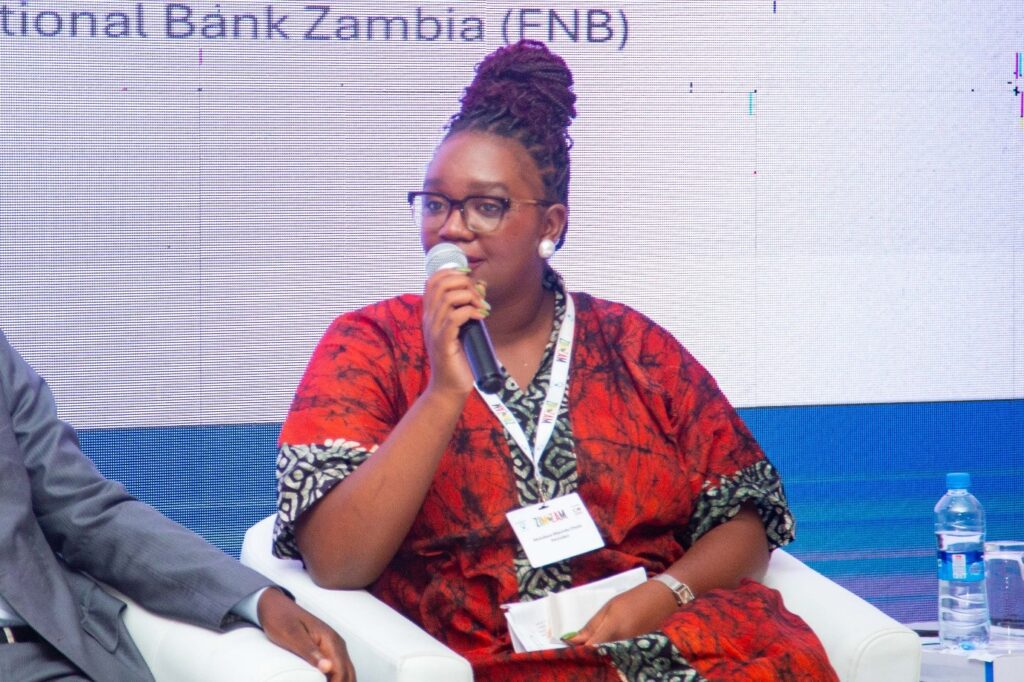
“We think the easiest and the best solution is always to keep the currency the same across the board,” Ms. Chola said, but her plea extends beyond currency alignment. She urged regulators to accommodate new market entrants and consider exempting cross-border trades within the Southern African Power Pool from local currency requirements. Dr. Shepherd Fungura, who leads ZB Financial Holdings in Zimbabwe, called for relaxing statutory reserve requirements specifically for power infrastructure deposits, excluding those funds from reserve calculations to increase bank liquidity. Tax incentives for renewable energy financing would further mobilise capital.
Mr. Itwi emphasised capacity building for project sponsors to improve bankability, noting credit approval processes can stretch an entire year. Mr. Yafele stressed that developers must deliver robust corporate governance before approaching lenders. Mufungulwa pointed to monetary policy: the Zambia central bank recently reduced its benchmark rate by 25 basis points to 14.25%, but further cuts are necessary to narrow the local-foreign interest differential.
The lights are not all back on yet. But for the first time in decades, the people holding the deals—not the excuses—are the ones in the room.
Article provided by Financial Insight Zambia