How Market Mechanics Are Destroying the Middleman Myth
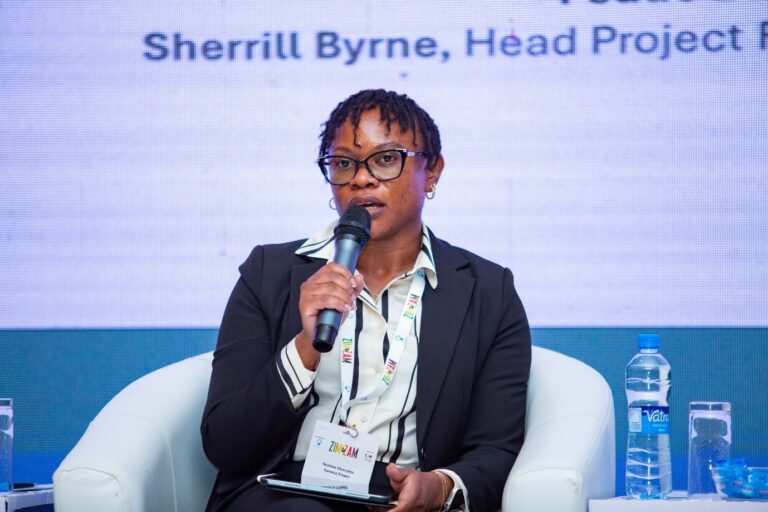
Jeannette Ilunga, Africa Works, LUSAKA | Friday 28 November, 2025 — Energy traders are not middlemen extracting rent from desperate utilities. They are aggregators performing functions that no single entity in Southern Africa’s fragmented power markets can manage alone—guaranteeing supply when generation fails, guaranteeing payment when utilities default, and balancing grids that were never designed to handle variable renewable energy at scale. The distinction matters because misunderstanding what traders actually do leads to bad policy and stranded investment. This operational reality was dissected during a panel discussion at the ZimZam Energy Summit in Livingstone at the Radisson Blu Mosi-Oa-Tunya Hotel, where market participants laid out precisely what aggregation means in practice.
Two Forces, One Market
Zambia’s energy trading market did not arrive from abstract liberalisation theory. It came from two concrete pressures that converged with enough force to break open a previously closed system. Ms. Nsofwa Sikanyika, Head of Commercial at Kanona Power identified them with the Open Access Regulation as an example, which allowed large consumers to source power from independent producers and traders rather than only from the national utility, and the Energy Deficit, driven by drought-induced hydro shortfalls and compounded by the utility’s financial incapacity to procure replacement power.
“We are in an energy deficit,” Ms. Sikanyika explained, “The utility was not in a great financial position to be able to source power.” The gap between what the grid needed and what the utility could deliver created the commercial space that traders occupied through showing up with solutions when the lights were going out. “They played a big part in stepping in and bridging this gap,” she continued.
The regulatory framework made trading legally possible and the deficit made it commercially essential. Theory met desperation, and the market that resulted looks nothing like what policymakers originally envisioned.
What Aggregation Actually Means
As Mr. Emmanuel Chilombo Kalenga of Enterprise Power Zambia put it, the trader’s job is to anchor a web of relationships and shoulder risks that utilities avoid or simply aren’t equipped to manage.
“We are sort of an aggregator,” Mr. Kalenga said, then spelled out what that actually looks like in practice. Traders maintain banking agreements with utilities like the Zambia Electricity Supply Corporation (ZESCO), guaranteeing that generators will be paid for power supplied. At the same time, traders guarantee clients cost-effective delivery through balancing agreements that smooth out supply variability.
This is coordination work that someone has to do or the whole system seizes up. Generators need payment certainty. Clients need supply reliability. Utilities need technical services like wheeling and balancing but lack the financial position to procure power at scale. Traders take on obligations that would otherwise leave all parties staring at each other across an unbridgeable gap.
Ms. Sikanyika reinforced this, noting with some emphasis that ZESCO itself provides essential services to traders—wheeling, banking, and balancing. The relationship is cooperative, not adversarial. “We play this pivotal and I could say collaborative role with the utility,” she observed. Large industrial consumers, particularly mines and operations running 24/7, source through traders, which frees the utility to focus on other customer segments. It is a division of labour born from necessity, not ideology.
Capital Where Utilities Cannot Go
Traders also bring private capital into infrastructure development that utilities cannot finance on their own increasingly strained balance sheets. Mr. Kalenga highlighted something that matters enormously: traders can use the balance sheets of deep-pocketed clients—mining companies and large industrial operations with creditworthiness that utilities lost years ago. “We are able to leverage on the balance sheets of the clients to be able to push IP projects forward,” he said. Translation: money that would never touch a utility-led project finds its way to generation capacity because traders can structure deals that banks will actually finance.

This matters particularly in markets where sovereign debt distress and utility insolvency have slammed shut the traditional project finance routes. Private sector traders operate outside those constraints, accessing capital on commercial terms and deploying it without waiting for government budgets or development finance institution approvals that may never arrive.
SAPP Against the Field
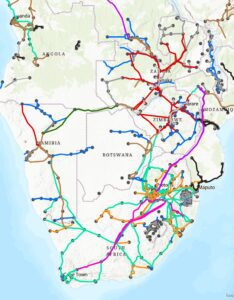
Southern Africa’s regional power market works. That sentence deserves to stand alone because it distinguishes Southern African Power Pool (SAPP) from virtually every other continental power pool. Mr. Monie Captan the deputy CEO of West Africa Petrodex offered a blunt comparative assessment that should make West African policymakers uncomfortable: SAPP is the most advanced regional market in Africa, and the gap is not close. In West Africa, despite regulatory frameworks that theoretically permit private sector trading, nothing much happens. “There is no real trading happening,” Mr. Captan said flatly, attributing the failure to a lack of political will rather than any technical barrier.
SAPP works because of decades of cross-border infrastructure investment, regulatory harmonization, and political commitment to regional integration that other power pools talk about but have not delivered. The market’s operational depth creates opportunities that traders have moved aggressively to exploit, and the results show in the numbers.
Mr. Captan described a reinforcing pattern worth paying attention to. Increased trading volumes produce more revenue for transmission service operators, which gets reinvested in the regional backbone infrastructure. “We’re increasing the volume of trade, and by increasing the trade there is more revenue coming to transmission service operators,” he explained, his enthusiasm for the mechanics evident. The revenue funds upgrades and expansions that further enhance market functionality, lowering transaction costs and enabling more trade. It is a virtuous cycle, assuming infrastructure keeps pace.
Infrastructure remains a binding constraint. Mr. Captan acknowledged the challenge directly: addressing the region’s supply gap requires parallel development in generation and transmission. “I think there needs to be a parallel development in terms of both what we do in increasing generation as well as the transmission infrastructure for that,” he said. Generation without adequate transmission creates stranded assets. Transmission without generation leaves expensive infrastructure underutilized. Getting both right simultaneously requires coordination that the region has historically struggled to achieve.
Debunking the Extraction Narrative
The middleman critique assumes that traders add cost without adding value—that they insert themselves into transactions that would otherwise occur more efficiently through direct utility procurement. Anyone who has watched Southern African utilities attempt to procure power over the past decade knows how fantastical that assumption is. The panel’s testimony dismantles it on factual grounds anyway.
Traders provide guarantees that utilities cannot credibly offer. They mobilize capital that utilities cannot access. They manage technical complexity around wheeling and balancing that utilities struggle to handle at scale. They enable cross-border trade that generates infrastructure revenue and enhances regional energy security. None of these are decorative functions or bureaucratic make-work.
Remove traders from the market and see what happens to these functions. They do not get performed by someone else. They simply stop happening. Generators do not get paid, clients do not get reliable supply, and projects do not get financed. The counterfactual is not frictionless utility procurement. It is market failure of the sort that keeps economies dark and industries shuttered.
Markets work through aggregation when underlying conditions prevent direct transactions between end parties. Southern Africa’s energy sector has those conditions in dangerous abundance: utility insolvency, sovereign debt distress, fragmented generation, variable renewable penetration, cross-border complexity, and regulatory frameworks that permit but do not compel market participation. Traders aggregate across these fractures, creating functionality where none would otherwise exist.
The mechanics are not elegant, and the arrangements carry costs that show up in tariffs and contracts. But the alternative—waiting for utilities to regain solvency and governments to rebuild creditworthiness—has proven itself a path to prolonged darkness. The market mechanics destroying the middleman myth are the same mechanics keeping the lights on. That is not an endorsement of every trading practice or contract structure. It is simply an observation about what works when the alternatives have failed.
Article provided by Financial Insight Zambia