
Powering Africa’s Megacity: Lagos State’s Vision for Energy Leadership and a 24/7 Economy
As Africa’s largest sub-national economy and one of the world’s fastest-growing megacities, Lagos State is rethinking how electricity is planned, regulated and delivered. With a population exceeding 25 million and an economy that rivals those of entire countries, the state’s ambitions—industrial growth, digital expansion, improved public services and climate resilience—depend on one critical enabler: reliable power.
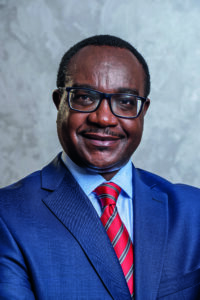
Guided by the THEMES+ agenda of Governor Babajide Olusola Sanwo-Olu and Deputy Governor Dr. Obafemi Hamzat, Lagos is implementing sweeping reforms to establish a state-regulated electricity market, attract private capital and accelerate decentralised generation. In this interview, Biodun Ogunleye, Commissioner at the Lagos State Ministry of Energy & Mineral Resources, outlines the state’s priorities, timelines and flagship initiatives shaping Lagos’s transition into a globally competitive, 24/7 economy.
What are the top energy priorities of the Lagos State Government over the next decade, and how do they align with the state’s long-term development goals?
Over the next decade, Lagos State’s energy priorities are anchored on reliability, affordability, sustainability and inclusivity, and on making Lagos a 21st-century, 24/7 economy. These priorities align directly with the THEMES+ development agenda of the Sanwo-Olu–Hamzat administration.
First, Lagos is prioritising power sufficiency. As Africa’s largest sub-national economy and a state of over 25 million people, Lagos cannot achieve its ambitions in industrialisation, digital economy expansion, healthcare delivery and urban liveability without reliable electricity. Our long-term objective is to support at least 6GW of dependable power capacity through a diversified energy mix that includes gas-to-power, renewables, embedded generation and distributed energy resources.
Secondly, we are focused on market reform and institutional strengthening. The establishment of the Lagos Electricity Market under the Lagos State Electricity Law 2024 provides the legal and regulatory backbone required to attract private capital, enforce service standards and create a transparent, competitive electricity market that is bankable and investor-friendly.
Thirdly, energy transition and sustainability are central. Lagos is expanding renewable energy deployment—particularly solar—across public infrastructure, social services, households, SMEs, MSMEs and underserved communities. This aligns with our climate-resilience goals, emissions-reduction commitments and the need to decouple economic growth from carbon intensity.
Finally, energy access and equity remain non-negotiable. Electrifying informal settlements, peri-urban areas, schools, hospitals and public spaces ensures that energy becomes an enabler of social inclusion, job creation and improved quality of life.
In summary, Lagos’s energy priorities are foundational to the state’s long-term vision of being a productive, liveable and globally competitive megacity.
In what ways is Lagos positioning itself as an energy leader within Nigeria and across Africa?
Lagos is positioning itself as an energy leader through policy innovation, regulatory clarity and execution at scale.
At the national level, Lagos is one of the first states to fully operationalise the powers devolved by the Electricity Act 2023, translating constitutional reform into a functional sub-national electricity market. The Lagos State Electricity Law 2024 goes beyond compliance; it establishes a forward-looking framework for licensing, tariff regulation, consumer protection and private-sector participation.
Institutionally, Lagos has created a clear separation of roles: policy formulation by the Ministry, regulation by the Lagos State Electricity Regulatory Commission (LASERC), system planning and power procurement by the Lagos State Independent System Operator (LAISO), and service delivery by market participants. This clarity reduces risk and builds investor confidence.
Across Africa, Lagos is demonstrating how a sub-national government can lead energy reform through public-private partnerships, embedded generation and decentralised solutions—mirroring global best practice while adapting to local realities. We are also integrating gender inclusion, data-driven planning and climate resilience into energy governance, positioning Lagos as a thought leader in sub-national energy transformation.
Given the establishment of the Lagos Electricity Market under the Lagos State Electricity Law 2024, when can Lagos expect its first state-licensed Independent Power Producer to begin operating?
The Lagos State Government has adopted a phased and deliberate transition strategy to ensure market stability and investor confidence.
Following the enactment of the Lagos State Electricity Law in December 2024, priority actions have included the constitution of LASERC and the development of secondary regulations, market rules and licensing frameworks. These foundational steps are critical to ensuring that the first state-licensed Independent Power Producer (IPP) enters a credible, bankable and well-regulated market.
Subject to the completion of regulatory instruments and ongoing engagement with existing federal market participants, Lagos anticipates that the first state-licensed IPPs will begin commercial operations between late 2026 and early 2027. These initial projects are expected to focus on embedded and distributed generation, particularly for industrial clusters, critical infrastructure and high-demand urban corridors.
The goal is not speed for its own sake, but sustainability—ensuring that early projects succeed and set the tone for a scalable market.
How prepared is Lagos’s existing distribution and transmission infrastructure to support a decentralised, state-regulated electricity market?
Lagos’s infrastructure readiness is mixed but improving, which is precisely why decentralisation is necessary. Historically, the transmission grid has been a major constraint—designed for centralised generation and struggling under the load of a rapidly growing megacity.
The new Lagos Electricity Market deliberately shifts emphasis toward embedded generation, microgrids and localised power solutions, reducing dependence on long-distance transmission.
On the distribution side, Lagos benefits from being served by two major DisCos with extensive networks, substations and customer bases. However, technical losses, ageing assets and capacity constraints remain challenges. The state is addressing this through targeted network upgrades, franchising models, performance-based investments and improved data visibility.
Crucially, the market design allows private investors to build generation closer to demand, while working with distribution infrastructure through regulated interconnection standards—improving reliability and accelerating service delivery without waiting for nationwide grid reform.
One of LASERC’s mandates is expanding access to underserved communities. What strategies is Lagos using to electrify informal settlements and peri-urban areas?
Electrifying underserved communities requires flexibility, innovation and community engagement—and Lagos is deploying all three.
First, the state is scaling solar mini-grids and hybrid systems for informal settlements and peri-urban areas where grid extension is technically or economically unviable. These systems are designed to support households, MSMEs, schools and health centres.
Second, Lagos is implementing community-based electrification models, working with developers, cooperatives and local leaders to ensure buy-in, sustainability and cost recovery. Energy access is treated as both a social service and an economic enabler.
Third, LASERC is embedding pro-poor tariff structures, gender-inclusive policies and consumer-protection mechanisms to ensure affordability and fairness, particularly for vulnerable groups.
Finally, electrification efforts are integrated with broader urban renewal, security and economic-development programmes, ensuring that power access translates into real improvements in livelihoods.
Can you provide an update on the ‘Light Up Lagos’ initiative and its impact on security, road safety and the night-time economy?
The ‘Light Up Lagos’ initiative remains one of the most visible and impactful interventions of the Lagos State Government in recent times.
Through the deployment of over 50,000—and counting—solar-powered streetlights across highways, inner roads, public spaces and transport corridors, the initiative has significantly improved urban visibility, road safety and public security. Well-lit streets deter crime, reduce accidents and enhance emergency-response capabilities.
Beyond safety, the initiative has unlocked the night-time economy. Extended business hours for traders, transport operators, hospitality businesses and informal enterprises have translated into increased economic activity and job creation, particularly for women and youth.
Importantly, the use of solar technology ensures energy efficiency, lower operating costs and climate resilience, aligning the programme with Lagos’s sustainability goals. ‘Light Up Lagos’ demonstrates how targeted energy interventions can deliver immediate social, economic and security dividends—reinforcing the central role of electricity in urban transformation.
With regulation in place and private capital now in view, Lagos’s electricity market is shifting from policy design to delivery—testing whether decentralised power can keep pace with Africa’s largest urban economy.