
Beyond Energy Access: Why Off-Grid Solar Is Essential Economic Infrastructure
As governments and development institutions work to achieve universal energy access, off-grid solar is moving from the margins of Africa’s power sector to the centre of the conversation. Once seen primarily as a rural and last-mile electrification solution, distributed renewable energy (DRE) is increasingly recognised as a vital part of the infrastructure needed to power households, businesses, agriculture and local industry across the continent.
In an exclusive interview with ENN, GOGLA Executive Director Sarah Malm discusses the role off-grid solar will play in delivering Mission 300, why the sector’s investment potential remains underestimated, and how policy, finance and technology are evolving to support scale.
From results-based financing and grid coordination to battery innovation and productive-use applications, Malm argues that off-grid solar is no longer only about first-time electricity access. It is about enabling economic activity, strengthening resilience and accelerating delivery where traditional infrastructure cannot move fast enough.
- Mission 300 aims to connect 300 million people by 2030 – where does off-grid solar and DRE sit within that delivery mix, and how critical is it to achieving those targets?
Off-grid solar and DRE solutions alone could reach around half of the 300 million people targeted, particularly in rural and hard-to-reach areas where grid extension is slow or not cost-effective.
As a partner to Mission 300, GOGLA recently analysed the National Energy Compacts finalised as of January 2026. While the compacts reflect strong political commitment, many do not yet translate ambition into clear, investable frameworks. Key gaps remain, including limited disaggregation of targets, unclear grid expansion plans, and underdeveloped financing mechanisms.
Through our role on the Mission 300 Private Sector Council, GOGLA is both supporting delivery and advocating for a set of priorities. These include helping countries translate compacts into investable project pipelines, better aligning finance with delivery pathways, and establishing feedback loops so companies can flag regulatory, financial, and operational barriers in real time.
For companies, such visibility is critical. They need clarity on where and when the grid will expand, well-defined roles for different technologies, and predictable financing, particularly results-based financing, to reach lower-income and remote households. Without this, private capital cannot scale at the pace required.
Off-grid solar and DRE are therefore not only essential to meeting connection targets, but also to ensuring speed, cost-effectiveness, and inclusivity. Without a clearly defined role for these solutions, achieving Mission 300 will be significantly more challenging.
- There’s still a perception that off-grid is small-scale – what does the actual size and investment potential of the off-grid/DRE market look like today, and how fast is it growing?
This is outdated thinking. We don’t still think about mobile devices as flip phones and PDAs, so why assume off-grid solar hasn’t evolved?
GOGLA’s 2025 investment data shows that the sector represents a multi-billion-dollar market, is already serving hundreds of millions of people and is expanding energy access year after year. Leading companies are attracting debt and structured finance, signalling more mature business models and increasing financial sophistication.
However, investment is not keeping pace with demand. Annual capital flows remain in the hundreds of millions, while the level required to meet global energy access goals is several times higher.
The more accurate characterisation is that off-grid solar is not a small market, but an undercapitalised one.
As demand expands beyond household electrification into productive use, powering businesses, agriculture, and local industry, the addressable market grows significantly. This creates opportunities for larger, more scalable investments.
For investors, the fundamentals are strong: demand is proven, business models are maturing, and the gap between capital supply and market potential remains substantial.
- How is technology evolving the role of off-grid systems – what can they deliver today that might surprise those who still see them as “basic access” solutions?
Advances in solar efficiency, battery durability, and appliance design are transforming what even the smallest systems can deliver. Plus, unit costs and wattage needs are going down, in many cases. Lithium-ion batteries, driven by the global EV revolution, now dominate the off-grid market and can last 8 to 10 years. Battery prices have fallen by more than 80% since 2010, while systems certified under VeraSol standards ensure durability and safety.
GOGLA members are extending warranties, offering repair services, and introducing second-life battery programmes that create local jobs and reduce waste. These innovations mean today’s off-grid systems are future-ready, capable of powering homes, small businesses, farms, and digital devices. The next decade could see entry-level kits that irrigate crops, cool produce, and support connectivity in even the most remote communities.
Even in urban neighbourhoods, solar energy kits and solar generators are helping businesses stay open later, keep food fresh, and connect digital entrepreneurs to online opportunities. Sometimes, these activities occur in places that could or should be powered by the grid, but are not. Just ask Zephaniah Abuya in Nairobi.
- GOGLA has highlighted off-grid as one of the fastest and most cost-effective ways to reach underserved populations – why is that, and how should governments and investors respond?
Off-grid solar is one of the fastest and most cost-effective ways to expand energy access because it aligns with how demand emerges and grows.
Systems can be deployed quickly, without the high upfront costs of extending the grid to low-density areas. They are modular, allowing households and businesses to scale usage over time as incomes increase. The sector also mobilises significant private capital, meaning public funding can be used more strategically to unlock access.
The priority is not to choose between grid and off-grid, but to deploy each where it delivers the greatest impact. This requires deliberate coordination.
Governments play a critical role in creating a predictable enabling environment. This includes integrating off-grid solutions into national electrification strategies, removing VAT and import duties on certified products, and deploying targeted subsidies such as results-based financing to close affordability gaps. Clear and transparent grid expansion plans are essential to reduce investment risk.
Development finance institutions and multilaterals can accelerate scale by expanding guarantees, concessional financing, and foreign exchange risk mitigation, and by supporting blended finance structures that crowd in private capital.
Philanthropy remains catalytic, particularly in supporting innovation, early-stage markets, and access for the lowest-income households.
At the same time, the private sector must continue to deliver high-quality products, innovate across business models, invest in after-sales service and circularity, and use data responsibly.
Strategically deployed, off-grid solar enables countries to expand access quickly, use public resources efficiently, and build the foundation for long-term economic growth.
- Results-based financing (RBF) has been central to scaling energy access – what lessons has the sector learned so far, and what needs to change to make the next generation of RBF more effective?
Results-based financing has been instrumental in expanding energy access, enabling millions of households and businesses to access off-grid solar solutions. The key lesson from more than a decade of implementation is that RBF works, but outcomes depend heavily on design and delivery.
In some cases, very high subsidy levels have accelerated uptake but risk distorting markets and depleting funds too quickly. Programmes focused primarily on sales, or those with delayed and unpredictable payments, can weaken incentives for sustained access and place pressure on company balance sheets.
RBF is most effective when it is coordinated with broader policy and financing frameworks, rather than implemented in isolation.
The next generation of RBFs should build on these lessons. That means calibrated subsidy levels that reflect affordability and market conditions, incentives aligned with long-term access rather than one-time connections, and predictable, timely disbursement of funds. Programmes should also be flexible enough to accommodate diverse business models and evolving market dynamics.
The opportunity now is to revamp RBFs so they can deliver durable access, support resilient markets, and attract sustained investment at scale. On this point, GOGLA is working closely with the World Bank Group and other partners to ensure that private sector experience informs future programme design.
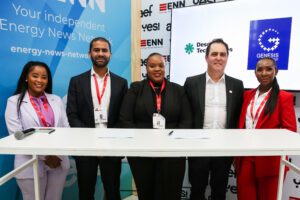
GOGLA joins the Africa Energy Forum (aef) 2026 as Global Off-Grid Solar Partner, with Sarah Malm also joining the speaker line-up on the session: “What Role Does DRE Play In Achieving Africa’s Energy Access Objectives?” The discussion will explore how DRE can accelerate affordable and reliable electricity access across Sub-Saharan Africa, while increasingly supporting productive use, local enterprise, resilience and long-term economic development alongside national grid expansion.