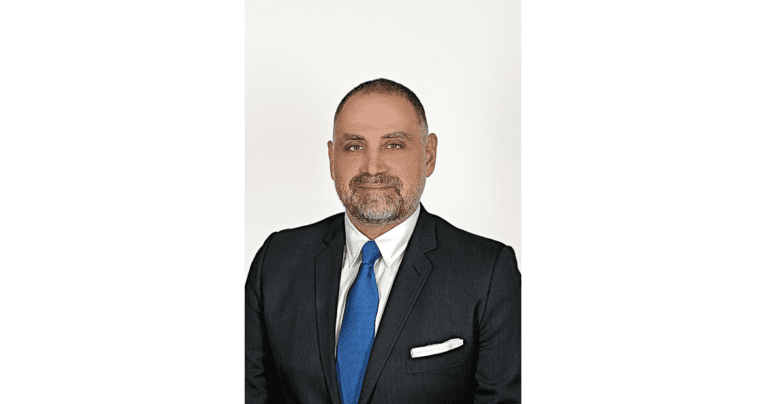
From Frontier Risk to Baseload Reality: Nant Power’s Vision for Sierra Leone’s Energy Transformation
As Sierra Leone confronts chronic power shortages and works to strengthen the foundations of its industrial economy, dependable baseload generation has become a central priority. In this interview, Karim Nasser, Executive Chairman of Nant Power, discusses how the 108MW gas-to-power Nant project aims to provide long-term, dispatchable capacity to Freetown while establishing a bankable structure for private investment in frontier markets.
From sovereign co-liability in the power purchase agreement to a purpose-built liquidity framework and a phased fuel strategy beginning with propane before transitioning to LNG, Nasser outlines the regulatory, financial and commercial decisions that brought the project to financial close. He also reflects on what dependable baseload enables for industry, mining and regional power trade – and what the project signals to global investors assessing risk and return across West Africa.
Question 1:
What specific regulatory, financing, or risk-mitigation conditions were essential to moving the Nant Power Project forward – and how replicable are these conditions across West Africa?
Three things had to come together at the same time. They’re worth understanding because each one addresses a different failure mode that has derailed similar projects elsewhere.
First, Sierra Leone made a true institutional – and credit – commitment. The Government entered into a 22-year Power Purchase Agreement in which EDSA (the national utility company) and the Government are jointly and severally liable as off takers. This goes beyond a standard commercial arrangement: it is a sovereign-backed payment obligation that gave lenders confidence that project revenues would be protected even if the utility’s standalone credit profile came under stress. In many markets, governments sign PPAs but stop short of being financially co-liable. Sierra Leone did not – and that difference was decisive.
Second, we solved the “liquidity gap” with a purpose-built mechanism. In Sierra Leone, the typical short-term liquidity support instruments for projects of this type are not readily available. A Partial Risk Guarantee (PRG) – often used to backstop government performance – was not available for this project. To address that constraint, DFC and the Sponsors pioneered an alternative structure: a Liquidity Reserve Account embedded in the financing and operational framework. Rather than relying on a third-party guarantee, the project carries dedicated liquidity reserves to manage short-term payment timing mismatches. In practical terms, lenders accepted a slightly larger exposure at the project level, but this feature was essential to making the project financeable in the local context. Thankfully, the ECOWAS Bank for Investment and Development (EBID) was keen to support this facility when they came in as a lender. This is also where regional development finance stepped up: EBID’s participation and constructive engagement demonstrated a growing flexibility among African DFIs to tailor solutions to local constraints.
Third, we engineered a transparent payment architecture that makes default structurally difficult. The PPA includes a contractual payment waterfall supported by a ring-fenced Collection Account administered by an independent agent, with clear rules on how funds are received, verified, and disbursed. Revenues collected by EDSA flow through a defined sequence of accounts, and payments to the project are executed according to a contractually agreed order of priority – creating real-time visibility for lenders and stakeholders on what was collected, what was allocated, and what was paid. For investors in frontier markets, the question is not only whether an off taker intends to pay, but whether the payment system is transparent and rules-based so that discipline is the default outcome rather than a discretionary decision. We built that architecture from the ground up, and the sector cash-flow management framework that underpins it has since become a key pillar of Sierra Leone’s broader electricity-sector reform.
Are these conditions replicable? Yes – but they are not accidental. Replication requires: (i) governments willing to put real skin in the game through sovereign co-liability; (ii) openness to transparency and disciplined cash-flow management that investors can trust; and (iii) DFIs and lenders willing to be pragmatic – and in certain cases accept incremental risk – to unlock transformative infrastructure in frontier markets.
Question 2:
In practical terms, what does dependable baseload from Nant enable for Sierra Leone’s economy – industries, jobs, or trade – that intermittent power simply cannot?
The distinction between baseload and intermittent power is not academic – it is the difference between an economy that can attract real investment and one that cannot.
Today in Sierra Leone, only about 36% of the population in the Western Area has access to electricity, and that supply is unreliable. Businesses across Freetown run on diesel generators, paying two to three times what they should for energy. A cold chain for food or pharmaceuticals requires power 24 hours a day, not 16. A hospital running diagnostic equipment cannot afford a three-hour blackout. A factory producing goods for export cannot tell its buyer that the order will be late because the grid went down.
Nant Power’s 108 megawatts of combined-cycle gas turbine capacity will supply approximately 60% of Freetown’s electricity demand. That is not peaking power or supplementary power – it is the stable, round-the-clock generation that allows entire economic sectors to emerge. Light manufacturing, food processing, digital services, data centres – none of these can function on intermittent supply. Mining operations across the region, which require continuous reliable power, currently self-generate at enormous cost. Dependable baseload changes that calculation entirely.
I want to be clear: we are not against renewables. But renewables alone, given current grid constraints and the absence of large-scale battery storage in this part of West Africa, cannot deliver the uninterrupted supply that industry requires today. Gas is the bridge that makes industrial development possible now, while simultaneously creating the grid stability that allows future integration of renewables on a much larger scale. That is the sequence that works – and it is the sequence that countries like Bangladesh, Vietnam, and Ghana have followed to industrialise.
The economic multiplier effects are significant. Every megawatt of reliable baseload power enables downstream job creation in sectors that simply cannot exist without it. When you give Freetown 108 megawatts of dependable supply, you are not just keeping the lights on – you are creating the conditions for light industry, value-added processing, and the kind of productive enterprise that generates fiscal revenue and reduces aid dependency.
Question 3:
Gas projects can take years to reach FID. What decisions or structures helped Nant progress more quickly, and what should investors change today to shorten timelines across Africa?
Most gas-to-power projects in Africa take years to reach FID/FID-equivalent because three things are hard at the same time: (i) securing reliable LNG supply and shipping, (ii) financing and building costly import infrastructure, and (iii) locking in more than one anchor off taker – especially when mining companies increasingly want to keep their balance sheets clean and avoid long-term take-or-pay liabilities. We progressed faster by sequencing those problems instead of trying to solve them all on day one.
We de-risked fuel by starting with propane (LPG), not LNG—then built the pathway to LNG after bankability was secured.
The first and most important decision was to design the plant to operate initially on U.S.-sourced propane (LPG) as a bridge fuel, with conversion to LNG engineered into the design from day one. This is not a technical footnote—it is a timeline strategy. LNG is often the bottleneck: the supply chain is more complex, the import terminal is capital-intensive, and aligning volumes with credible demand takes time. Propane infrastructure, by contrast, is simpler and faster to deploy. So instead of waiting years for an LNG terminal to reach bankability and be constructed before first power, we created a structure where the plant can start generating, start earning revenue, and service debt while the LNG conversion is developed in parallel. That single sequencing choice can compress timelines materially versus the conventional “terminal-first” approach.
We acknowledged the offtake reality: one anchor is hard enough; multiple anchors are even harder – especially from mining.
Across Africa today, mining companies often prefer shorter commitments and “clean” balance sheets; they avoid long-term liabilities that look like quasi-debt. That makes “multi-anchor LNG” structures slow to close, because developers end up chasing several large off takers and negotiating long-term take-or-pay arrangements that counterparties increasingly resist. Our approach was to avoid making the LNG terminal dependent on multiple mining anchors at the start. We prioritised a structure that works with a conservative base case and then expanded optionality.
We separated “getting the plant to financial close” from “building a regional LNG platform.”
Once the power project reached financial close, we then began working with regional off takers and counterparties to support the LNG transition on a stronger footing—i.e., with an operating asset, proven payment mechanics, and a clearer demand picture. In other words: first get steel in the ground and cash flowing, then scale the fuel solution from propane to LNG as regional demand matures and counterparties are willing to engage without forcing the project into years of pre-FID commercial complexity.
What investors should change today to shorten timelines across Africa
• Stop trying to solve LNG supply + LNG infrastructure + multi-anchor offtake simultaneously. Sequence the problem: start with a fuel and infrastructure solution that is fast and bankable, then scale into LNG once the asset is operating and demand is clearer.
• Accept that mining offtake has changed. Many miners will not sign long-term liabilities early. Design projects that can reach bankability without requiring multiple mining anchors on day one, and treat miners as upside/expansion demand rather than the gating item.
• Use bridge fuels intelligently. Propane/LPG can be the difference between a project that reaches operations in a realistic timeframe and one that sits in development for years waiting for an LNG terminal and long-term offtake.
Net-net: Nant moved faster because we treated “first power” as the priority outcome, used propane to remove the LNG bottleneck, and only then—once bankability and momentum were secured—expanded the platform toward LNG with regional off takers.
Question 4:
How does Nant move Sierra Leone from an energy-constrained market to a credible platform for regional power trade and future industrial investment?
Sierra Leone’s binding constraint is simple: there is not enough reliable baseload power. Without firm, dispatchable generation, everything else stalls—industry under-invests, demand stays suppressed, the utility remains financially fragile, and regional power trade stays theoretical. Nant changes that dynamic by turning Sierra Leone from a scarcity market into a bankable, expandable platform for investment.
First, Nant provides the missing baseload backbone that investors need to believe in the system.
For industrial and infrastructure investors, the key question is not “is power available sometimes?”—it’s “can I count on power every day, at scale, for years?” A utility-scale, long-term contracted, dispatchable plant gives the market something it hasn’t had: predictability. That predictability translates directly into investor confidence—because it reduces operating risk, improves project economics, and makes new investment decisions financeable.
Second, reliable power creates demand; it doesn’t just serve it.
In energy-constrained markets, measured demand is artificially low because customers adapt to unreliability—self-generation, reduced operating hours, deferred expansion, and under-utilised equipment. When dependable power is introduced, you get a “demand release” effect: existing businesses expand, new loads connect, and the sector’s revenue base strengthens. Nant is therefore not only meeting demand; it is unlocking it, helping EDSA shift from crisis management toward growth.
Third, we built the project to be operationally flexible—and we are ready to invest to scale it quickly.
A credible trade platform needs a system that can respond quickly to changes in load, outages elsewhere, and cross-border opportunities—and it needs a sponsor willing to back that flexibility with capital. Nant is designed to ramp quickly and support grid stability, and we have structured the project so that additional stages can be deployed fast as demand materialises. Practically, this means Sierra Leone can capture growth as it happens: if new supply from other sources is delayed, we can step up immediately; if demand rises faster than forecast, we are ready to invest and expand in staged increments without restarting the entire development cycle. That combination—operational flexibility plus a sponsor prepared to fund rapid, modular expansion—is what gives a small system the confidence to integrate more renewables, manage variability, and scale into a credible regional trading platform.
Fourth, Sierra Leone has been unusually open to private enterprise—and Nant proves a replicable model that others can follow.
What separates Sierra Leone from many peers is not only the need for power, but the willingness to structure partnerships that private capital can finance: credible contracts, enforceable payment mechanics, and an approach that welcomes independent power. Nant demonstrates that this can be done—creating a template for additional IPPs, expanded fuel infrastructure, and new grid investments. Once a country has a proven structure, follow-on projects move faster, risk premia fall, and capital becomes more willing to engage.
Fifth, this combination positions Sierra Leone to move faster than its neighbours toward power trade and industrialisation.
Regional trade requires more than interconnectors; it requires a country that can be counted on as a supplier and a settlement counterparty. By stabilising supply and strengthening sector cash-flow discipline, Nant helps Sierra Leone become a more credible participant—able to support domestic growth first and then participate in cross-border transactions as transmission links and market arrangements develop.
Bottom line: Nant converts Sierra Leone’s power sector from “unreliable and investment-deterring” to reliable, expandable, and bankable. That shift builds the confidence other investors need—because once baseload stability exists, the country becomes a platform where industrial loads can commit, financiers can underwrite long-term plans, and regional trade becomes a realistic next step rather than a policy aspiration.
Question 5:
What signal does Nant send to global investors about the risk-return profile of power infrastructure in frontier markets like Sierra Leone?
The signal is simple: frontier markets are investable, but only if you do the structuring right.
Nant Power represents a $417 million commitment into Sierra Leone — roughly 5% of the country’s GDP. This is the largest single private infrastructure investment in Sierra Leone’s history, and it was financed not through concessional grants but through institutional project finance: DFC debt, EBID co-lending, political risk insurance, and sponsor equity. The fact that it achieved financial close, won the IJGlobal Power Deal of the Year, and is now under construction with COD on track for the second half of 2027 sends a very specific message to the global investment community.
First, it demonstrates that Strategic lenders, DFC and EBID, are willing to deploy meaningful capital in frontier markets, and that when DFC is at the table with both loan financing and political risk insurance, the risk profile changes fundamentally. For investors who have been sitting on the sidelines, the Nant deal should be a signal that the de-risking tools exist — they just need to be used.
Second, it shows that proper structuring — sovereign co-liability, structured payment waterfalls, independent revenue management, Tier 1 contractors like Shapoorji Pallonji and Siemens Energy — can produce a risk-return profile that is viable for institutional investors. The returns in frontier markets compensate for the complexity, but only if the contractual architecture protects your downside. That architecture is exactly what we spent years building.
Third — and this is the point I want investors to hear — the demand fundamentals in West Africa are unlike anything you will find in developed markets. You are not competing for market share in a saturated grid. You are providing the first reliable baseload power that hundreds of thousands of homes and businesses have ever had. The offtake risk is structurally different from mature markets where demand is flat or declining.
And we are not stopping at the power plant. The LNG terminal project, backed by a signed MOU with the Government, DFC preliminary approval, and a U.S.-owned infrastructure partner in AG&P, represents USD 11.88 billion in potential U.S. LNG exports over the 22-year life of the project. That is not an aspiration — it is a commercially quantified pipeline built on the back of infrastructure that is already under construction. For investors looking at where the next wave of African energy infrastructure investment will happen, Sierra Leone and the Mano River region deserve serious attention.
What we are building is not just a power plant. We are building the proof of concept that these markets deserve and can support serious infrastructure investment — and that the capital deployed here can deliver both developmental impact and commercial returns.