How Miners are Buying Their Own Grid After Being Ghosted
Jeannette Ilunga, Africa Works, LUSAKA | Friday 28 November 2025 — Zambia’s mines are racing toward a power crunch: by 2031 they’ll need up to three new gigawatts of electricity, yet the investors who could build it are still holding out for a mythical “zero-risk” guarantee. Hydropower has buckled, load shedding has become routine, and the regulatory framework for private generation is still half-finished. So, miners, burning 12% of their operating budgets on electricity, have stopped waiting for government—and have started buying their own grid instead.
Nobody Went to Mining School for This
Nobody goes to mining school dreaming of one day becoming a utilities executive, yet here sits Mr. Anthony Mukutuma of First Quantum Minerals discussing transmission infrastructure with the resigned expertise of someone who has accepted an absurd career detour. His company has strung 600 kilometres of 330 kilovolt transmission line across Zambian countryside, not because FQM woke up wanting to compete with ZESCO, but because waiting for government infrastructure proved about as productive as waiting for Godot.
Mining operations devour 55% of Zambia’s electricity, which would be fine except the national grid treats power delivery with all the reliability of a teenager’s promises. The infrastructure connecting generation sites to mines requires investment so eye-watering that no single company can justify the expense, but someone has to build it. That someone, increasingly, is the mining company itself, which would really rather be digging holes in the ground.
“High energy users cannot be passive in this construct,” Mr. Mukutuma explained, deploying the careful language of someone who would prefer stronger words. The unspoken translation: we are stuck doing your job because you are not doing your job.
The mathematics are merciless. Zimplat’s power appetite doubled from 60 to 120 megawatts and projects another leap to 210 megawatts by 2031. Power expenses claimed USD 94m last year, representing 12% of operational costs. When one line item consumes that proportion of the budget, supply disruptions stop being inconveniences and become existential crises. Mr. Amend Chiduma from Zimplat, speaking with the exhausted precision of someone who has explained this too many times, confirmed power sits atop the risk hierarchy requiring mitigation before investors commit capital.
Zimplat’s solution involved building a 185-megawatt solar plant they now own and operate, bypassing independent power producers entirely. The cost matrix simply worked better with direct ownership, avoiding the commercial gymnastics required when positioned between a producer and utility while absorbing everyone else’s risks. The irony was not lost on anyone involved.
“By the way we are miners sitting here talking about power and tariffs and billing,” Mr. Chiduma noted, allowing himself a wry smile. “We are novices in that particular area but we cannot remain novices at the moment because we have suddenly become generators.” Translation: welcome to your new career managing something you neither understand nor wanted but somehow cannot avoid.
Lawyers Who Outlast Construction Crews
Here is where the story becomes genuinely absurd. Zimplat’s contract negotiations consumed more calendar time than physically constructing the 185-megawatt solar plant. Lawyers outlasted construction crews. Regulatory approvals moved with the urgency of continental drift while actual infrastructure rose from bare ground and waited, complete and useless, for permission to function.
This is not a developing country problem. This is a Southern African masterpiece of bureaucratic dysfunction.
Mr. Kevin Magwenze of Calonia Energy watched negotiations over use-of-system charges stretch past two years without resolution. These charges, the fees for transmitting privately generated power across national grids, require transparent calculation. Instead, they have become a perpetual negotiation, an administrative purgatory where the only certainty is more meetings.
“You cannot have a situation where you are discussing a use-of-system charge for more than two years,” Mr Magwenze said, his measured tone barely concealing exasperation. His company built a solar plant then promptly transferred it to Cross Bond Energy, extracting themselves from a sector where commercial arrangements had achieved levels of complexity that would impress a tax attorney.
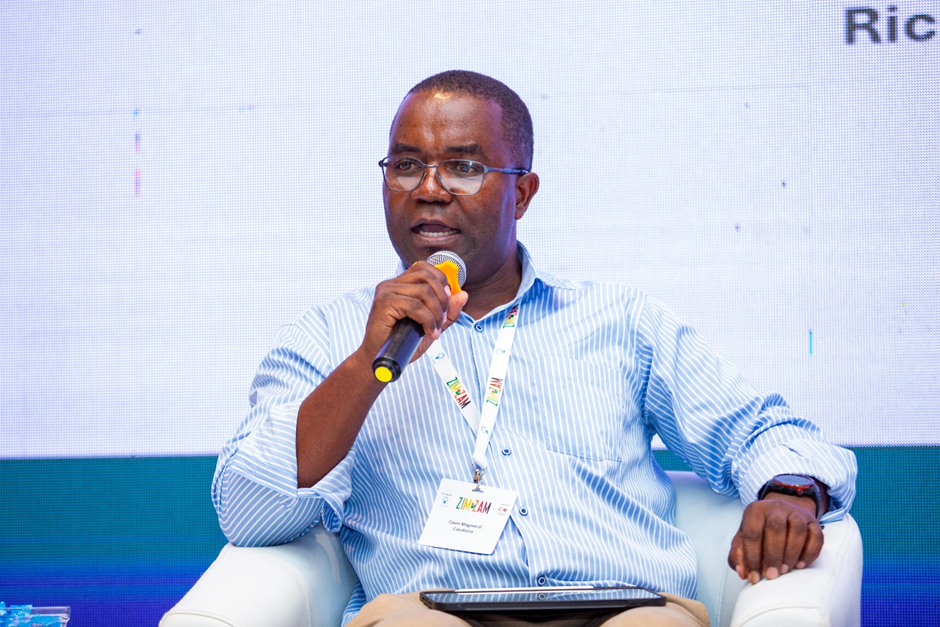
Zimbabwe’s regulatory authority insists it is helping. The Zimbabwe Energy Regulatory Authority (ZERA) slashed licensing fees, introduced standardised power purchase agreements, and floated plans for a mythical “one-stop shop” consolidating all permitting requirements. Whether these measures prove adequate depends on who you ask. The Intensive Energy Users Group, a government-created vehicle for collective power procurement, now teeters under what Mr Magwenze delicately termed “policy inconsistencies.”
Mr. Chiduma from Zimplat rejected this characterisation entirely, pointing to his company’s successful investment as proof that government policy works. “These are matters of negotiation rather than policy inconsistence,” he countered, drawing a distinction between bureaucratic friction and fundamental dysfunction. Future investors can decide which interpretation feels more accurate when they spend their third year negotiating system charges.
The Magical Thinking of Risk-Free Infrastructure
Zambia has perfected a different brand of paralysis. Independent power producers cannot secure financing because investors demand something resembling a written guarantee from God himself that nothing will ever go wrong. Mr Mukutuma described the current definition of bankability as “narrow” and “risk-averse,” which ranks among the more charitable assessments available.
“They are looking for zero risk,” he said flatly, “And there is no such thing as zero risk.” This apparently requires explanation in financing discussions, where grown adults with advanced degrees seriously propose that infrastructure projects in emerging markets should carry the same risk profile as treasury bonds.
Projects worth billions sit undeveloped while lenders refine their demands for the impossible. Mr. Richard Silumbe from the Zambia Research and Development Centre (ZDRC) pointed out that renewable energy projects require capital measured in billions, pricing out local participation entirely. Zambia suffers devastating load shedding from over-reliance on hydropower during drought, which should theoretically create desperate appetite for diversified generation. Instead, the financing architecture remains frozen in a collective delusion that zero-risk investments exist somewhere outside fantasy.
At Least Someone Is Trying Something Different
Zimbabwe at least attempts solutions. Government Project Support Agreements promise repatriation of capital, dividends, and borrowed funds while allowing currency negotiation within power purchase agreements. Mr. Man’arai Ndovorwi from ZERA explained these mechanisms remove foreign exchange risk for investors selling to independent customers. Whether these guarantees prove credible requires trusting government commitments, which presents its own challenges, but at least the attempt exists.
Zambia offers no equivalent framework, leaving miners to finance infrastructure before producers commit to projects. FQM’s 600-kilometre transmission line represents capital deployed to create conditions where private generation might eventually become commercially viable for someone else. This backwards financing model, where consumers build enabling infrastructure then hope producers materialise, reflects markets that have abandoned any pretence of conventional development logic.
The ZDRC advocates diversification beyond solar and hydro, promoting nuclear exploration and local manufacturing of renewable components. Zambia possesses lithium deposits but imports finished batteries, which represents the kind of missed industrial opportunity that makes economists weep. Whether nuclear provides realistic medium-term solutions for countries facing immediate deficits remains highly debatable, but the willingness to consider alternatives beats repeating failed approaches while expecting different results.
Mining companies are not waiting for transformative industrial policy or regulatory enlightenment. Power deficits threaten three-million-ton copper production targets by 2031, and threats to copper production concentrate minds remarkably. The result is a situation where the largest consumers have become producers, where contract negotiations outlast construction timelines, and where doing it yourself proves faster than waiting for anyone else to do their job. Southern Africa’s mining sector is building its own power plants because every alternative proved slower, more expensive, or more uncertain than getting on with it themselves.
Article provided by Financial Insight Zambia