Sun Africa, EXIM and African Ministers Set Project-Focused Tone at Powering Africa Summit in Washington D.C.
By Poliana Sperandio, EnergyNet
WASHINGTON, D.C. 19 March 2026 — The Powering Africa Summit opened with a clear shift toward execution, as Summit Sponsor Sun Africa and senior government leaders called for bankable projects, scalable infrastructure and deeper U.S.-Africa investment ties.
Adam Cortese, CEO of Sun Africa, framed energy as the backbone of industrial growth and cross-Atlantic partnership. “Energy isn’t just a commodity. It’s the lifeblood that connects these pillars, driving economic growth, security, and prosperity on both sides of the Atlantic,” he said.
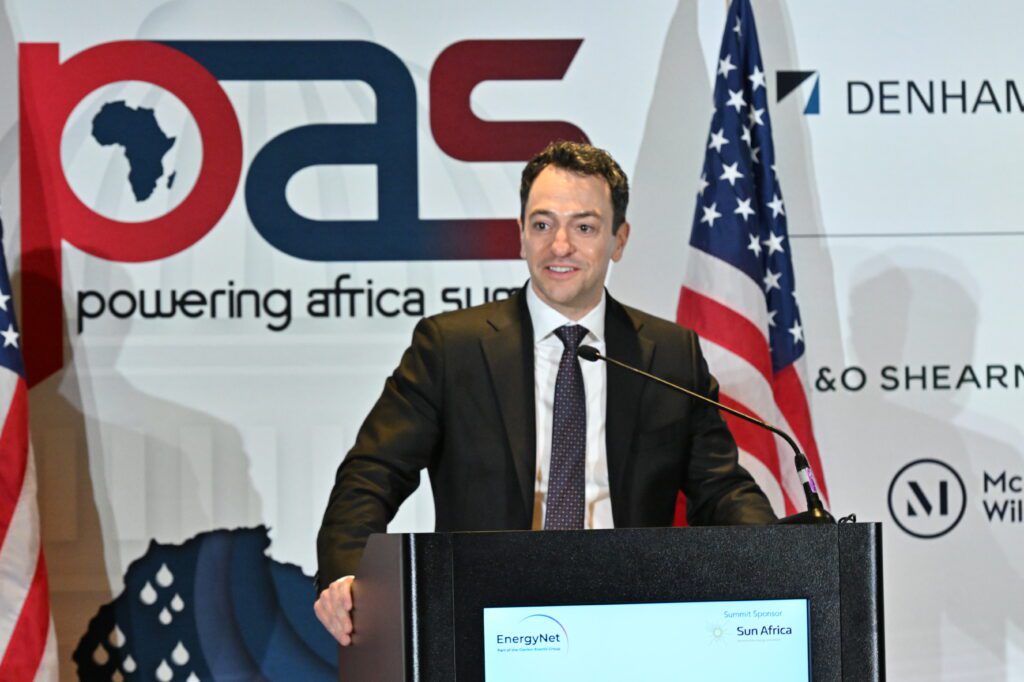
Pointing to projects already underway, Cortese highlighted the role of U.S.-Africa collaboration in delivering infrastructure on the ground. “These aren’t just power plants. They’re arteries of progress, delivering electricity to remote areas, powering factories, and supporting transportation networks,” he said.
He also linked energy directly to critical minerals development, announcing a new initiative in Liberia. “This initiative will deliver up to 500 megawatts peak of utility scale solar generation 200 megawatt hours of battery storage and vital infrastructure to support the mining sector,” he said, adding that it will help “secure supply chains that benefitted US industries.”
Cortese emphasised that future projects must be commercially viable. “These are not fleeting policy driven efforts, they’re built on mutual benefits that endure beyond administrations,” he said, calling for “bankable projects, transparent frameworks, and scalable models.”
From government, Uganda’s Minister of Energy & Mineral Development, Ruth Nankabirwa Ssentamu, stressed that energy access remains central to economic transformation. “We must strive to eliminate energy poverty, as energy access is a foundation of human and economic world made,” she said.
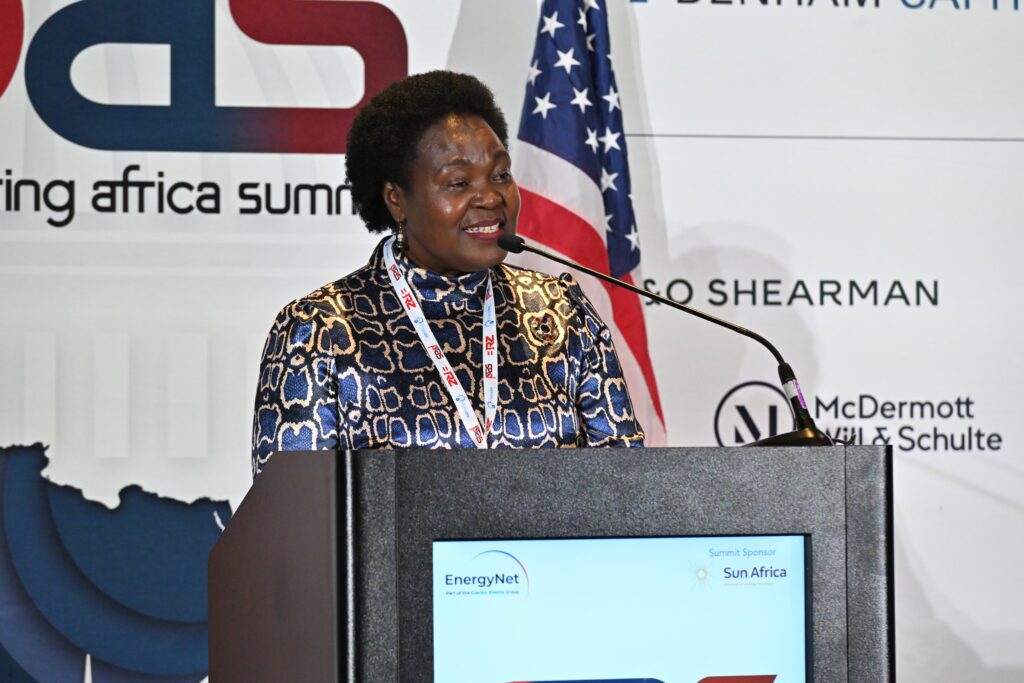
She underscored the need to move from planning to delivery, urging stakeholders to shift “away from power points to power points.” She also warned that access alone is not enough, noting that “simply delivering electricity to people’s homes is not enough. Productive use of this electricity” must drive “genuine socioeconomic development.”
From the Democratic Republic of the Congo, Minister of State for Hydrocarbons Acacia Bandubola Mbongo positioned the country at the centre of the global energy transition. “The global energy transition is ushering in a new era of strategic cooperation,” she said, adding that the DRC is “at the heart of three major challenges for the global energy future: oil, natural gas, and critical minerals.”
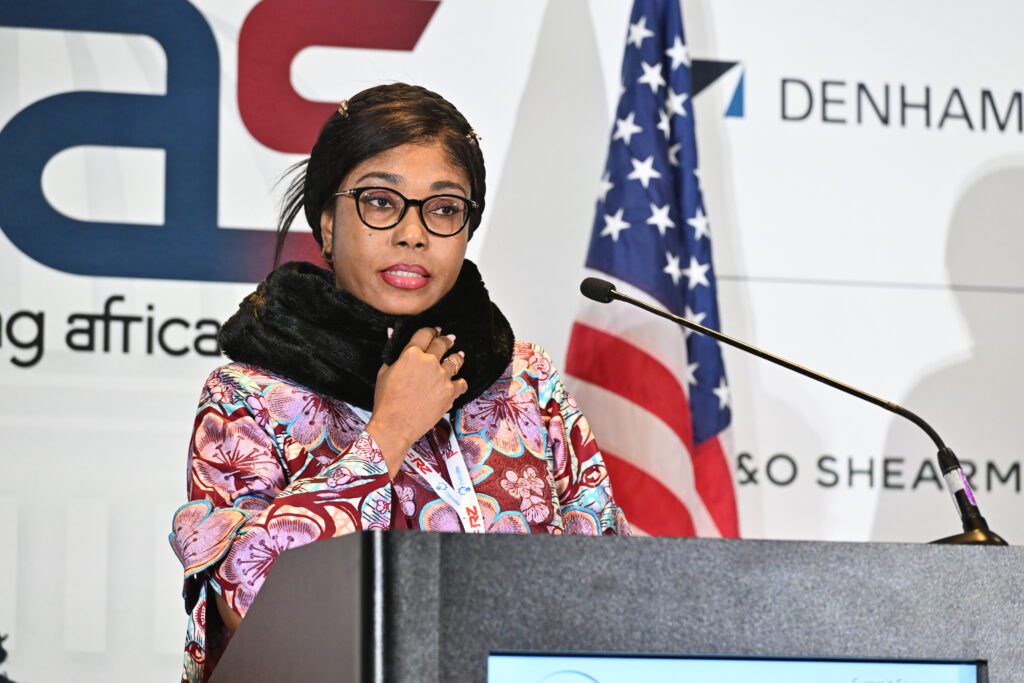
She outlined a strategy focused on gas development, infrastructure and mineral value chains, and invited U.S. investors to participate. “We invite U.S. companies to invest in oil and gas exploration, natural gas development, energy infrastructure, and value chains for critical minerals,” she said.
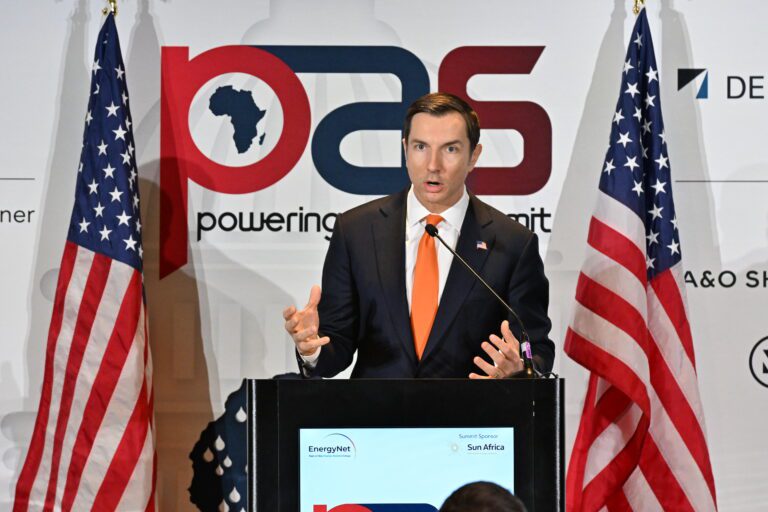
John Jovanovic, President & Chairman of the U.S. Export-Import Bank (EXIM), said the U.S. is scaling its financial engagement across the continent. “Today, we are open for business in nearly all of the 49 countries of Sub Sahahan Africa,” he said, adding that EXIM has “doubled the amount of financing that has gone to the continent.”
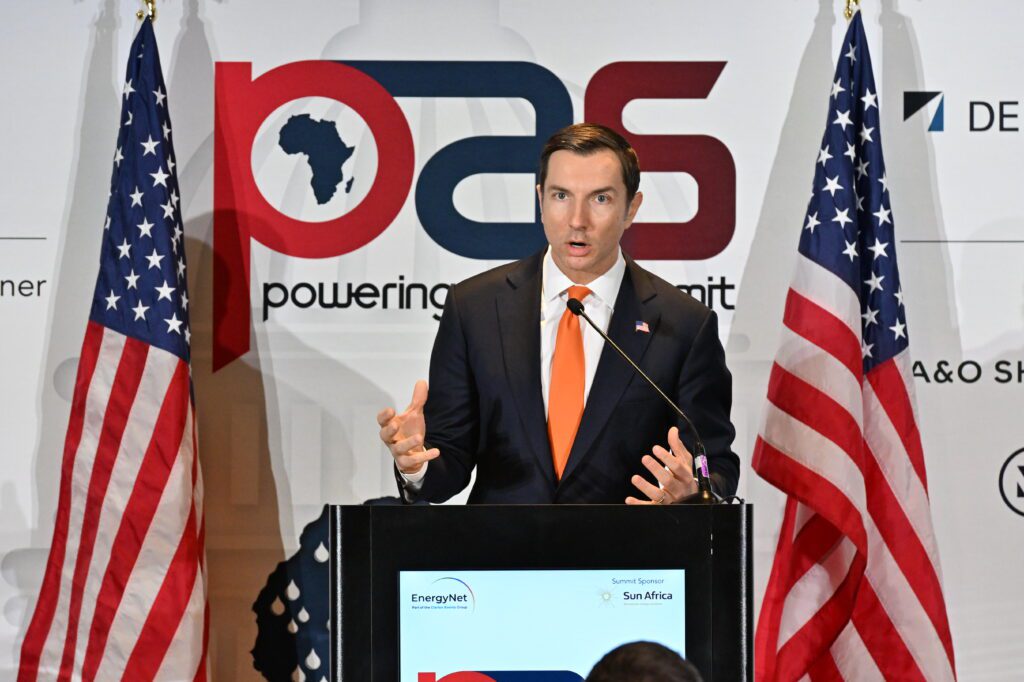
He framed energy and supply chains as central to U.S. strategy. “These are the most foundational decisions that you make, not just for a country, not just for a company, but every household,” he said.
Across the opening remarks, the message was consistent: the U.S.-Africa energy partnership is moving into a more commercial, project-driven phase — with delivery, not dialogue, now the priority.