U.S. Secretary of Energy Chris Wright says clean cooking is a major focus of Africa policy for the Trump administration
Washington DC | 19, March, 2026 — U.S. Secretary of Energy Chris Wright confirmed a major Africa policy focus: partnering with African governments to create the right conditions to solve the delivery challenges associated with clean cooking across the continent.
Secretary Wright told the Powering Africa Summit (PAS) 2026 in Washington D.C. on Thursday: “This will be a major Africa policy focus for this administration. There are many U.S. interests in Africa — critical minerals, trade, investment — but if, after four years, we have made rapid progress on clean cooking, that alone would make the effort worthwhile.”
Clean cooking means moving away from solid fuels such as wood and charcoal that have proven health risks to more modern energy sources such as liquefied petroleum gas (LPG), electricity, biogas, and ethanol.
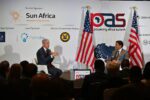
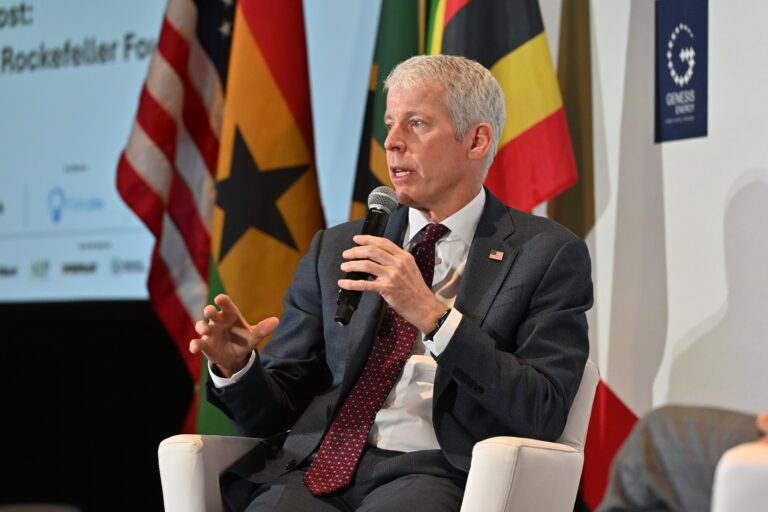
Secretary Wright attended PAS 2026 and made the comments in a fireside chat with Dr. Rajiv Shah, President of the Rockefeller Foundation. Their discussion covered: clean cooking; government reforms; the role of philanthropy and public-private partnerships in tackling energy poverty; the role of technology; and Mission 300 — a joint initiative between the World Bank Group (WBG) and the African Development Bank (AfDB), with the Rockefeller Foundation as a key partner, to connect 300 million Africans to electricity by 2030.
Nearly one million people die in Africa every year from indoor air pollution caused by lack of clean cooking fuel. Secretary Wright stressed that this is a solvable infrastructure problem. Access to electricity and clean cooking saves lives, improves health outcomes, and liberates millions from collecting fuel for fires.
Wright stressed the role of Africans in solving the logistics challenge around clean cooking, saying the U.S. wants to be their partner. “Africans are inventive, resilient, and entrepreneurial. It is a challenge that can and must be solved,” he said.
Shah said Mission 300 has brought together African leaders around policy reform, private investment, and improved governance to advance the energy sector in Africa. When he asked Wright what else was needed, Wright cited private investment, secure rule of law, less corruption, and more space for entrepreneurs.
When it comes to new technology, Wright said Africa should use the resources and technologies that make sense for its own development, even if that involves fossil fuels.
Makhtar Diop, Managing Director, International Finance Corporation (IFC), told the summit that around $120 billion of investment is needed every year for Africa to close the energy gap, that there is no shortage of capital globally, but that no single group can deliver this alone.
“We need a coalition. That coalition must bring together the private sector, public institutions, philanthropies, and multilaterals. One of the biggest jobs is using the limited public resources available to create conditions that give confidence to institutional investors… that Africa is a place worth investing in,” he said.
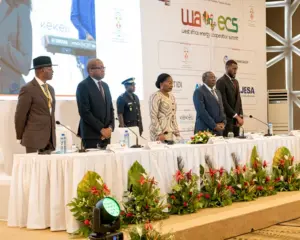
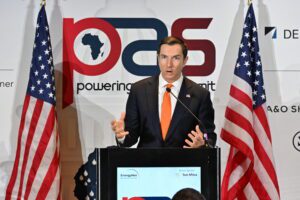
The two-day Powering Africa Summit is held in Washington D.C. every year and connects U.S. government initiatives with African energy officials and private-sector investors. This year marks the 11th PAS Summit. The theme is Powering the US-Africa Partnership: Energy Infrastructure — Critical Minerals — Investment Strategies.
With partnership and collaboration front and center, Simon Gosling, Managing Director of PAS, organiser EnergyNet, said: “Progress begins when the right people come together. We bridge public ambition and private investment, gathering global decision-makers to spark the initiatives that power tomorrow, because the future cannot wait.”