Unlock the Billion Dollar Vault Hidden Inside Zimbabwe’s Energy Liberalisation
Mozel Chimuka, Agora Village, AfricaWorks | LUSAKA, 27 November 2025 — Zimbabwe currently generates significantly less electricity than required to keep basic lights on, yet the government audaciously demands that private investors triple available capacity within six short years to feed a voracious mining beast that never sleeps. This paradoxical mandate requires the state to abandon its historical monopoly and aggressively court the private capital it once ignored, creating a high-stakes environment where regulatory barriers are being dismantled at remarkable speed to ensure that the lights stay on for the digital age.
A Hunger Driven by Mines and Machines
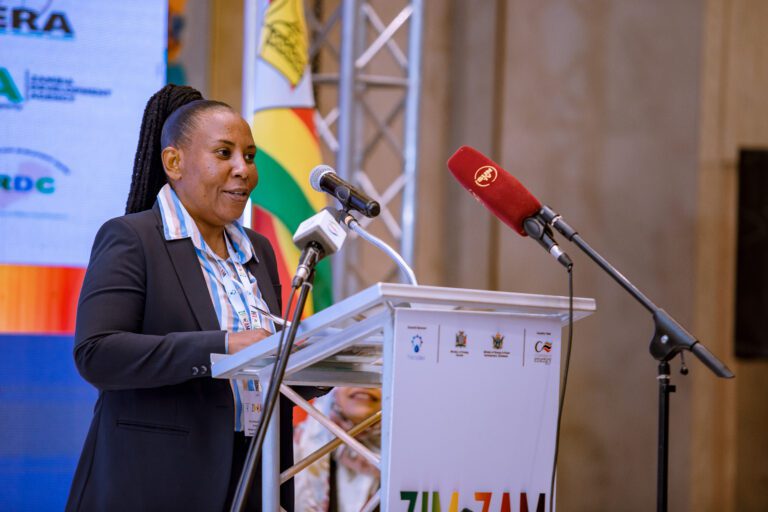
The driving force behind this urgent shift comes from intense, compounding pressure from the industrial sector far beyond residential lighting needs. A presentation “Zimbabwe: Project Presentations”, regarding this pressure dominated the recent ZimZam Energy Summit held at the Radisson Blu Mosi-Oa-Tunya Livingstone Resort, where state officials acknowledged that the region is experiencing a deficit that threatens to stall economic momentum.
“The conversations that have been happening have shown that the region in general and Zimbabwe in particular is in great need of energy,” Engineer Ndhrovu from Zimbabwe Electricity Supply Authority (ZESA) Holdings admitted to investors gathered at the resort. Mr. Ndhrovu explained that the deficit is colliding with a surge in demand driven by mining expansion and industrialisation. Mining, particularly the booming lithium and platinum industries, cannot function on intermittent power. He noted that demand is increasing daily, driven primarily by aggressive expansion of the mining industry, which requires base load stability that the current grid struggles to provide.
“We also share the issue of regional drivers,” said H.E. Honourable Yeukai Simbanegavi, Deputy Minister of Energy & Power Development, Zimbabwe “Industrialisation, digitalisation, mining expansion, electric mobility and population growth.” highlighting that the drivers of demand are evolving beyond traditional machinery. Honourable Simbanegavi particular emphasis on the digital future, noting that artificial intelligence and digitalisation are becoming key drivers of energy development. Data centres and digital infrastructure require constant, clean energy, and the current grid cannot support them without massive expansion. To meet these compounding demands, the government has set aggressive targets. The Integrated Energy Resource Plan (IRP) targets an available capacity of at least 6,000 megawatts by 2030. Achieving this goal requires moving from the current 62% energy access rate to near universal coverage.
Tearing Down the Regulatory Walls
Regulators have responded to this deficit by actively dismantling the bureaucratic hurdles that previously discouraged investment. The Zimbabwe Energy Regulatory Authority (ZERA) has radically altered the licensing process to favour speed and ease. Years-long application processes appear to be over.
“In terms of our licensing period,” stated Mr. Man’arai Ndovorwi, Technical Services Director, Zimbabwe Energy Regulatory Authority “We have licensed projects within thirty days.” He clarified that this short timeline includes a necessary public component, involving a mandatory two weeks to advertise in the press to the community where the project will be located. For smaller projects, the barrier to entry has effectively vanished. In a bid to encourage rapid deployment of distributed energy, the regulator has waived licensing fees entirely for specific capacities. Projects below ten megawatts no longer require any licensing fee to ZERA. This moves signals that the state prioritises new electrons over administrative revenue. While the new focus for licensing is on projects of five megawatts and above, the message to Independent Power Producers (IPPs) is clear: if you have the capital and the technical capacity, the paperwork will not stop you.
“We have allowed them to generate for own consumption,” the Regulator said, “Allow them to generate and sell to customers of their own choice and also generating and selling to the grid.” Detailing the liberalisation of the market structure. The old model of a single buyer—where every producer had to sell to the state utility—is being dismantled. This flexibility allows investors to secure their own revenue streams by signing direct deals with solvent private off takers, bypassing the financial risks associated with the national utility. Independent producers can now choose their own path to profitability, whether that involves powering a mine, selling to a factory, or feeding the national grid.
Regional Trading and Financial Security
Zimbabwe occupies a central geographic position that it intends to use to its advantage. Its transmission network connects physically to Zambia, South Africa, Mozambique, and the Democratic Republic of Congo (DRC). This allows independent producers to trade on the regional market, moving power across borders to where prices are highest. address the lingering fear of currency instability and policy reversal, the government has made commitments to ensure Power Purchase Agreements (PPAs) are bankable, a critical requirement for international lenders.
“We have also improved IP licensing processes,” Honourable Simbanegavi stated, adding that “we have now ensured that our PPAs are bankable.” She further assured investors that the government is committed to ensuring transparent, predictable, and investor-friendly policies. Incentives such as duty-free importation of solar equipment further sweeten the deal. With over 2,000 megawatts of solar potential ready for development and a policy environment that finally favours the private sector, the opportunity is substantial. Honourable Simbanegavi sees specific opportunities for the mining sector to take the lead in this new arrangement, particularly regarding captive power systems and storage solutions like lithium batteries.
“Zimbabwe is open for business and from a utility perspective, we are also ready to discuss,” Mr. Ndhrovu stated. The state has effectively privatised its own survival, handing over the keys to its industrial future to anyone bold enough to pick them up. Regulatory barriers have been blown open due to the sheer, crushing necessity of keeping the economy alive. For the investor standing on the sidelines, the risk is no longer about policy reversal or currency fluctuation; the only real risk now is blinking whilst the most lucrative energy contracts in Southern Africa are signed by someone else.
Article provided by Financial Insight Zambia