West African Ministers push for deeper energy integration, regional power market
By Kabir Yusuf, Accra, Ghana – December 3, 2025
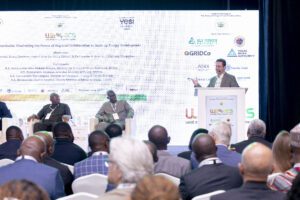
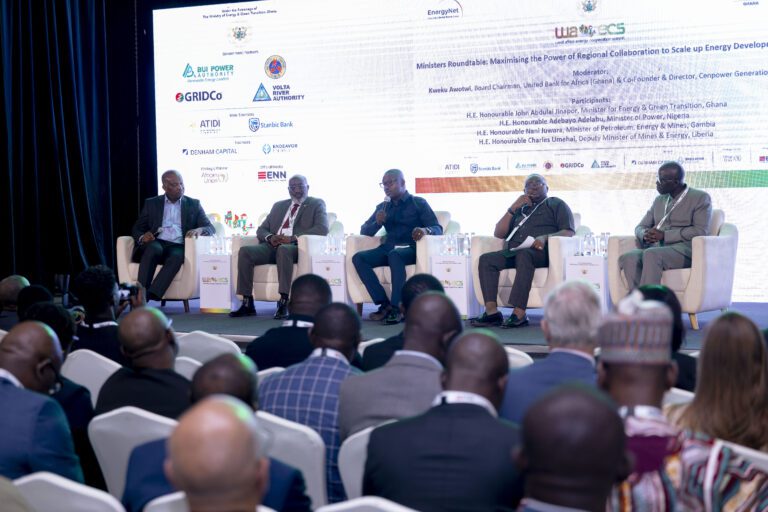
They spoke during a ministerial roundtable themed “Maximising the Power of Regional Collaboration to Scale Up Energy Development.”
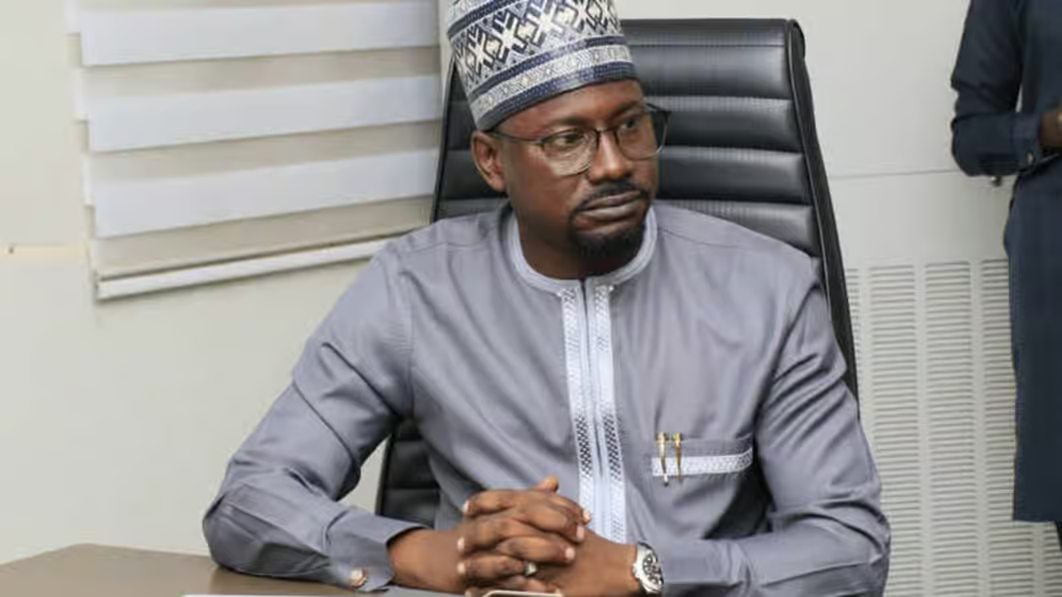
The Nigerian Minister of Power, Adebayo Adelabu, on Tuesday joined his counterparts from Ghana, Liberia, and Ghana to call for deeper regional cooperation to address electricity shortages, secure long-term energy supply, and unlock the economic potential of the sub-region.
The call was made at the West Africa Energy Cooperation Summit in Accra, Ghana, where the officials charged regional institutions to fast-track power interconnection and harmonise regulations to make cross-border electricity trade a reality.
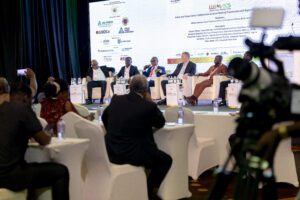
Speaking during a ministerial roundtable themed “Maximising the Power of Regional Collaboration to Scale Up Energy Development,” the leaders stressed that West Africa must urgently move from policy statements to execution if the region is to meet rising energy demands and achieve industrial growth.
The session was moderated by Kweku Awotwi, board chairman of United Bank for Africa (Ghana) and co-founder of Cenpower Generation.
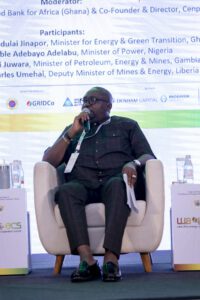
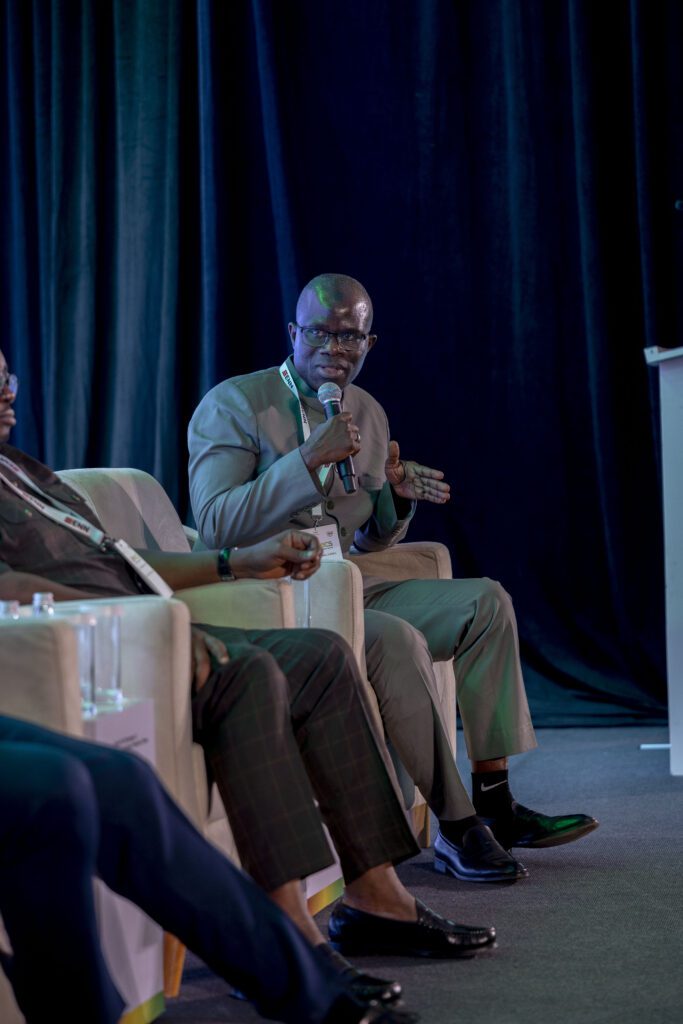
The ministers on the panel were Nigeria’s Minister of Power, Mr Adelabu; Ghana’s Minister for Energy and Green Transition, John Jinapor; Gambia’s Minister of Petroleum, Energy and Mines, Nani Juwara, and Liberia’s Deputy Minister of Mines and Energy, Charles Umehai.
Nigeria: “Fix Nigeria, and West Africa will be fixed”
In his submission, Mr Adelabu said regional energy security is tied to Nigeria’s success, noting that the country holds the largest gas reserves in the region and must play a central role in sustaining West Africa’s power market.
“If Nigeria can be fixed, the entire West African region can be fixed,” Mr Adelabu told the forum. “We believe that achieving energy security requires not only increased supply, but also universal access for West African citizens.”
He said cooperation rather than competition must now define the region’s energy agenda.
“The name of the game must now be cooperation, collaboration, and partnership,” the minister said. “Nigeria is committed to its big brother responsibility within the West African energy space. We have a major role to play.”
Listing two pathways for scaling regional supply, Mr Adelabu highlighted the ongoing West African Gas Pipeline extension from Ghana toward Morocco and Europe, supported through energy export contracts and financing partnerships.
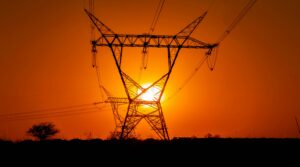
The minister also emphasised the need for seamless transmission lines to enable cross-border electricity flow from Nigeria across ECOWAS member states.
“In the coming months, Nigeria will move to the second level of testing …,” he said. “Once achieved, we can transition to permanent synchronization of transmission lines in West Africa.”
He added that permanent grid synchronisation would optimise comparative generation strengths across the region and lower supply costs.
To achieve this, he said countries must strengthen transmission systems, standardise frequency and protection controls, expand automation and build trust in regional trading rules.
“We must stabilise the local grid, standardise control systems, and ensure regulation and market trust through transparent settlement, shared data and dispute resolution,” the minister said.
We must leave this forum with action, Ghanaian Minister
Ghana’s energy minister, John Jinapor, called the summit a turning point for West Africa’s power future. He said the region must accelerate integration through harmonised regulatory frameworks, energy trading mechanisms and shared infrastructure funding.
“For too long, our energy systems have operated in isolation, undermining our collective resilience,” Mr Jinapor said.
Quoting the vision of the West African Power Pool (WAPP), he said the goal remains to create a unified regional electricity market that guarantees reliable, affordable energy for ECOWAS citizens.
He referenced a significant technical milestone achieved in November 2025 — the first-ever full regional power synchronisation trial linking the Ghana-Togo-Benin grid with Nigeria for four hours.
“The gathered data is being analysed to inform a permanent synchronisation strategy,” he noted, describing it as a major leap toward a fully functioning regional power market.
Mr Jinapor added that Ghana is aligning AfCFTA participation with energy market reforms, arguing that an integrated African trade bloc cannot function without cross-border electricity supply.
“A truly functional single market will require cross-border infrastructure, harmonised power rules and bankable power purchase agreements,” he said.
He outlined Ghana’s priorities, including competitive generation procurement, standardised power contracts, expanded gas infrastructure, digital innovation in upstream development and an ambitious energy transition guided by a Green Transition Fund.
He urged the region to finalise interconnection protocols, harmonise tariffs and design renewable energy trading platforms.
“Let us be remembered as the generation that connected our grids and powered the dreams of our people,” he said. “Let this roundtable not end with declarations, but with concrete, collaborative and catalytic.”
We must move from dialogue to implementation, Gambia’s Energy Minister
Gambia’s minister, Nani Juwara, said his country was strengthening reforms to attract energy investment despite not yet discovering domestic gas. He said over 90 per cent of Gambians currently have access to electricity, but the nation depends on regional supply links.
“We must now move from dialogue to coordinated action,” he said, urging standardised regional power purchase agreements and shared financing mechanisms to build cross-border energy corridors.
He highlighted recent reforms, including improved regulatory transparency, upstream investment promotion and renewable energy expansion.
Mr Juwara noted Gambia’s solar integration progress, citing the commissioning of a 23-megawatt Jambur solar plant and several mini-grids.
He said The Gambia signed a cooperation MoU with Turkey in October 2025, covering joint investments in solar, wind, hydro, transmission and private-sector development.
“Our journey has begun,” he said. “We are taking greater steps to increase renewables in our energy mix.”
Energy cooperation is fundamental – Liberia
Liberia’s deputy minister, Charles Umehai, said regional cooperation remains essential if West Africa is to meet development and climate goals.
He said the Liberian government under President Joseph Boakai was committed to expanding clean energy systems in line with its 2030 climate targets.
Mr Umehai said cross-border electricity markets will strengthen energy security, lower generation costs and reduce reliance on fossil fuels. As the summit continues in Accra, energy leaders continue to deliberate on regulatory harmonisation, regional transmission financing and the market framework for a unified West African electricity grid.