Zambia and Zimbabwe Throw Open Their Energy Sectors as Private Capital Rushes to Light Millions
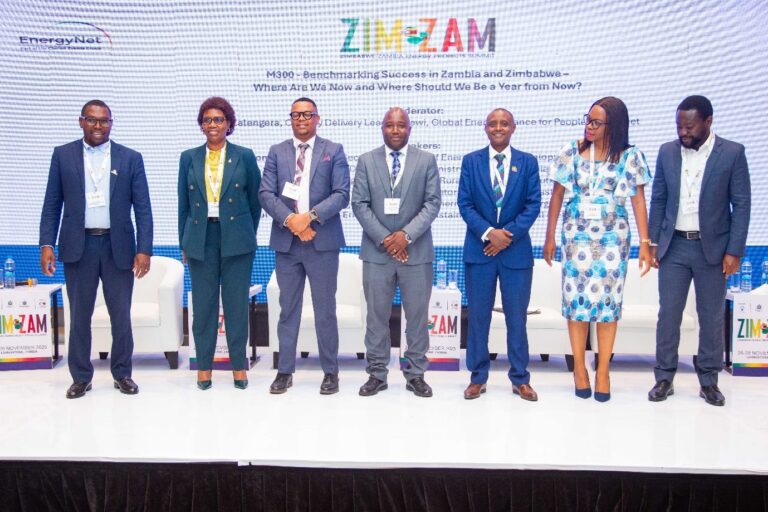
Mozel Chimuka, Agora Village, AfricaWorks | LUSAKA, 27 November 2025 — Nearly ten million Zambians have never switched on a light in their own homes. Across the border, Zimbabwe’s national utility connects 50,000 households per year; its new binding commitment demands 320,000. Both nations have now staked billions on pledges to achieve universal electricity access by 2030—a five-year sprint that requires them to multiply their current pace sixfold, almost overnight. These ambitious targets were discussed at a panel discussion themed “Benchmarking Success in Zambia and Zimbabwe,” at the ZimZam Energy Summit held at the Radisson Blu, Mosi-oa-Tunya, Livingstone Resort, where regional stakeholders convened to address the pressing electrification challenges facing both countries.
The Compacts That Changed Everything
Zimbabwe and Zambia went beyond aspirations when they signed their energy compacts with the World Bank and African Development Bank. They locked themselves into binding, measurable commitments with a five-year deadline. Zambia’s compact, endorsed in January 2025 at the Africa Energy Summit in Dar es Salaam, commits the country to 120,000 on-grid connections and 194,000 off-grid connections annually. Zimbabwe, which began drafting its compact in February and launched it barely a month ago, has pledged even more aggressive numbers: 320,000 on-grid and 200,000 off-grid connections every year until the decade closes.
The financial ambitions match the connection targets. Zambia intends to mobilise 6.5 billion USD in private capital for generation alone, alongside 300 million USD for on-grid access. Zimbabwe’s compact calls for 3.43 billion USD in generation investment and aims to shift non-hydro renewables from 7.8% to 31% of the national energy mix.
“Our access levels still remain low”, said Mr. Mafayo Ziba, Director of Energy in Zambia’s Ministry of Energy. “Especially in the rural areas—we are sitting at about 30%”. During a recent panel discussion assessing progress under Mission 300. His Zimbabwean counterpart, Dr. Gloria Magombo, Permanent Secretary in the Ministry of Energy and Power Development, noted that her ministry’s first success was preparing and agreeing to the compact in record time. But neither official attempted to minimise what comes next. Zimbabwe’s utility currently targets 50,000 connections annually: the compact demands more than six times that figure beginning in 2026.
Governments Step Aside and Wave Capital Through
“The energy compact for Zambia, if you look at it”, observed Mr. Ziba. “Is very much private sector driven eighty eighty percent of that we expect to be delivered through the private sector”. Both countries have concluded that state utilities alone cannot deliver these numbers. Their response has been to dismantle regulatory barriers and invite private investors into spaces previously reserved for government.
Zimbabwe has opened its retail electricity sector to private participation for the first time, licensing companies under three distinct strategies. Developers may now install infrastructure in new settlement areas, purchase power in bulk from the utility, and retail it directly to residents. Homeowners in unconnected areas may band together, secure bank financing, hire contractors, and electrify their own neighbourhoods. A new law mandates that developers of future housing estates must install electricity infrastructure before construction permits are granted.
Zambia has pursued similar reforms. An Independent Power Producer procurement framework, expected by year-end, will address competitiveness concerns and reduce the country’s historical reliance on unsolicited projects. A mini-grid regulatory framework, also due before January, will provide regulatory certainty in the off-grid space and resolve disputes over grid encroachment on existing investments. Open access and net metering policies have already taken effect. Financing has been secured for the Zambia-Tanzania power interconnector, a strategic link between the Southern African and Eastern power pools.
The Grassroots Revolution That Outpaced the Grid
“We have, as we speak right now”, Dr. Magombo explained. “Over 400,000 new developments which need to be connected to the grid—however, I just want to highlight that most of them are on off-grid systems already”. Citizens across Zimbabwe, tired of waiting for the utility, have electrified themselves. She estimated that 75% of these new housing developments have connected through bank loans, pay-as-you-go schemes, and government subsidies.
While governments recalibrate their policies, private companies have built a parallel energy infrastructure across both countries. Ms. Helen Zulu, Regional Director for Ignite Energy Access and Managing Director for Zambia, reported that her company alone achieved over 95,000 connections in Zambia last year. She described distributed renewable energy solutions as the fastest and most flexible option for reaching customers at the bottom of the economic pyramid.
Zimbabwe’s Presidential Solar Program aims to finance 200,000 solar home systems annually through the national budget, each exceeding one kilowatt. Banks offer short-term loans for civil servants to acquire systems up to three kilowatts, repayable over one or two years. Pay-as-you-go providers have penetrated rural communities with smaller systems targeting lighting and phone charging. Quality control has emerged as the principal concern; Zimbabwe’s regulator has developed new standards, procured testing equipment, and launched a registration program for installers. Mandatory warranty periods will soon apply to all renewable energy systems sold in the country.
Paying for the Promise
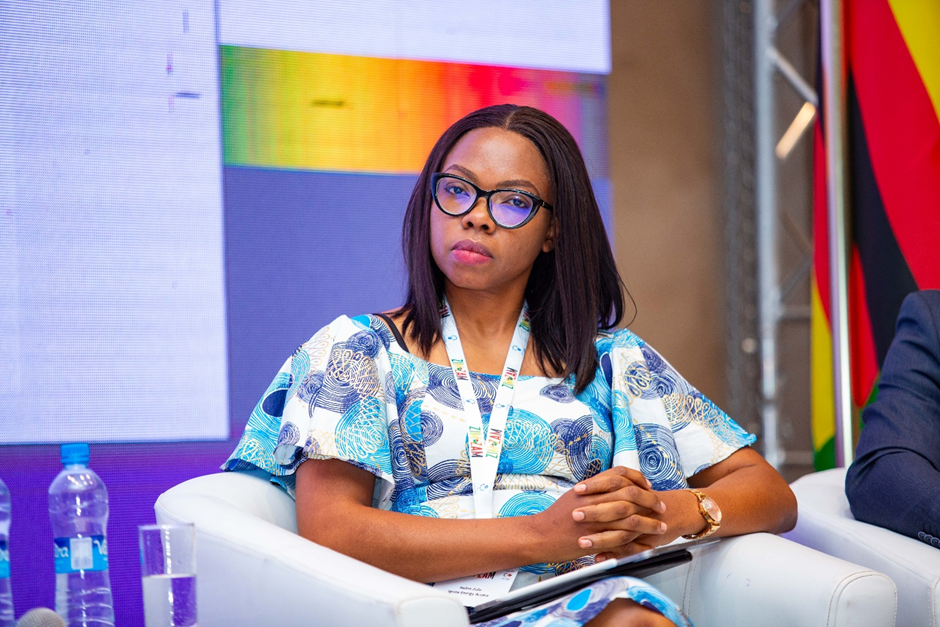
“A sell is not achieving the electrification target.” Ms. Zulu cautioned during the panel discussion. Validation must confirm that systems remain operational and customers are lighting their homes. If only 60% of installed systems function properly, she argued, then the success rate stands at sixty—regardless of how many units were sold. Her warning underscored why Results-Based Financing has become the preferred mechanism for channelling both donor and private capital into connections. Under this approach, implementers receive payment only after delivering verified results.
Mr. Suzyo Silavwe, Acting Director for Engineering Services at Zambia’s Rural Electrification Authority, announced that the World Bank’s 200 million USD Ascent program will launch on 3 December. The government has committed an additional USD 250 million USD. Disbursements will follow verified connections rather than project milestones. A previous World Bank program using similar mechanics delivered 60,000 connections in a single year.
Mr. Abdulmumini Yakubu of Sustainable Energy for All emphasised the importance of accountability structures. Country Delivery and Monitoring Units, typically housed within the presidency, provide real-time reporting on project progress and enable governments to course-correct when implementation falters. Zambia’s Presidential Delivery Unit already serves as a one-stop shop for licensing new energy projects. Prof. Askwar Hamanjida Hilonga, representing the Energy Regulators Association of East Africa, addressed the tension between cost-reflective tariffs and affordability, noting that investors require a predictable multi-year tariff path that makes projects bankable even if initial prices fall below cost recovery.
What Happens Next
“The focus should shift to discussing how many investors or developers do we have that are contributing to universal success,” Mr. Silavwe suggested, offering a pointed reframe for next year’s agenda. By the time delegates reconvene in twelve months, both countries will have either demonstrated that their compacts are more than paper commitments or begun explaining why reality fell short of ambition.
Zambia’s Ascent program will have been operational for nearly a year. Zimbabwe’s new revenue assurance system should be driving increased utility connections. Private developers, solar installers, and pay-as-you-go providers will have either scaled dramatically or encountered barriers that governments must address. The question is no longer whether ambition exists. It is whether execution will follow.
Article provided by Financial Insight Zambia