Grid Bottlenecks Strangle Billions in Potential Power Trading Revenue
Gerald Hamuyayi, Lusaka, Saturday, 29 November, 2025 – No transmission means no transition. This stark equation confronts African energy planners who watch renewable projects proliferate whilst the wires to connect them lag years behind. The Southern African Power Pool operates a sophisticated trading platform which enables independent producers to gain market access when they join with smooth commercial arrangements. One single hurdle for developers remains brutally simple: unavailable capacity prevents power from moving from generation points to consumption centres, strangling trade that would deliver immediate value whilst the continent waits for reinforcements that planning cycles measure in decades.
The Capacity Paradox
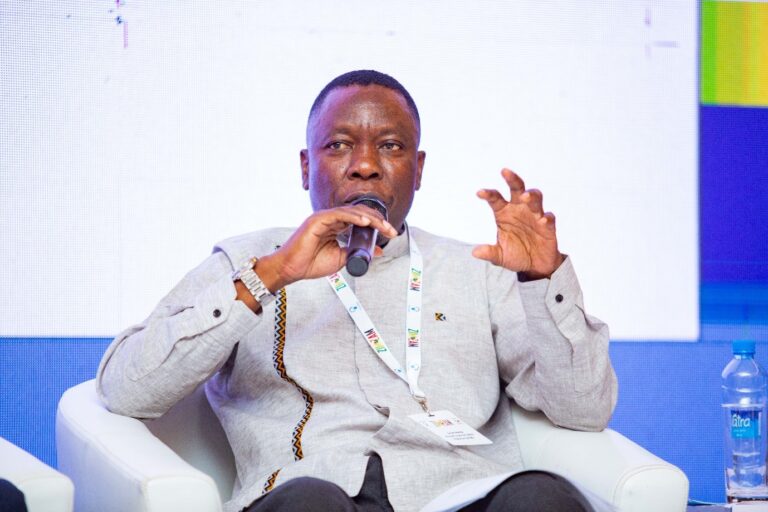
South Africa possesses excess generation capacity at this moment whilst Zambia confronts desperate power deficits with severe blackouts. The distance between surplus and shortage measures mere hundreds of kilometres, yet electricity cannot flow because the central transmission corridor lacks sufficient capacity. Engineer James Masumba Manda, Technical Manager at African forum for utility regulation, notes that South African excess could easily serve deficit areas like Zambia if strong links existed. The commercial logic appears straightforward as generators with idle capacity meet consumers willing to pay premium rates for reliable supply. However, physical infrastructure constraints override economic rationality.
Engineer John Diya, Senior Manager at Zimbabwe Electricity Transmission and Distribution Company (ZETDC), identifies the specific bottleneck in energy transmission infrastructure. Electricity trading already occurs through the Southern African Power Pool’s competitive day-ahead market. The main challenge stems from unavailable capacity to push electrons from one point to another. Transmission networks cannot accommodate the volumes traders wish to move.
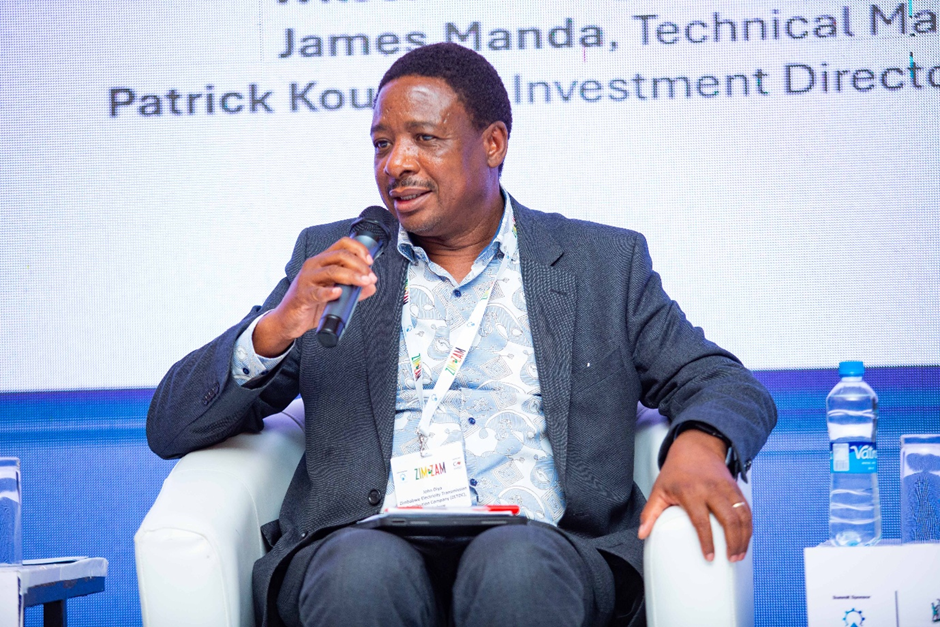
The competitive day-ahead market operated by the Southern African Power Pool (SAPP) demonstrates that commercial frameworks exist and operate effectively with traders submitting bids and offers. The market clearing mechanism matches supply and demand with price discovery emerging through transparent and efficient processes. Yet when the market signals clear arbitrage opportunities emanating from substantial price differentials between surplus and deficit zones, physical constraints prevent merchants from executing profitable trades.
Strategic Infrastructure Gaps
Engineer Diya outlines specific reinforcements required to unlock trading potential. A second interconnector from South Africa into Zimbabwe would provide redundancy and increase capacity on a critical route. Reinforcement of western Zimbabwe into Mozambique would strengthen regional loops and enable power flows that currently face limitations. A second interconnector from Zimbabwe into Zambia would address both redundancy concerns and capacity constraints on another vital corridor.
These projects share common characteristics. Each addresses known bottlenecks where trading demand exceeds transmission capacity. Each would enable substantially higher volumes of cross-border electricity commerce. However, these potential projects face lengthy development timelines despite clear commercial justification. The gap between identifying necessary infrastructure and deploying it perpetuates inefficiencies that impose costs on the entire regional market.

Mr Wilson Masango, Chief Engineer for Markets at SAPP, explains how the organisation transforms national plans into regional perspectives through the SAPP Support Plan. This process examines generation and transmission project sequencing to ensure coherent development. National utilities submit their expansion plans; SAPP analyses how these plans interact at regional level and identifies gaps where cross-border infrastructure becomes necessary. The analytical framework exists and produces sound recommendations. Implementation has nonetheless lagged behind projects planning.
Market Access Without Market Reach
Francisco Kgoboko, a professional engineer at FMK Global Holdings Pty Ltd, speaking from the audience, raises a question that highlights regulatory contradictions. He explains that utilities restrict independent producers (IPs) to serving only local demand, often limiting them to about ten megawatts, even when the producer can economically develop a fifty-megawatt plant. A larger facility would allow the producer to swap power with a neighbouring country that currently supplies imports. In this arrangement, the IP could generate fifty megawatts for export whilst the importing utility redirects its purchase contract from the original supplier to another customer, ensuring the domestic market still receives the same ten megawatts.

This configuration improves economies of scale for the independent producer, enhancing return on investment and potentially reducing the effective cost of electricity delivered domestically. Yet regulatory frameworks prevent such arrangements, insisting that IPs should size their facilities to match immediate local demand rather than optimising for broader regional economics. The restriction makes sense only if transmission capacity to execute swaps does not exist, which circles back to infrastructure deficits.
When IPs become members of SAPP, Mr Masango notes, they gain access to the regional market and can sell excess power beyond domestic requirements. This access holds theoretical value but practical limitations. An IP can join SAPP and notionally access the regional market, yet if transmission capacity does not exist to move power from their location to demand centres, the market access remains largely symbolic. The commercial framework permits trading; physical infrastructure prevents it.
Information Asymmetry and Investment Decisions
Mr Patrick Kouamé, Investment Director at African Infrastructure Investment Managers (AIIM), calls for greater information availability regarding power flows, the highways of electrons, as he terms them. Developers and investors struggle to identify clear business cases for investment on specific corridors like the north-south central route. Detailed data on congestion patterns, capacity utilisation, price differentials, and projected demand growth would enable more targeted investment decisions.

Transmission system operators possess this information but rarely publish it in forms useful to potential investors. Load flow studies, contingency analyses, and network constraint data remain proprietary or presented in technical formats that require specialised expertise to interpret. Creating accessible summaries that translate engineering data into business intelligence could accelerate private sector participation.
Mr Kouamé’s focus on the north-south central corridor reflects its strategic importance. This route connects surplus generation in South Africa with deficit markets further north. Substantial trading demand exists, but transmission capacity consistently constrains volumes. Clear business cases for private investment in expanding this corridor should emerge from the fundamentals, yet investors lack sufficient granular information to structure bankable projects with confidence.
The Infrastructure Investment Timeline
Mr James Mackay delivers the sobering global context. The world needs to spend USD 24 trillion on transmission by 2050 to enable the energy transition. African requirements represent a fraction of this total but remain enormous in absolute terms and relative to available financing. The fifty-year planning horizon masks the urgency; infrastructure deployed in 2045 will have missed decades of potential service.
Current planning cycles exacerbate the timing problem. Engineer Diya emphasises that addressing bottlenecks becomes imperative, yet the projects he identifies require years to develop even after receiving approval. The central transmission corridor will not expand capacity overnight. Second interconnectors between countries demand extensive planning, permitting, financing, and construction phases. Meanwhile, trading opportunities foregone today represent permanent economic losses.
SAPP’s role in sequencing generation and transmission projects attempts to prevent mismatches where generation develops ahead of the transmission needed to evacuate power. Mr Masango describes how the SAPP Support Plan analyses project timing to maintain coherence. However, coordination can only optimise sequences; it cannot accelerate individual project timelines constrained by financing limitations, regulatory processes, or construction capacity.
Bridging Ambition and Reality
The gap between market sophistication and infrastructure availability defines the current predicament. SAPP operates one of Africa’s most advanced regional electricity markets. The day-ahead market functions reliably. Participants understand the commercial frameworks. Prices reflect supply and demand dynamics. Yet this market sophistication highlights rather than resolves the infrastructure deficit.
Generators with capacity cannot reach customers willing to pay. Independent producers cannot optimise plant sizing because grid constraints prevent regional trading. Price differentials between surplus and deficit zones persist because transmission capacity cannot arbitrage them away. The commercial mechanisms exist to drive efficient resource allocation; physical infrastructure remains the binding constraint.
Engineer Manda’s observation that South African excess could easily serve Zambian deficits through strong links captures the frustration. The technical solution appears straightforward: build the transmission capacity. The implementation proves far more complex, requiring coordination across multiple jurisdictions, mobilising substantial financing, navigating lengthy regulatory processes, and executing multi-year construction programmes. The electricity sector cannot afford these timelines, yet no mechanism exists to compress them dramatically.

Mr Mackay’s formula, “no transmission, no transition,” applies with particular force in contexts where market frameworks outpace infrastructure development. African regional power pools have built sophisticated trading platforms ahead of the physical networks needed to realise their full potential. Closing this gap demands treating transmission expansion with the urgency currently reserved for generation projects, recognising that wires constitute the bottleneck preventing value creation from existing assets and planned investments alike.
Article provided by Financial Insight Zambia