Copper Dreams and Power Schemes Racing to Electrify Africa
Jeannette Ilunga, Africa Works, LUSAKA | Friday 28 November, 2025 — Five years from now, Southern Africa’s energy market will look nothing like it does today. Zambia’s copper ambitions demand 1,500 MW of new capacity. Tanzania has a strategic surplus of power that cannot reach major markets like Zambia and Kenya because vital cross-border interconnectors remain uncommissioned, while Angola’s substantial, localized power surplus cannot be exported regionally due to its lack of external grid links. Climate change is turning reliable hydro assets into seasonal gambles. The traders who thrived by aggregating existing supply are being forced to become something different entirely: owners of renewable generation, financiers of cross-border transmission, and the backstop for industrial expansion that governments can no longer fund. Whether they succeed will determine if the region’s growth targets are achievable or just aspirational. These challenges set the stage at the ZimZam conference in Livingstone at the Radisson Blu Hotel, where industry leaders laid out what the next five years need to achieve.
Three Million Tons and a Prayer
Mr. Emmanuel Chilombo Kalenga, Chief Executive Officer at Enterprise Power Zambia, presented the copper target with the enthusiasm of someone announcing a moon landing, except nobody has built the rocket yet. Zambia wants to produce three million tons of copper by 2031. Admirable. Achievable, even. “We will need in excess of 1,500 megawatts to come online in the next five years,” Mr. Kalenga said. “It’ll have to be all hands-on deck.”
All hands-on deck is what you say when the ship is sinking or when you need to accomplish something so ambitious that polite understatement will not suffice. Zambia needs to find, finance, and commission enough generation capacity to power a small country, and it needs to do so while the utility that traditionally handled such things remains financially underwater.
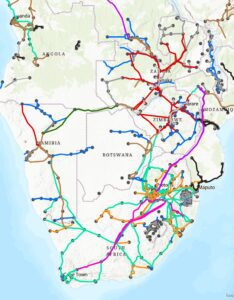
The situation gets more absurd when you zoom out. The DRC’s Katanga mining region alone faces a deficit exceeding 1,500 MW. Meanwhile, Tanzania has 2,000 MW sitting idle. Angola has another 2 GW doing precisely nothing. “But there’s no interconnectivity,” Mr. Kalenga said, stating the problem that makes the entire situation feel like a particularly cruel joke. The power exists and so does the demand. What does not exist is the wire connecting them.
Geography as Destiny, If Anyone Bothers
Ms. Nsofwa Sikanyika, Chief Executive Officer at Kanona Power, described Zambia’s geographic position with the kind of optimism that only makes sense if you ignore decades of failed infrastructure promises. Zambia sits between excess markets in the Eastern Africa Power Pool and deficit markets in the DRC. “In Zambia we are strategically located,” Ms. Sikanyika said. “It actually allows us to become a power hub.”
Hub. The word gets thrown around in energy conferences the way “synergy” gets used in corporate board rooms—frequently, enthusiastically, and often without much connection to reality. Ms. Sikanyika went beyond geographic observations, pointing to the Zambia-Tanzania-Kenya interconnector and urging traders to take the lead in building it.
“It’s definitely important for traders to have a hand in this growth not just in the trading aspect but also in the growth in the relevant infrastructure,” he said. Translation: traders need to start writing checks for transmission lines. This represents a rather dramatic shift from buying low and selling high to actually owning the assets that make buying and selling possible in the first place.
When Rain Becomes a Risk Factor
Mr. Monie Captan, Chief Executive Officer at Petrodex, explained why traders are getting into the generation business with the weariness of someone who has watched hydro assets turn into weather-dependent liabilities. “We are investing in generation assets, renewables,” Mr. Captan said. “It’s purely from a trading angle. If we cannot secure electrons in the open market, there is not enough investment.”
The subtext is darker than the quote suggests. Hydro used to be the thing you could count on. Rain fell, rivers flowed, turbines spun, power got generated. Climate change has turned that reliable sequence into something closer to a gamble. “Climate change is affecting especially the hydro sources quite significantly,” Mr. Captan said, which is the polite way of saying that droughts now last longer and hit harder, and planning generation around rainfall patterns that no longer hold is a recipe for blackouts.
So now, traders are buying solar farms, and the question is why. Hydro is no longer reliable, and securing dependable electricity has pushed the market toward rapid diversification.
Mr. Alpha Mwale, Managing Director at Lunsemfwa Hydro, suggested blending hydro and solar to bring down tariffs enough that ordinary people might actually afford the power. “We could blend the power, let’s say hydro and solar, to achieve a much lower tariff so that the public can begin to afford,” Mr. Mwale said. It is a sensible idea that also happens to address the political problem of traders being perceived as only serving wealthy industrial customers. Lower tariffs might even justify the investment in distribution infrastructure that would let traders serve households. Might.
Rewriting the Finance Playbook in Real Time
Mr. Jonathan Berman at Autonomi Capital made a prediction that captures something real. “In five years’ time, if we do a new edition of the power project finance handbook, we will definitely need a new chapter or two on trading,” Mr. Berman said.
Five years ago, traders barely existed as a category in Southern African energy markets. Now they are financing projects, owning assets, and providing bankability for transmission infrastructure that governments cannot fund. The transformation has happened so quickly that the frameworks used to teach project finance have not caught up. Which means the people currently figuring out how to structure these deals are writing the playbook in real time, with their own money on the line.
Ms. Sikanyika predicted that once an independent system market operator is in place, the opaque transactions that currently fuel public suspicion will become transparent. “In the next five years, once the Independent System Market Operator (ISMO) or independent system market operator is in place, a lot of things will come out clear, clean,” she said. That clarity would be welcome, however, its arrival within five years is an entirely different question.
From Crisis Managers to Infrastructure Developers
Ms. Sikanyika stated what should be obvious but apparently still needs saying: the market is not reversing. “The market is definitely not going back to what we were used to seeing,” she affirmed. The single buyer model is dead. Open access is here. Private capital is financing generation because public utilities cannot. Traders are aggregating supply, managing risk, and now being asked to build the infrastructure that makes the entire system work.
None of this was planned. It happened because the old system collapsed and something had to fill the gap. What stepped in were traders with balance sheets, risk appetite, and the ability to move faster than governments or development banks. The real question for the next five years is if this makeshift solution can evolve into the permanent infrastructure needed to support Zambia’s copper ambitions.
Utilities are not going to finance this. Governments lack the money. Development finance institutions move at a pace better suited to different emergencies. That leaves traders, who have already proven they can deliver power when the established players cannot. The test now is if they can finance interconnectors, own renewable portfolios, and build transmission infrastructure at the scale and speed required.
Zambia wants three million tons of copper by 2031. Getting there requires 1,500 MW of new capacity, functioning interconnectors to Tanzania and Angola, climate-resilient generation, and a level of private sector infrastructure investment that the region has never achieved. The arithmetic is brutal. The timeline is tight. And the only entities positioned to deliver are companies that five years ago were dismissed as opportunistic middlemen.
Their success will determine if Southern Africa’s industrial future becomes real or remains just another aspirational target that reality cannot meet.
Article provided by Financial Insight Zambia