Building Peace, One Megawatt at a Time: Dr. Sandrine Mubenga on the DRC’s Energy Future
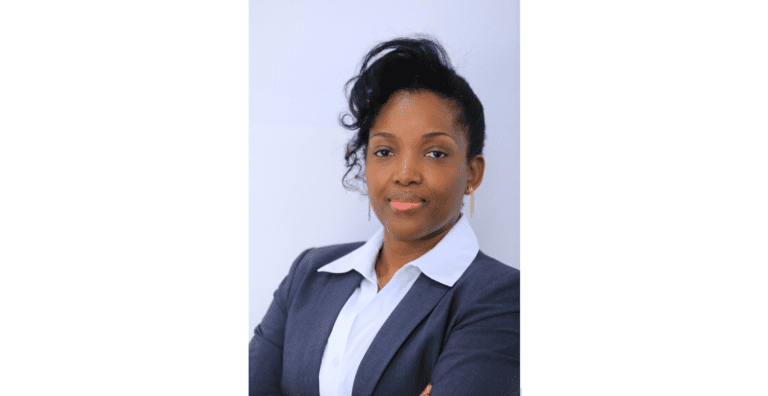
Dr. Sandrine Mubenga, Director General of the Autorité de Régulation du secteur de l’Électricité (ARE), shares her insights on unlocking the Democratic Republic of Congo’s (DRC) vast energy potential. From landmark reforms to innovative projects in hydropower, solar, and mini-grids, she highlights how regulatory modernisation, regional infrastructure, and strategic initiatives like “Business for Peace” are driving electrification, industrial growth, and socio-economic development across the DRC and the Great Lakes region.
- The DRC is often described as an energy giant with untapped potential. From your perspective as CEO and Board Member of ARE, what is the most critical reform needed to unlock this potential?
The Democratic Republic of Congo has exceptional energy potential, particularly 100,000 MW in hydropower, which can transform our country and the region. From ARE’s perspective, the most urgent reform is to align the legal and regulatory framework with on-the-ground realities, notably to support innovations such as mini-grids, renewable energy solutions and private sector participation.
Since 2021, at ARE we have advocated for a revision of the electricity law to integrate these elements, with the aim of creating a transparent, flexible, and investment-friendly environment. This will help accelerate electrification and mobilise the DRC’s energy potential. We are happy to share that the electricity law was effectively revised in February 2025. The law now promotes renewable energy and mini-grid deployment by simplifying the process. Indeed, such that a mini-grid operator can now obtain a single permit to cover generation, distribution, and commercialisation. In the past the operator would have had to secure the 3 permits individually.
The revision of the electricity law is creating more liberalisation of the sector. And we can already see its impact. It is the triggering factor that will lead to structural transformations within the electricity sector.
Example:
For instance, in January 2026 Congo Reliable Energie Seko (Cre Seko) became the first company to benefit from the simplification resulting from this revision of the law, allowing it to become the first operator to receive a single title to operate across three distinct segments, namely generation, distribution and commercialisation.
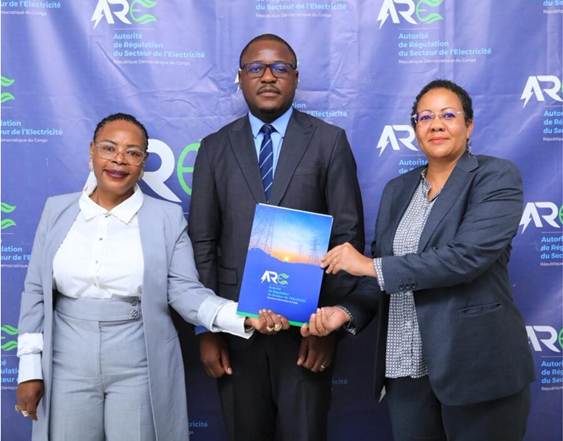
Initially starting with 1.9 MW hydropower project, the production will reach 5 MW and will improve access to electricity for 12,000 households in South Kivu, in rural communities who need it the most. Cre seko is collaborating with a company from the Czech Republic to build this electrical infrastructure in the Democratic Republic of the Congo.
- The Lobito Corridor is increasingly seen as a transformative regional infrastructure project. How do you see energy infrastructure supporting its success?
Regional infrastructure projects such as the Lobito Corridor require a reliable and sustainable energy base. Robust generation, transmission, and distribution infrastructure is essential for industrial development, economic integration, and cross-border value chains. As a regulator, we invite the leadership of the Lobito corridor to heavily invest in power generation, transmission, and distribution inside the Democratic Republic of Congo. ARE’s role is to support these projects by streamlining procedures, promoting transparency, and facilitating public–private partnerships. In this way, initiatives such as the Lobito Corridor can thrive, attract investment, and foster regional socio-economic progress.
Examples:
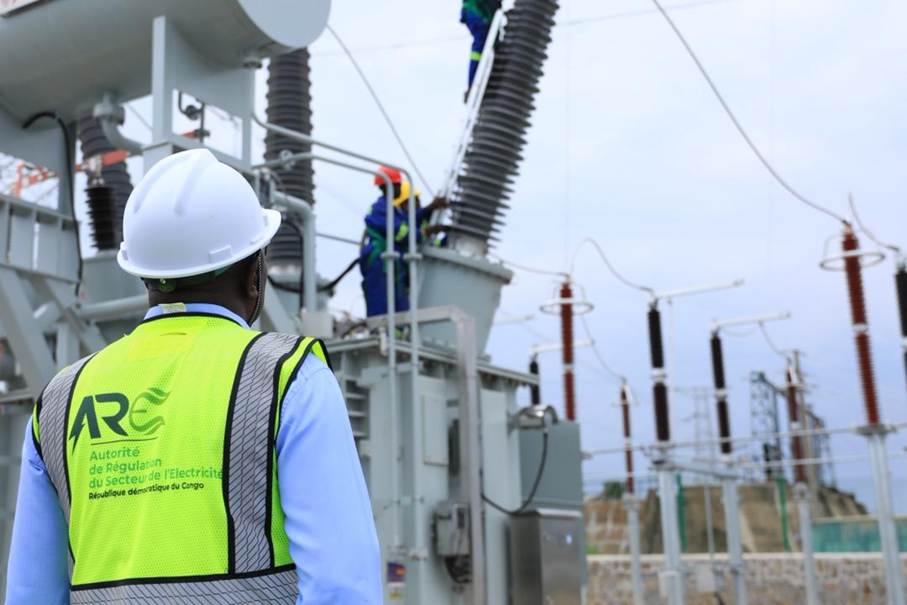
In 2025-2026, ARE supported several structuring projects on the ground: Katamba Mining secured its electricity supply, strengthening the continuity of its mining operations, enabling improved operational planning and generating a positive impact on local production and job creation; Green World Energy obtained a no-objection opinion for a 200 MWp solar power plant, generating nearly 300 jobs and reducing CO₂ emissions by 75,750 tons per year.
Furthermore, CrossBoundary Energy received two no-objection opinions for its 233.8 MWp solar power plant in Mutshatsha, enabling the commercialisation of electricity for the mining sector.
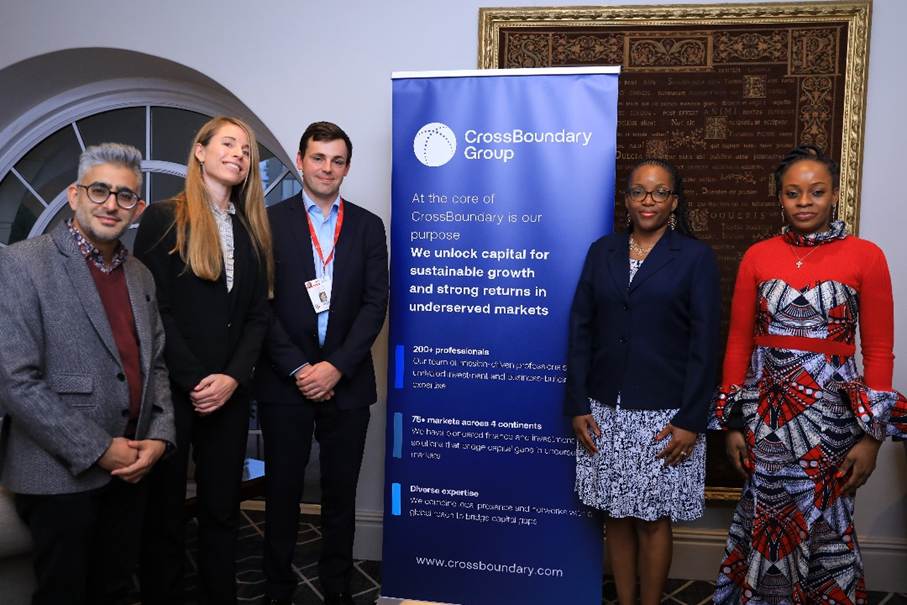
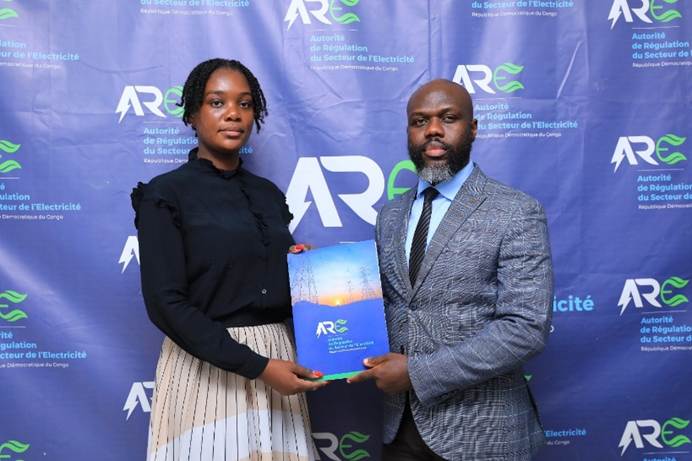
This project, implemented in partnership with Kamoa Copper, provides for the installation of more than 400,000 solar panels and the creation of hundreds of direct and indirect jobs. The electricity produced will supply the Kamoa mine and serve as a reference for other mining projects, thereby contributing to the energy transition, the reduction of more than 70,000 tons of CO₂ per month, and the securing of a reliable energy supply for the extractive industry.
These initiatives clearly illustrate ARE’s role in securing access to energy, structuring bankable projects and promoting socio-economic development.
- At the Powering Africa Summit 2025, you highlighted the “Business for Peace” concept built on three pillars: locally processed critical minerals, electrification, and education. What is the latest progress on this initiative, and how is it being implemented in the DRC and the Great Lakes region?
I had developed the concept of “Business for Peace” since 2016 and during a panel session at the Powering Africa Summit 2025, I seized the opportunity to explain the concept. The Business for Peace concept revolves around three strategic pillars: critical minerals, electrification, and education. Indeed, local transformation of critical minerals to maximise value addition; development of electricity infrastructure, including the rehabilitation of existing networks and the promotion of innovative projects such as the Inga project, mini-grids and private investments; and education and creation of the centre of excellence, to strengthen the workforce required to support a modern and competitive economy. These three pillars would then add value to the supply chains of technology for the energy transition and industry 4.0 and generate a business boom which would result in the improvement of living conditions for local populations in the Great Lakes region. The countries invested in these different businesses would seek to protect their interest by seeking peace in the region. Hence the term “Business for Peace.”
During the panel, the Moderator was Katie Auth, Policy Director, Energy for Growth Hub and the speakers were His Royal Highness (HRH) Prince Lonkhokhela Dlamini, Minister of Natural Resources & Energy, Eswatini ; H.E. Honourable July Moyo, Minister of Energy & Power Development, Zimbabwe ; myself Sandrine Mubenga, CEO, Autorite de Regulation du secteur de l’Electricite (ARE), Democratic Republic of the Congo ; Linda Habgood, Chief Financial Officer, Wright Energy Storage Technologies (WEST) ; Dan Klinck, Founder & CEO, East African Power ; and Gaspar Lino, CEO, Averi Finance.
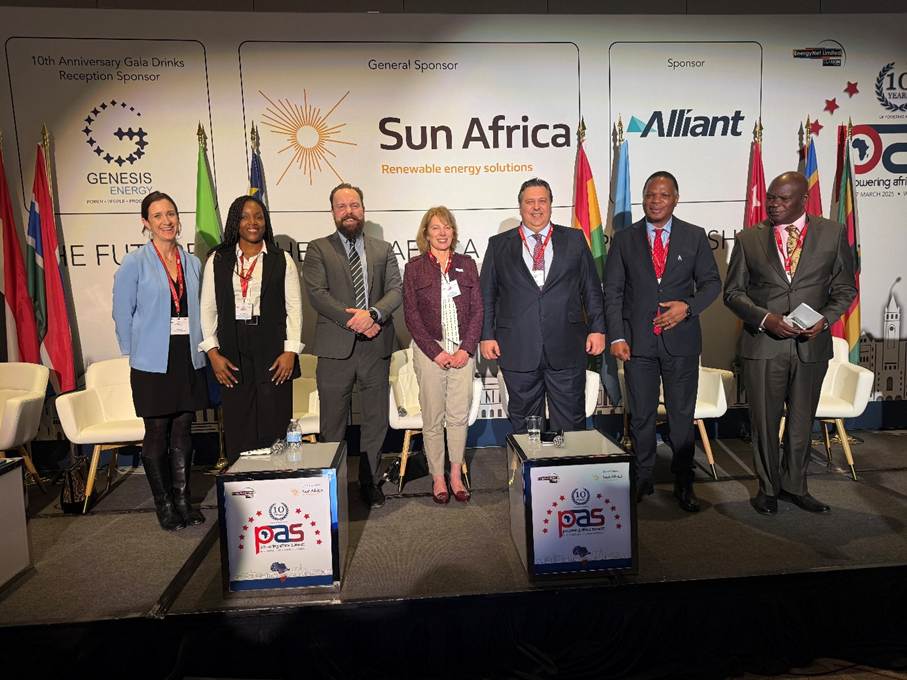
We have since been pursuing diplomatic and technical engagements at the regional level to promote synergies between regulators, investors, and financial institutions, with a view to developing sustainable and integrated energy solutions across the sub-region. Indeed, since PAS 2025, we have been working with 4 of the 5 other panelists to make “Business for Peace” a reality.
Examples
After PAS 2025 held in March in Washington DC, USA, I attended the Africa Energy Forum (aef 2025) held in Cape Town, South Africa. While in Cape Town, I contacted Linda and, with my team, we met with WEST team and visited an operating site near Cape Town that uses the energy storage products manufactured by WEST. We also invited WEST to enter the DRC market.
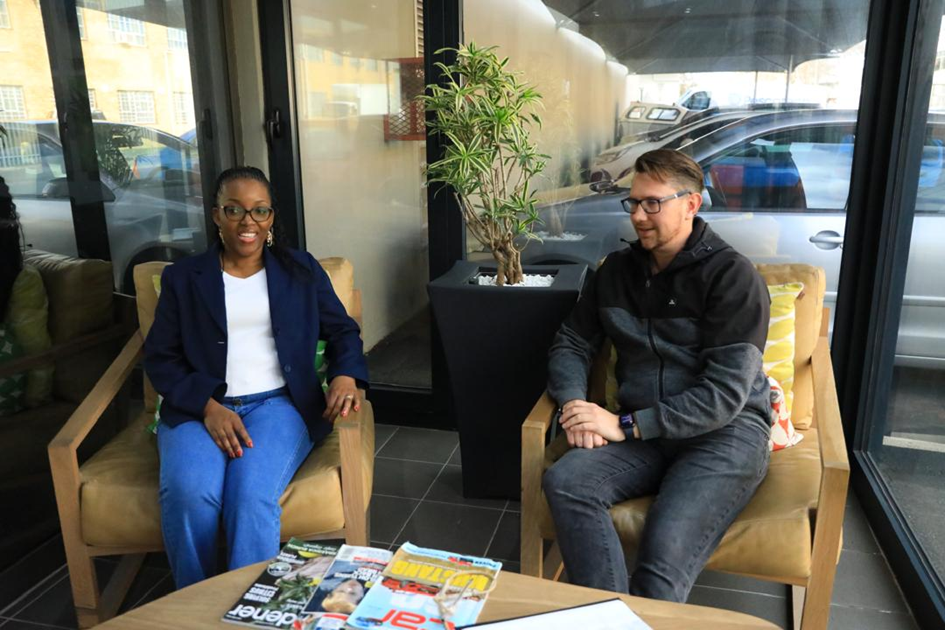
At aef 2025, I met with HRH Prince Lonkhokhela Dlamini of Eswatini and with Skhumbuzo, Energy Regulator of Eswatini. Since PAS 2025, Skhumbuzo and I have discussed ways to improve the procurement process. Then, during the official launch of the 2025 Electricity Regulatory Index organised by the African Development Bank, both Skhumbuzo and I were selected as the only two regulators to highlight the work we are doing in Eswatini and the DRC to improve the regulatory framework.
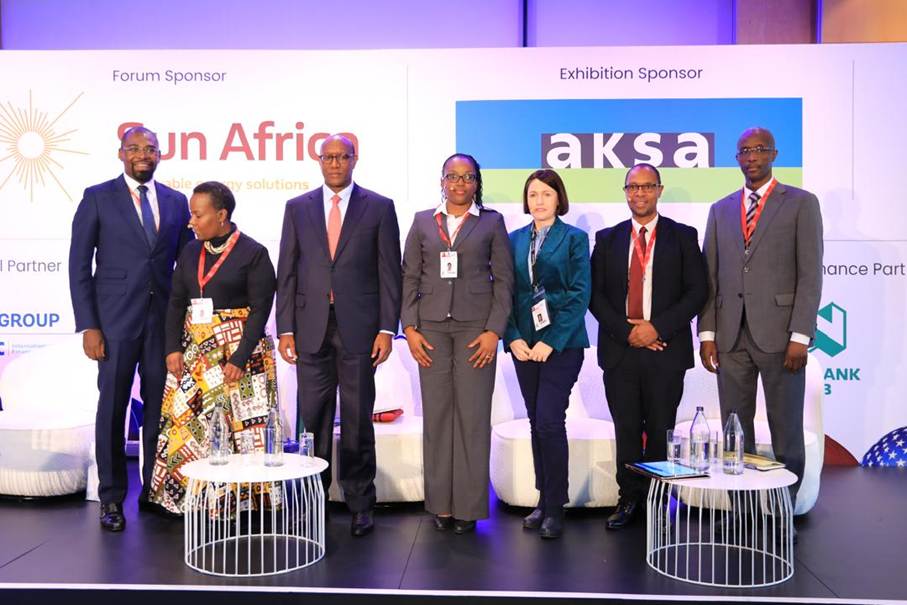
After PAS 2025, we stayed in contact with Gaspar and he sent his leadership team from his company Averi Finance to my office which is ARE’s headquarters in Kinshasa, to better understand the regulatory framework and process for building a transmission line in the DRC. ARE and Averi Finance have been working together since.
After the PAS 2025 panel, Dan Klinck and I had a meeting to further discuss East African Power (EAP) work. We also had a working meeting in Cape Town at aef 2025.
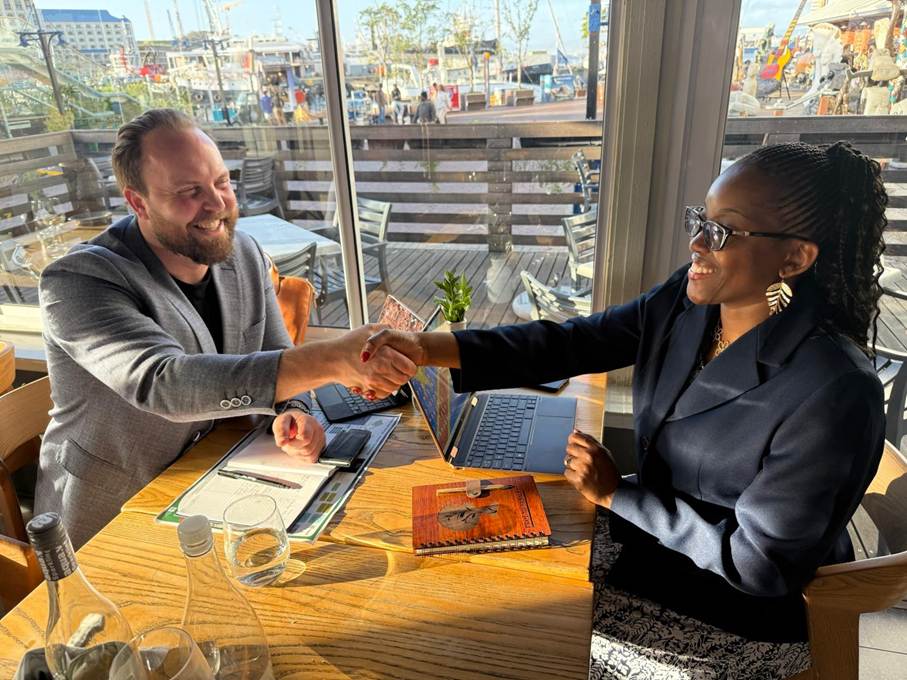
East African Power (EAP) is a Texas-based energy investment and development company with a mandate to deliver 1 GW of reliable power capacity by 2030 in the Democratic Republic of Congo (DRC). In March 2025, Dan Klinck, Founder and Chief Executive Officer of EAP, met with Dr. Ngalula Sandrine Mubenga at EnergyNet’s Power Africa Summit in Washington, DC, to initiate and accelerate the bankability of agreements for Phase I of EAP’s 266 MW solar photovoltaic project located in Kolwezi and Likasi in southeastern DRC.
In partnership with the Trade and Development Bank (TDB) of Kenya, EAP streamlined the final power purchase agreements with SNEL and concession agreements with the Ministry of Energy.
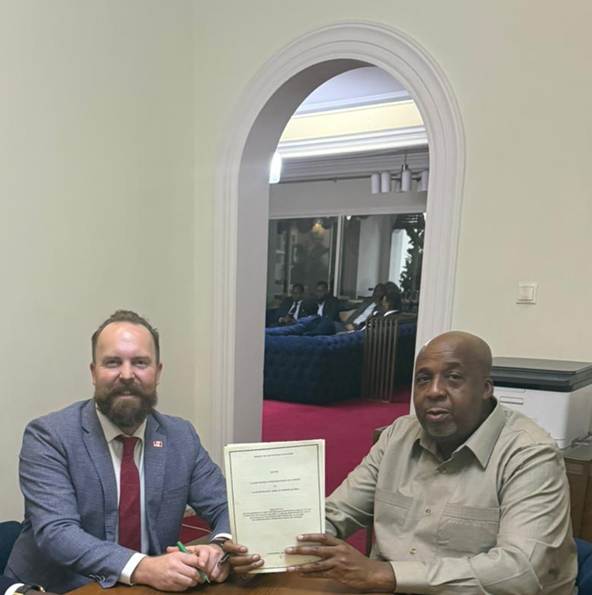
EAP was encouraged to scale the initiative into four phases totaling 1 064 MW (266 MW annually) by 2030. In November 2025, Dan Klinck and EAP’s local partner executed a USD 2 billion framework agreement with the Minister of Energy, Aimé Sakombi Molendo. This agreement accelerates the deployment of energy solutions supporting U.S. companies developing critical mineral projects in the DRC, including the delivery of 100 local mini-grids with the first mini-grids scheduled to become operational in June 2026. EAP and ARE share a common mission to structure bankable energy access agreements that will accelerate the electrification of one million homes across the DRC by 2030.
- As demand for critical minerals accelerates, how is ARE evolving to support the mining sector?
ARE supports the mining sector by facilitating dependable, sustainable, and competitive energy solutions.
To this end, we have established several exchange platforms that bring together regulators, private operators, public institutions, and technical and financial partners through sectoral workshops, technical training sessions, multi-stakeholder dialogues, and consultation forums. These platforms aim to share best practices and identify operational solutions tailored to the needs of the mining sector.
Example: collaboration with the African Development Bank to strengthen the regulatory framework and provide reliable and affordable energy to mines; on-the-ground projects involving Katamba Mining, Green World and Cre Seko to secure electricity access for their operations; and partnerships with CrossBoundary and East African Power to structure financing and accelerate the deployment of mini-grids and sustainable energy solutions.
These platforms help better align energy projects with industrial needs, while ensuring transparency, regulatory stability, and an investment-friendly climate.
- What does success look like for the DRC’s energy sector in the next decade?
Success for the DRC’s energy sector means expanded access to reliable and affordable electricity for all citizens.
This requires the deployment of diversified and innovative energy sources, including hydropower, solar and mini-grids, while strengthening regulatory institutions to support growth and attract investment. Installed generation capacity will need to increase, and electricity access rates must improve.
It also involves creating an ecosystem in which the public and private sectors, local communities and international partners work together. Success will be measured by a DRC where electricity becomes a catalyst for education, health, industry, and agriculture, contributing to regional integration and prosperity.
Example
Initially, in 2020, when we effectively started ARE, the installed capacity was 2 972 MW and in 2025, thanks to our work, the installed capacity of the DRC increased to about 4 133MW, a 39% increase.
The annual energy production went from 12 460 GWh in 2020, to about 16 594 GWh in 2025, a 33% increase.
Indeed, in 2025, ARE processed 115 files covering generation, transmission, distribution, commercialisation, import, and export activities, as well as applications for the certification of electrical installations and eligible customers.
- Generation: 24 projects reviewed totaling 2,272.35 MW, including 17 solar photovoltaic licenses totaling 1,021.37 MW (44.95%) and 7 hydropower concessions (1,250.98 MW, 55.05%), distributed across several provinces.
- Transmission & Distribution: 9-line concessions (70 to 220 kV) and 6 distribution concessions to improve local access.
- Sales & Importation: 8 sales licenses and 7 import applications (898 MW).
- 3 tariff proposals were approved.
- Certification & Eligible Customers: 42 certified installations and 13 recognized eligible customers.
This is a good start. In the next decade, we are pursuing diplomatic and technical engagements at the regional level to promote synergies between regulators, investors, and financial institutions, with a view to developing sustainable and integrated energy solutions across the sub-region. The DRC is inviting investment in electrical infrastructure. Now, more than ever, it is time to build the Inga Project along with small-scale hydroelectric power plants. ARE invites developers of mini-grid and battery storage solutions to invest in the DRC. And finally, the DRC welcomes companies who want to build transmission lines and manage distribution systems. We are building peace, one megawatt at a time. 10 years for now, we hope to achieve “Business for Peace”.