Burundi hydropower programme takes national capacity from 60MW to 109MW
Prime Minister Nestor Ntahontuye opened the 17MW Mulembwe plant on 16 June, finishing a scheme that began with Jiji in June last year. The two run-of-river stations carry 49.5MW between them and are expected to produce 239GWh a year, evacuated to Bujumbura on 80km of new 110kV line.
Burundi’s installed generating capacity has risen from around 60 megawatts to more than 109 with the commissioning of the Mulembwe hydroelectric plant, an increase of roughly 80 per cent in what the country can generate.
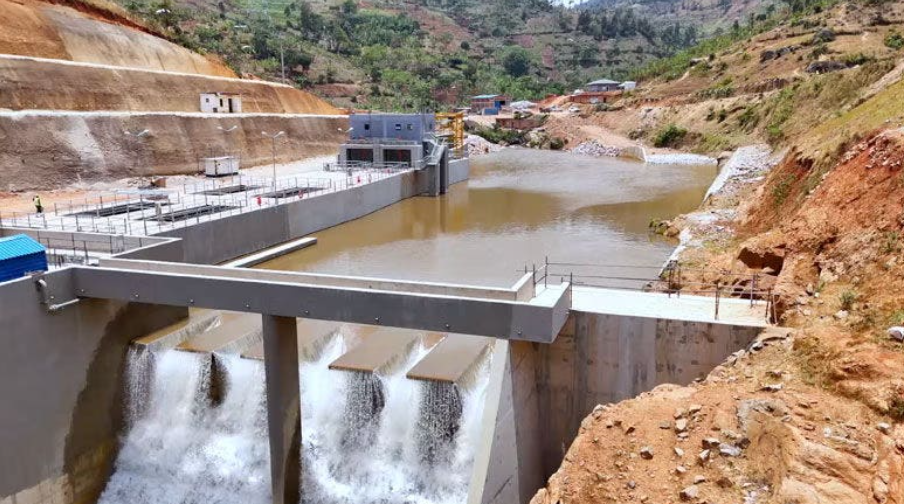
The 17MW plant was inaugurated on 16 June by Prime Minister Nestor Ntahontuye, after nearly twelve years of development and construction. It completes the Jiji and Mulembwe programme, which began supplying power when the 32.5MW Jiji station was inaugurated by President Évariste Ndayishimiye in June last year. The two run-of-river stations sit around three and a half kilometres apart in the southwest of the country.
Together they carry a combined 49.5MW and are expected to produce 239GWh a year, intended to reach 7,000 businesses and 1,700 industrial facilities alongside 15,000 households.
Built into the programme is 80km of 110kV transmission line carrying the output to Bujumbura, which connects to the national grid and to the regional network beyond it. For a system this size, the line matters as much as the turbines, since generation that cannot be evacuated changes nothing for the industrial customers the plants were built to serve.
The complex cost around $320 million. It was delivered through Burundi’s national water and electricity utility REGIDESO with the Ministry of Hydraulics, Energy and Mines, financed by the African Development Bank, the European Investment Bank, the European Union and the World Bank Group. Construction employed an average of around 1,000 workers, roughly 80 per cent of them recruited locally, alongside skills development programmes intended to leave technical capacity behind once the contractors have gone.
Ndiamé Diop, the World Bank’s vice president for Eastern and Southern Africa, said commissioning the plant is a step towards giving households, businesses and public services access to reliable electricity, and described the project as aligned with Mission 300 and with the priorities Burundi has adopted through its National Energy Compact.
Juliette Besnard, senior energy specialist at the World Bank, described the inauguration as the end of years of collaboration between government agencies, development partners and project teams. Officials at the opening were clear that reliable operation and maintenance is what will determine whether 49.5MW built over twelve years still delivers in the next twelve.