EXCLUSIVE: IFC’s Marieme Travaly wants Nigeria’s infrastructure deals to become markets
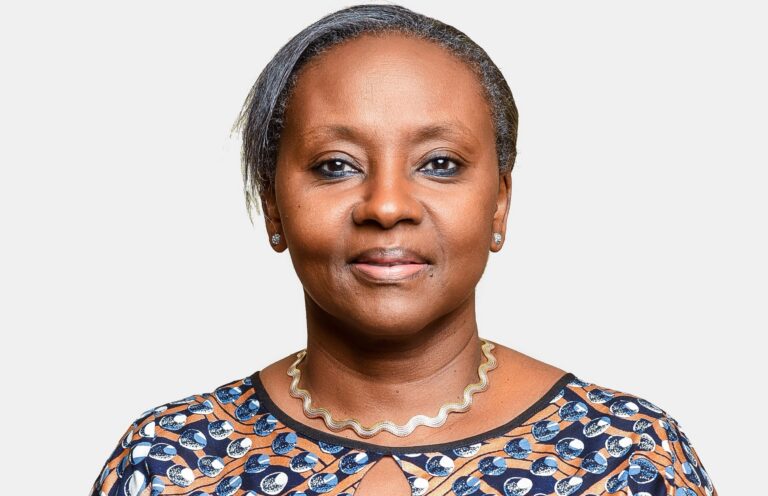
Marieme Travaly, IFC’s Regional Director for Infrastructure and Resources, on where private capital can work in Nigeria and across West, North and Central Africa. In written answers to ENN, she sets out the three areas IFC sees as strongest in Nigeria and explains what makes gas and water projects bankable.
In Lagos at the end of September, IFC signed a $50m subordinated debt facility with InfraCredit, the Nigerian credit guarantor that helps infrastructure projects raise long-term finance in naira. For Marieme Travaly, who leads IFC’s infrastructure work in Nigeria and across West, North and Central Africa, it is one part of a wider aim to build “markets that can attract capital repeatedly and at scale”.
In written answers to ENN ahead of Nigeria NOW! in Abuja on 19 and 20 November, she sets out where IFC sees the strongest openings in Nigeria, and what she would need to see by the end of 2027 to say the infrastructure agenda has moved.
Nigeria is working to bring more private capital into its infrastructure, including power and gas. Where do you see the strongest opportunities for IFC in Nigeria right now, and what would bring more of them to financial close?
Nigeria’s biggest infrastructure opportunity is not a lack of demand. It is how to convert that demand into investable, scalable platforms that can attract private capital. For IFC, three areas stand out:
First, Distributed Renewable Energy. Nigeria has one of the world’s largest electricity access gaps, but also one of the most dynamic private-sector ecosystems. Through our DARES platform, we are helping address one of the sector’s biggest constraints: access to affordable long-term capital. As of September 2026, DARES was on track to provide more than US$160 million to 11 companies, supporting up to 129 MW of new capacity and electricity access for more than 5 million people.
Second, Distribution. The next frontier is not simply adding generation, but improving the quality, reliability, and commercial sustainability of power delivery. Investments in metering, network upgrades, digitalization, loss reduction, and revenue assurance can unlock significant value while improving service for customers. IFC is actively exploring platform approaches to support this transformation.
Third, Local-Currency Infrastructure Finance. One of the most powerful ways to scale infrastructure investment is to mobilize Nigeria’s own institutional capital. Our recent US$50 million facility for InfraCredit is designed precisely for that purpose: to strengthen its ability to crowd in long-term domestic institutional capital into infrastructure sectors ranging from energy and digital infrastructure to transport and climate investments.
Ultimately, what brings more projects to financial close is not just financing. It is strong project preparation, predictable risk allocation, regulatory consistency, and platforms that can be replicated and scaled. IFC’s role is to help bring together Development, Financing, Mobilization, and Risk Mitigation so that Private Capital can move from the sidelines into the sectors that matter most.
The real opportunity in Nigeria is not financing a few successful projects. It is building markets that can attract capital repeatedly and at scale. That is how we move from individual transactions to transformational impact.
Gas is a growing focus across the World Bank Group. How do you see gas fitting into the infrastructure your team finances, and what makes a gas project bankable for IFC?
We see gas selectively as part of a practical energy transition, not as an alternative to renewable energy. In many African markets, gas can help replace more carbon-intensive liquid fuels, provide reliable power to households and industry, and support the integration of growing volumes of solar and wind.
For IFC, a gas project is bankable when it sits within a country’s least-cost energy pathway, has reliable fuel supply and offtake arrangements, strong sponsors, and an appropriate risk-allocation framework. Just as importantly, it must meet IFC’s rigorous environmental and social standards.
What often makes the difference is the broader World Bank Group platform. The World Bank can support sector reforms and enabling frameworks. IFC can provide transaction advice, financing and mobilization, and WBG guarantee instruments can help mitigate political, payment, sovereign, and other project-bankability risks. Together, that helps turn complex projects into investable opportunities.
Ultimately, our goal is to support reliable, affordable, and sustainable energy systems that drive growth and development.
Beyond energy, your remit includes sectors such as water. Where is private capital beginning to work in those sectors, and what does a project need to attract it?
Water is a sector where the challenge is often not a lack of capital, but a lack of bankable projects. Private capital can play a much larger role when utilities are stronger, institutions are credible, and projects have sustainable commercial frameworks.
That is why the Water Forward initiative is so crucial. It combines sector reforms, project preparation, blended finance, guarantees and risk mitigation instruments to help turn water projects into investable opportunities, creating conditions where private capital can be mobilized at scale. More broadly, we are moving away from a model that relies primarily on sovereign lending toward one that mobilizes a broader ecosystem of public and private finance. Our objective is not simply to provide funding, but to act as a catalyst, helping structure solutions that crowd in commercial investment and maximize development impact. This strategy aims to improve water security for 400 million people by 2030.
You cover West, North and Central Africa. Where is the pipeline strongest right now, and where is it thinner than the headlines suggest?
Energy remains our strongest infrastructure pipeline, from distributed renewable energy and transmission and distribution to gas-to-power and utility transformation. Digital infrastructure is also a major growth area, driven by demand for connectivity, data, and mobile services.
Where the pipeline is often thinner than the headlines suggest is in sectors like water and transport. The demand is there, but turning projects into bankable transactions requires stronger project preparation, sustainable commercial frameworks, and effective risk allocation.
The challenge in Africa is rarely a shortage of opportunities. It is converting strong demand into investable projects that can attract private capital at scale.
What do international investors most often misread about the risk in your region?
What investors often misread is that they view Africa’s risks as a single story. In reality, risks differ significantly by country, sector, sponsor, and project structure.
The key question is not whether risk exists, but whether it can be properly allocated and mitigated. With the right contractual frameworks, guarantees, and partners, many projects that initially appear high risk become highly investable.
In my experience, investors who take a nuanced view of the market often find opportunities where others see only risk.
What has to be true by the end of 2027 for you to say the infrastructure agenda has moved?
2027 is just around the corner in infrastructure terms, so success will not be measured only by what has been built, but by whether we have fundamentally changed the trajectory.
By the end of 2027, I would like to see more private capital flowing into infrastructure, more projects reaching financial close, and platform approaches such as distributed energy, power distribution, and domestic capital-market financing scaling beyond individual transactions.
Most importantly, I would like to see evidence that these investments are improving people’s lives: more reliable electricity, better connectivity, stronger businesses, and more jobs. Ultimately, success will be when a transaction becomes a market, and when one project creates the conditions for many more to follow.