From Energy to Water Security: Hashem Ghabashi of Acwa on Africa’s Industrial Transformation
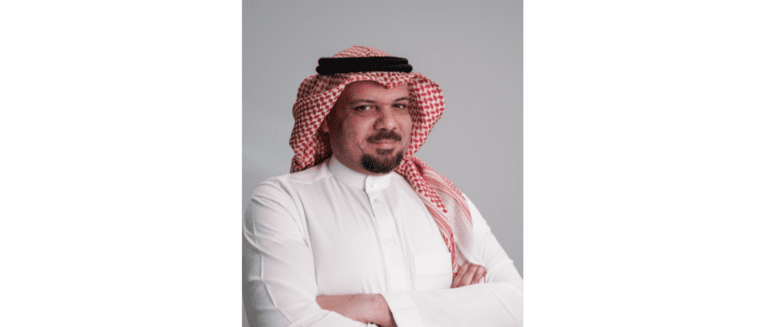
As momentum builds towards the Africa Energy Forum 2026, held under the theme “Building Africa’s Industrialised Future,” Acwa’s President for Africa, Hashem Ghabashi, shares the company’s perspective on supporting Africa’s industrialisation and energy transition, as well as the key drivers behind its growing engagement across the continent, including the growing importance of integrated energy and water solutions.
Could you share how Acwa sees its role in supporting Africa’s industrialisation and energy transition and what drives the company’s engagement across the continent?
Acwa sees itself as a long-term partner in building the energy foundations of Africa’s industrial future. Industrialisation and energy transition go hand in hand, and reliable, affordable and sustainable power is the key enabler.
Across the continent, we develop large-scale, bankable energy and water infrastructure that supports industrial growth, strengthens grids, and improves energy security. Our focus on competitively priced renewables, combined with storage and hybrid solutions, allows countries to expand access while accelerating decarbonisation. Getting there requires integration – power, desalinated water are increasingly interconnected pillars of industrial competitiveness – and Africa needs partners who can deliver across all three.
We are equally committed to local value creation, skills development, and partnerships that deliver lasting economic and social benefits. Our localised operating model empowers African leadership with accountability and decision-making closer to the market. Ultimately, the key challenge remains bankability: projects advance only when financing, offtake certainty, and execution credibility align, and this is where Acwa’s track record makes a difference.
GCC countries are emerging as some of the most active new players in Africa. What advantages do these companies, such as Acwa, bring to infrastructure and energy projects in Africa, particularly in terms of financing, technology transfers and job creation?
GCC companies bring scale, speed, and long-term capital to Africa’s infrastructure landscape. A key advantage is access to patient, competitive financing, which helps large projects reach financial close more efficiently.
GCC developers, including Acwa, also benefit from having delivered large-scale projects in their home markets. This scale creates significant procurement advantages, allowing access to competitive equipment pricing and supply chains. These efficiencies are then transferred to African projects, helping reduce overall project costs and improve tariff competitiveness. bring proven technical expertise in utility-scale renewables, energy storage, hybrids, and water solutions, with experience delivering projects in challenging markets.
Our integrated delivery model keeps the same team involved from development through construction and into long-term operations, and that’s how genuine skills transfer happens, not through one-off training sessions. This knowledge is transferred through local partnerships and capacity building.
It’s important to also note that GCC developers take a long-term owner-operator approach: creating jobs, developing skills, and strengthening local supply chains, so that infrastructure generates lasting community and economic value. Through Acwa Operations, our dedicated O&M platform, we maintain and operate assets for decades, which is a commitment few developers can match.
What are some of Acwa’s key renewable energy projects currently underway across Africa, and which regions of the continent are emerging as the most strategic for future development?
Acwa has built a strong and growing renewable energy footprint across Africa, with flagship projects in key strategic markets.
In Egypt, we have developed over 2 GW of wind and solar capacity in operation, and we are now advancing large-scale wind projects aligned with the country’s long-term energy transition strategy. These contribute to energy security, decarbonisation, and sustainable growth, reinforcing our role as a long-term partner in Egypt’s evolving energy mix.
In South Africa, projects such as Redstone and Bokpoort are landmark examples of concentrated solar power with storage, demonstrating the value of dispatchable renewables for grid stability and industrial demand.
In Morocco, we continue to expand through utility-scale CSP, solar PV, and storage, supporting the country’s ambition to become a regional clean energy and industrial hub.
Beyond these core markets, West Africa is emerging as a key strategic growth region, where we are actively developing new opportunities to further strengthen our continental presence.
Expanding renewable energy in Africa is crucial, but affordability remains a major challenge. How does Acwa balance scaling clean energy with ensuring that power remains affordable and accessible across the continent?
Affordability is at the core of Acwa’s renewable strategy in Africa. Scaling clean energy only works if power remains competitive, accessible, and bankable and the main challenge across the continent is often risk allocation rather than ambition.
We address this through cost leadership, developing large utility-scale projects and leveraging global procurement to deliver low tariffs. Equally important are smart financing structures, where we work with governments and multilaterals to de-risk projects and reduce the overall cost of power through long-term PPAs. Acwa mobilises over USD 9 for every dollar invested, helping crowd in international capital at scale.
We also prioritise reliability by integrating renewables with storage, hybrid, and dispatchable solutions,. When technology, financing, and local value creation come together, clean and affordable energy becomes not only possible, but scalable.
Acwa is currently developing a 400,000 m³/day seawater desalination plant north of Dakar through a PPP with the Senegal Government and the National Water Company of Senegal, SONES. As one of the largest desalination projects in West Africa, could you briefly outline the vision behind this initiative and the impact you expect it to have on water security and sustainable development in Senegal and the wider region?
Water security is one of the most under-recognised strategic priorities globally. Desalination must be viewed as core infrastructure, not simply utility supply. That’s the lens through which we approach the Dakar project. As the world’s largest private desalination company – producing 9.8 million cubic meters daily for 36 million people – we bring unmatched scale and operational experience to this initiative.
Acwa’s vision for the Dakar desalination project is expected to supply up to 40% of the water demand in the greater Dakar region, and to secure a long-term, climate-resilient water supply for Senegal while setting a new benchmark for sustainable infrastructure in West Africa, significantly strengthening national water security in a country with limited natural freshwater resources. Desalination provides a reliable and increasingly cost-competitive alternative to long-distance water transfers, such as from the Senegal River.
Importantly, the project is powered by dedicated renewable energy, primarily solar PV, which enhances its sustainability while helping maintain competitive tariffs.
At the end of last year, Acwa signed a cooperation framework with the AfDB to help accelerate the financing of up to $5 billion in sustainable energy and water projects across Africa between 2025 and 2030. How will this partnership work in practice, and what types of projects or countries, particularly in sub-Saharan Africa, do you see as priorities?
Acwa’s target is USD 250 billion in assets under management by 2030 – tripling our current portfolio. Africa is central to that trajectory, and this partnership with the African Development Bank is designed to accelerate it.
The framework works practically by combining Acwa’s project development and execution expertise with AfDB’s balance sheet strength, concessional financing tools, and deep country knowledge. Together, we aim to de-risk and accelerate bankable renewable energy, water, and desalination projects, crowding in private capital at scale. We already have formal local content programs across our African markets, including supplier development, workforce training, and targeted localisation and these will scale alongside the partnership.
ACWA joins the Africa Energy Forum (aef) 2026 as a Lead Sponsor, and Hashem Ghabashi joins the speaker delegation alongside senior colleagues from across the company. Together, they will contribute to discussions around large-scale infrastructure, industrial growth and Africa’s evolving energy and infrastructure landscape.