
Powering Africa’s Industrialised Future: A Conversation with Petrodex COO Mahmoud Merhi
As Africa accelerates its path toward industrialisation, the question of reliable and scalable energy supply remains central. In this context, Petrodex has emerged as a key player in integrating power generation, trading and infrastructure development across the continent.
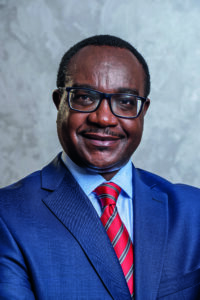
We spoke with Mahmoud Merhi, COO of Petrodex, about the company’s approach to powering energy-intensive industries, the growing importance of regional electricity markets, and the role of private sector investment in supporting Africa’s industrial and economic transformation.
At aef 2026, the main theme is “Building Africa’s Industrialised Future.” How is Petrodex addressing the challenge of ensuring continuous energy access for industrial users?
Africa’s industrialisation will not be built on aspiration alone: it will be built on reliable power. Energy-intensive sectors such as mining, manufacturing and mineral processing require continuous, dispatchable and predictable electricity.
At Petrodex, this challenge is addressed by integrating power generation, cross-border trading, infrastructure development and market optimisation. Rather than relying on a single solution, the company operates across the entire energy value chain.
Currently, Petrodex moves approximately 200–270 MW of electricity daily across the SAPP network, dynamically allocating supply to stabilise industrial demand and reduce exposure to regional generation volatility. By balancing different energy sources, such as hydro and solar, the company ensures greater resilience in supply.
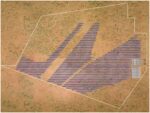
In Zambia, Petrodex signed a 400MWac MoU with ZESCO. The Mailo Solar Plant, with a capacity of 108 MWp, is the first project under this initiative. Notably, the initial 25 MWp phase was delivered in under a year, reflecting a strong focus on rapid deployment. The remaining capacity is expected online in early H2 2026.
Unlike traditional captive generation models, these projects are developed on a merchant basis, allowing electricity to be integrated into a broader trading portfolio and dynamically allocated across markets.
Beyond generation, Petrodex has also launched Zampower to address grid congestion and voltage instability, ensuring reliable power delivery to industrial users.
Ultimately, industrial growth requires more than megawatts: it requires coordination between generation, infrastructure, markets, and finance. This is where Petrodex brings value.
You mentioned the Mailo Solar Plant – what key lessons from this project are shaping your approach to scaling renewable energy?
The Mailo project demonstrated that speed and precision are achievable when there is strong alignment between developers, utilities, financiers and regulators.
Several key lessons have emerged. Early stakeholder alignment significantly accelerates execution, while equity-backed financing enables faster mobilisation. The use of advanced solar tracking technology has also improved energy yield and project bankability.
Perhaps most importantly, renewable projects must be integrated into broader grid and trading strategies. Solar capacity alone is not sufficient, effective integration is essential.
Scaling renewables across Africa will therefore require coupling solar generation with battery storage, transmission planning, and regional market access. Mailo served as a proof of concept. The focus now is on scaling.
Why has Petrodex chosen Sub-Saharan Africa as its primary investment focus?
Energy investment follows demand, and Sub-Saharan Africa presents one of the most compelling opportunities globally due to a unique convergence of structural factors.
The region combines strong industrial and mining demand with persistent energy deficits, creating immediate need for reliable power solutions. At the same time, regional power pools such as SAPP are becoming increasingly sophisticated, enabling cross-border optimisation and more efficient use of generation assets.
Unlike mature markets where growth is incremental, Sub-Saharan Africa offers the potential for direct and immediate economic impact. Every additional megawatt supports industrial production, strengthens export competitiveness, and enables value-added activities.
This is particularly significant given the region’s vast reserves of critical raw materials, including copper, cobalt, lithium, and bauxite, which are essential to the global energy transition. Ensuring reliable energy supply in these mining corridors is therefore not only commercially attractive but strategically important for global supply chains.
Which African markets currently offer the most promising opportunities for energy infrastructure investment?
The Southern African Power Pool region stands out as particularly promising, driven by increasing government efforts to modernise energy systems, strengthen interconnections, and attract private investment. Within this region, Zambia and the Democratic Republic of Congo are especially significant. Both countries are central to the Copperbelt, one of the world’s most important mining regions, and have undertaken reforms to facilitate private-sector participation in energy markets.
Beyond Southern Africa, West Africa is also gaining momentum, particularly through regional initiatives such as the CLSG corridor, which enhances cross-border electricity flows. Ultimately, the most attractive markets are those where three factors converge: strong industrial demand, interconnected grids, and regulatory openness to private investment.
How does Petrodex ensure reliable power supply for energy-intensive mining operations?
Mining operations depend on uninterrupted baseload power, as any disruption directly impacts output and revenue. Petrodex addresses this through a diversified, portfolio-based approach rather than relying on single assets. This includes merchant-oriented generation integrated into a broader trading portfolio, allowing dynamic allocation of power across markets.
The strategy combines diversified energy sources, cross-border optimisation through SAPP, dedicated infrastructure solutions, and robust commercial frameworks that ensure financial sustainability. As the company expands beyond its current 200 MW footprint, the ability to optimise power flows across regions becomes increasingly valuable.
In modern energy markets, reliability is achieved through diversification, interconnection, and flexibility – not dependence on a single source.
How does supporting the mining sector contribute to broader economic development?
Mining remains the economic backbone of many African countries. Reliable energy supply to this sector has far-reaching implications.
When mining operations run efficiently, export revenues stabilise, foreign currency inflows increase, and government fiscal positions strengthen. This, in turn, supports broader industrial ecosystems and supply chains.
Moreover, mining demand often underwrites critical infrastructure, such as transmission lines and substations, that later benefits other industries and communities. Supporting the mining sector is therefore not an isolated intervention; it is a catalyst for wider energy security and economic resilience.
What are Petrodex’s top priorities for the next four years?
The company’s next phase is centred on scale and optimisation, with four clear priorities.
First, Petrodex aims to scale renewable generation by advancing its 600 MWac solar pipeline across Zambia and the Democratic Republic of Congo, while expanding into both Southern and West Africa.
Second, it plans to strengthen regional trading platforms by increasing participation in day-ahead and intra-day SAPP markets, leveraging interconnections to optimise supply across borders.
Third, the company will invest in transmission and distribution infrastructure, focusing on key industrial corridors and last-mile connectivity.
Finally, Petrodex is targeting expansion into West Africa through the CLSG interconnection corridor, with the objective of replicating its Southern African trading model.
The broader ambition is to evolve from a regional power trader into a continental power optimiser, connecting generation, infrastructure, markets, and industrial demand.
- Monie Captan, Deputy CEO, West Africa, Petrodex will be speaking at aef this year.