Seriti Green’s Ummbila Emoyeni: a project of hope for Mpumalanga
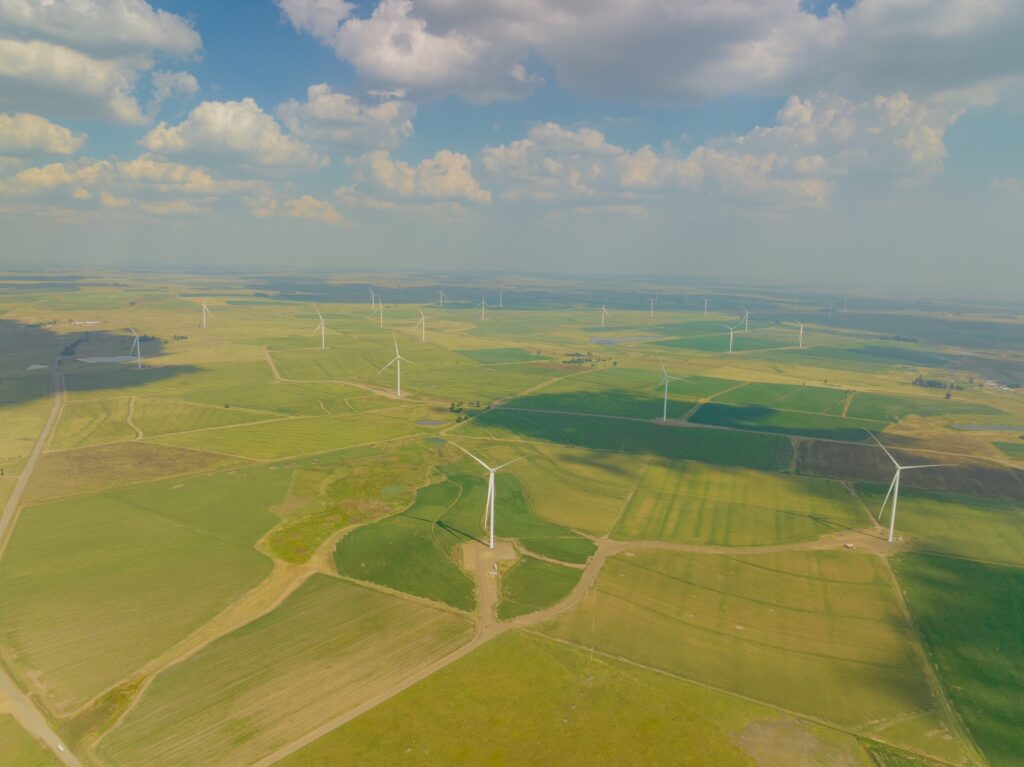
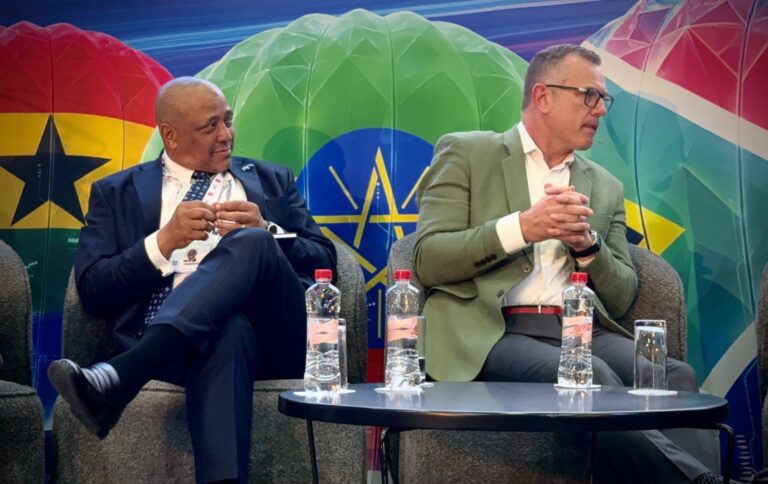
Building South Africa’s largest wind project in the heart of its coal country is not a contradiction, it is the whole point, according to Peter Venn, CEO of Seriti Green, speaking to ENN at the Africa Energy Forum.
Mpumalanga’s coalfields have supported people for generations, Venn said, with around 90,000 people relying on them for their income and, given how many dependents each wage supports, perhaps a million lives resting on the sector. To leave a province with that much grid and that much energy heritage out of the move to wind, solar and battery storage would be to work against the very people who built South Africa’s power. So Seriti Green built where it matters. The Ummbila Emoyeni project is surrounded by 150,000 people within ten kilometres, in the towns of Davel, Bethal and Morgenzon, and 54% of its workforce comes from those towns. For Seriti Green, Venn was clear, local means within ten kilometres of the project, not a town twenty-five kilometres down the road.
That closeness shapes how the company thinks about skills. Many of the abilities a wind farm needs already exist in the coalfields, Venn explained. Building a road on a wind site is much the same as building one on a coal mine, and the heavy-lifting and rotating-equipment skills transfer directly, so Seriti Green is reskilling conveyor engineers from the mines into rotating-equipment specialists on the wind farm. He estimated that around 70% of the skills a wind farm requires can be found natively in the coal sector, drawing on the engineering base built up across Eskom’s power stations, the mines and Sasol.
Asked why a third of the power runs Seriti’s own mines, Venn was candid that it is both a responsible move and a commercial one. The mines carry emissions the group wants to bring down, and they earn green credits as they shift away from coal-fired power, but it is also simply cheaper energy. Having the mines take the first project’s output, he said, gave Seriti Green the speed to market that got the whole venture moving.
On what Ummbila Emoyeni will mean for the province, Venn called it a project of hope, the first utility-scale renewable plant commissioned in Mpumalanga and proof that it can be done. Seriti Green opened the Port of Richards Bay to receive the turbines, opened the road corridor up to Mpumalanga to carry them, connected to the grid and skilled people to run it. To show what that means on the ground, he pointed to Freddie, an engineer who once left Morgenzon for Johannesburg because there was no work at home. Freddie now runs a wholly black-owned company building the project’s foundations and employing more than a hundred people. For that to last, Venn said, the province needs more projects than one, and as a proud pan-Africanist he sees mining, agriculture and renewables as the routes to bringing real jobs to rural Africa.
Tying it to the forum’s theme of building Africa’s industrialised future, Venn separated two things. First, the construction work that comes from cutting permitting times and getting more renewable capacity into the ground, with the right permits on time, he believes Seriti Green alone could employ six to eight thousand people over the next decade. Second, the cheap, steady electricity that renewables paired with battery storage can put on the grid, which is what lets a country industrialise. He pointed to the closure of the Mozal smelter in Mozambique, and the tens of thousands of jobs he said were lost with it, as a warning of what happens when that power is not there.
On AEF itself, Venn was warm, crediting Simon Gosling and Shiddika Mohamed with a wonderful event and noting he was glad to have it back in Cape Town, where he lives. As he put it, he does a year’s worth of work during the week of the forum and another year’s worth across the rest of the year, because the right people, the decision-makers, are all in the same room.