
The grid needs a generation of builders
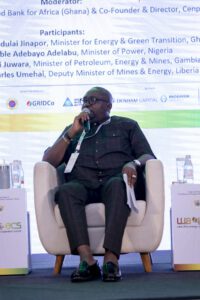
South Africa’s IPP Office has delivered 1,164km of new transmission under the first phase of its programme, and at AEF its head of strategy Niveshen Govender and the electricity ministry’s Mvumikazi Vimbani set out what scaling the transmission development plan demands next, from procurement to the engineers who make it real.
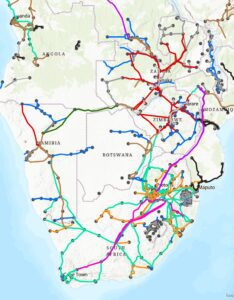
South Africa’s grid expansion has a first-phase number to show for itself: 1,164km of new transmission already built under the IPP Office’s programme, the concrete beginning of the build-out mapped in the country’s transmission development plan. At the Africa Energy Forum, the people running that machinery talked less about the steel and more about the system, and the workforce that delivers it.
Niveshen Govender, the IPP Office’s head of strategy, placed the programme inside the architecture that makes it work. “The IPP Procurement Programme doesn’t exist in a vacuum,” he told the forum’s workshop. “It’s governed by policy, implemented by instruments such as the IPP Office, operationalised by the private sector and created for future generations.”
That architecture is now carrying more weight than it has ever held. “South Africa’s energy industry is expanding rapidly,” Govender said, “and with that comes new opportunities, but also new responsibilities and new challenges.”
What the expansion has already produced is an industry that did not exist a generation ago. “Before, we didn’t have a renewable energy industry or a renewable energy engineer. Today we do,” said Mvumikazi Vimbani, policy analyst at South Africa’s Ministry of Electricity and Energy, describing a sector established out of need and shaped by the policy built around it. The wind technicians retraining from coal on Seriti Green’s sites in Mpumalanga, and the 500 learners a year moving through Siemens Energy’s Power Academy, are the same story told from the classroom.
The plan’s next phases will ask for far more than its first, more lines, more substations, and more of the procurement discipline that turned the IPP programme into one of the continent’s most studied models. The panel’s answer to what scaling requires was not a technology and not a tariff.
For Vimbani, the constraint and the opportunity meet in the same five words. “We need people to build power.”