A quarter of Rwandan households get their electricity without touching the grid
Off-grid systems accounted for 25% of national connectivity against 59.6% on the grid, according to Rwanda Energy Group. A results-based programme backed by the African Development Bank and the Asian Infrastructure Investment Bank now stands at $300 million.
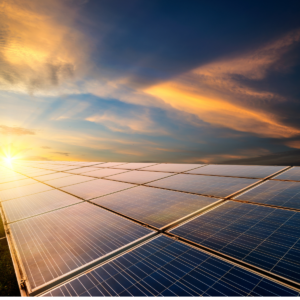
Rwanda Energy Group put cumulative household connectivity at 84.6% as at July last year, of which 59.6% was grid-connected and 25% ran on off-grid systems, mainly solar. That second figure is the one worth sitting with. In most markets off-grid is described as a stopgap until the wires arrive. In Rwanda it is a quarter of national electricity access and a deliberate policy choice.
What made it work was the currency. In 2017 the government established the Rwanda Renewable Energy Fund with $48.94 million from the Climate Investment Funds, hosted at the Development Bank of Rwanda, and used it to open credit lines in Rwandan francs for commercial banks and savings and credit cooperatives. Households and small businesses could then borrow locally to buy solar systems without anyone in the chain carrying dollar exposure. The fund also financed mini-grid developers directly.
The policy decision came earlier, during the elaboration of the country’s second Economic Development and Poverty Reduction Strategy, when the government moved to diversify away from grid-led electrification. Rwanda Energy Group produced a national electrification plan mapping every area to be electrified and the technology to be used in each, with households beyond planned grid coverage directed towards mini-grids and solar home systems.
The programme has since scaled considerably. The African Development Bank approved a $200 million loan in July 2025, and on 5 February confirmed an addendum formalising a further $100 million from the Asian Infrastructure Investment Bank, taking the Energy Sector Results-Based Financing Phase II programme to $300 million. The Bank administers the AIIB loan and coordinates delivery, with money released only against independently verified results.
The targets are specific. Phase two is to add 200,000 grid connections and 850 commercial users, 50,000 off-grid connections, clean cooking devices for 100,000 households and 310 public institutions, and street lighting along 200km of roads in secondary cities. It follows a first phase that reached at least 370,000 households through off-grid solutions alone. Implementation sits with the Ministry of Infrastructure through Rwanda Energy Group, alongside the Energy Development Corporation and the Energy Utility Corporation.
The programme is anchored on Rwanda’s Energy Sector Strategic Plan for 2024 to 2029 and on Vision 2050, which seeks universal access to modern and sustainable energy services by 2035. What the model demonstrates is that off-grid can be financed as infrastructure rather than as aid, provided the credit reaches the household and the lending sits in the currency the household earns in. Both of those are harder to arrange than the panels.
Photos: Unsplash