South Africa electricity capacity to more than double under the 2025 plan
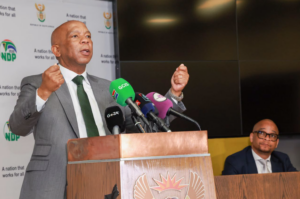
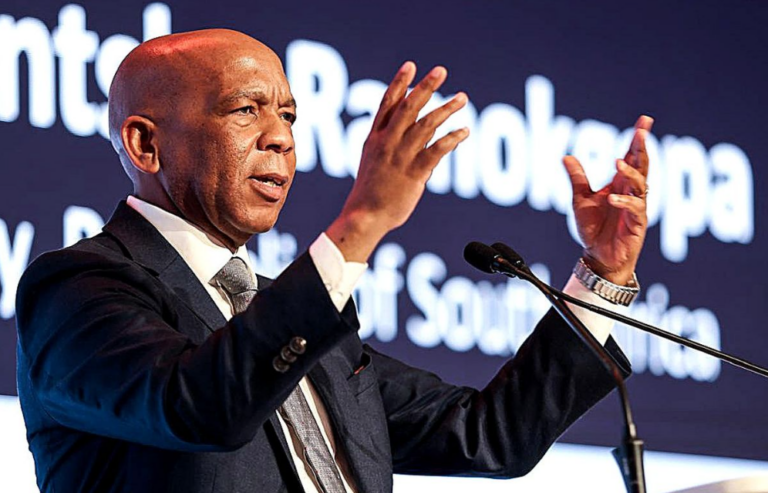
Speaking at the Manufacturing Indaba in Johannesburg, Dr Kgosientsho Ramokgopa set out an addition of 105GW alongside 14,500km of new transmission lines over the next decade. His pitch to the room was that the towers, transformers, cables and batteries this requires should come from domestic manufacturers rather than imports.
South Africa’s installed generation capacity stands at 51GW. At the 13th Manufacturing Indaba in Johannesburg on 14 July, the Minister of Electricity and Energy, Dr Kgosientsho Ramokgopa, told the room the country intends to add 105GW on top of it. “We are going to grow exponentially,” he said.
The addition follows the Integrated Resource Plan 2025, which sets out 105GW of new generation by 2039, with 67GW of that renewable and further contributions from nuclear and other sources. Building it requires a grid that can carry it, and the Transmission Development Plan commits the country to roughly 14,500km of new transmission lines over the coming decade.
Ramokgopa’s argument to the manufacturers in front of him was about who supplies that build. A programme on this scale needs transmission towers, transformers, cable products and batteries in quantities the domestic industry could serve, and he framed the infrastructure spend as demand waiting for local producers rather than an import bill.
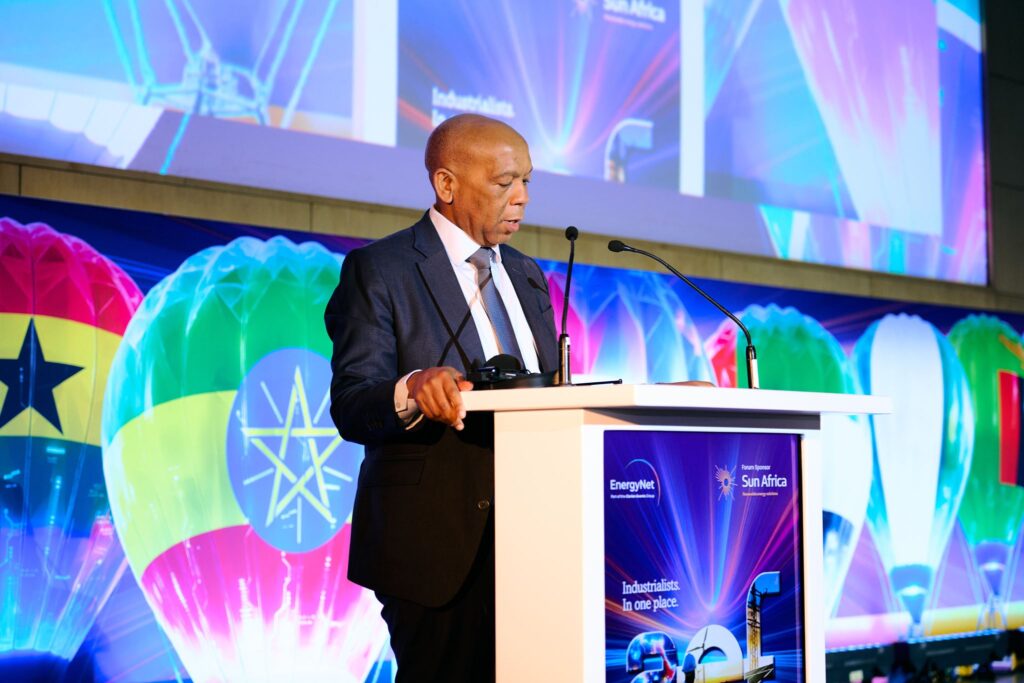
The case has a longer arc. At the Africa Energy Forum in Cape Town in June, Ramokgopa opened proceedings with the argument that Africa is not asking the world to finance dependency, but to invest in the greatest growth opportunity of the 21st century. In Johannesburg he was making the domestic version of the same point, that the build is the opportunity rather than the cost of catching up.
Whether the industrial half follows the generation half is a separate question from whether the megawatts arrive. Local content has been part of South African energy procurement for years, and the record has depended heavily on whether order books stayed full long enough for factories to justify the investment. What makes the transmission programme different is its duration, since 14,500km of line is a decade of orders rather than a single procurement window.
For the rest of the continent, the execution is the part worth watching. A grid build of that length, ordered from domestic suppliers, would be the working proof of the argument Ramokgopa took to Cape Town, that African energy infrastructure is an industrial opportunity for the continent rather than a bill it has to meet.
Photo: Steven Booth / Manufacturing Indaba