
Shell and Chevron sign MoU for Ghana’s South Deepwater Tano block
Ghana has signed a memorandum of understanding with Shell and Chevron covering exploration and production rights over the South Deepwater Tano Cape Three Points block, including the appraisal of the existing Nyankom discovery as the country seeks to revive upstream investment.
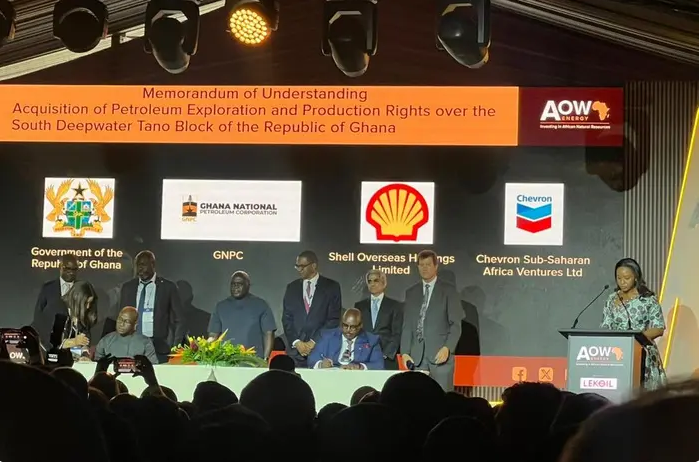
The agreement brings the two international majors into the appraisal of the Nyankom discovery, which was made by AGM Petroleum in 2019 before the company relinquished the block in 2023. The acreage covers around 3,482 sq km in the deep-to-ultra-deepwater Tano Basin, with water depths approaching 3,500 metres.
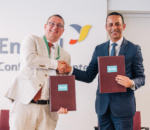
The MoU was signed on 1 September by Ghana’s government, GNPC, GNPC Explorco, Shell Overseas Holdings and Chevron Sub-Saharan Africa Ventures. Shell has described it as a non-binding framework for further negotiations and the development of a future petroleum agreement, subject to the necessary approvals.
The block’s immediate attraction is the existing discovery. AGM’s Nyankom-1X well encountered oil in two reservoirs, giving the incoming partners an opportunity to assess an existing find alongside wider exploration across the acreage. The parties have not yet disclosed their equity interests or detailed work programme.
The agreement comes as Ghana looks to revive upstream investment while production continues to fall. Oil output dropped from 48.24 million barrels in 2024 to 37.3 million barrels in 2025, according to Africa Oil+Gas Report.
It is also part of a wider return of international interest in Ghanaian offshore acreage. Earlier this month, Eni and Vitol signed MoUs covering the GH-WB-3 and GH-WB-8 blocks, with the agreements intended to pave the way for future petroleum agreements.
For Ghana, the next stage will be more significant than the MoUs themselves. The agreements still need to translate into petroleum agreements, work programmes and ultimately exploration and appraisal activity before they can deliver new production.
That makes South Deepwater Tano a test of whether renewed interest in Ghana’s offshore resources can move from agreement to drilling and, eventually, barrels.