TotalEnergies targets June 2027 for Uganda first oil export via heated artery
TotalEnergies chief executive Patrick Pouyanné is anchoring East African infrastructure spending in the Albertine rift basin, where commercial production is now targeted for June 2027. As green funding mandates squeeze Western commercial syndicates, the development relies on a 1,443km heated artery to bring its newly branded “Pearl Sweet” crude to market via Vitol.
On the western rim of the Albertine Graben, civil engineering teams have laid the concrete foundations for a 230,000 barrel-per-day production hub. The Tilenga and Kingfisher projects represent the front line of an inland oil infrastructure deployment that relies entirely on regional transit agreements. For decades, East African reserves remained stranded by the geography of a landlocked basin. The current build program shifts the debate from resource estimation to regional midstream logistics.
TotalEnergies holds a 56.7% operating stake in the Tilenga development alongside CNOOC and the Uganda National Oil Company. Patrick Pouyanné has maintained capital allocation commitments to the project despite international commercial banking syndicates withdrawing debt facilities under climate compliance guidelines. The state-backed financial architecture of joint-venture partners has filled the funding lines, replacing Western commercial equity with direct engineering procurement capital.
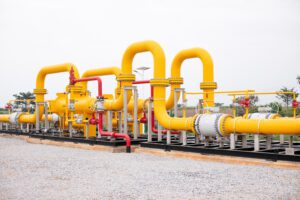
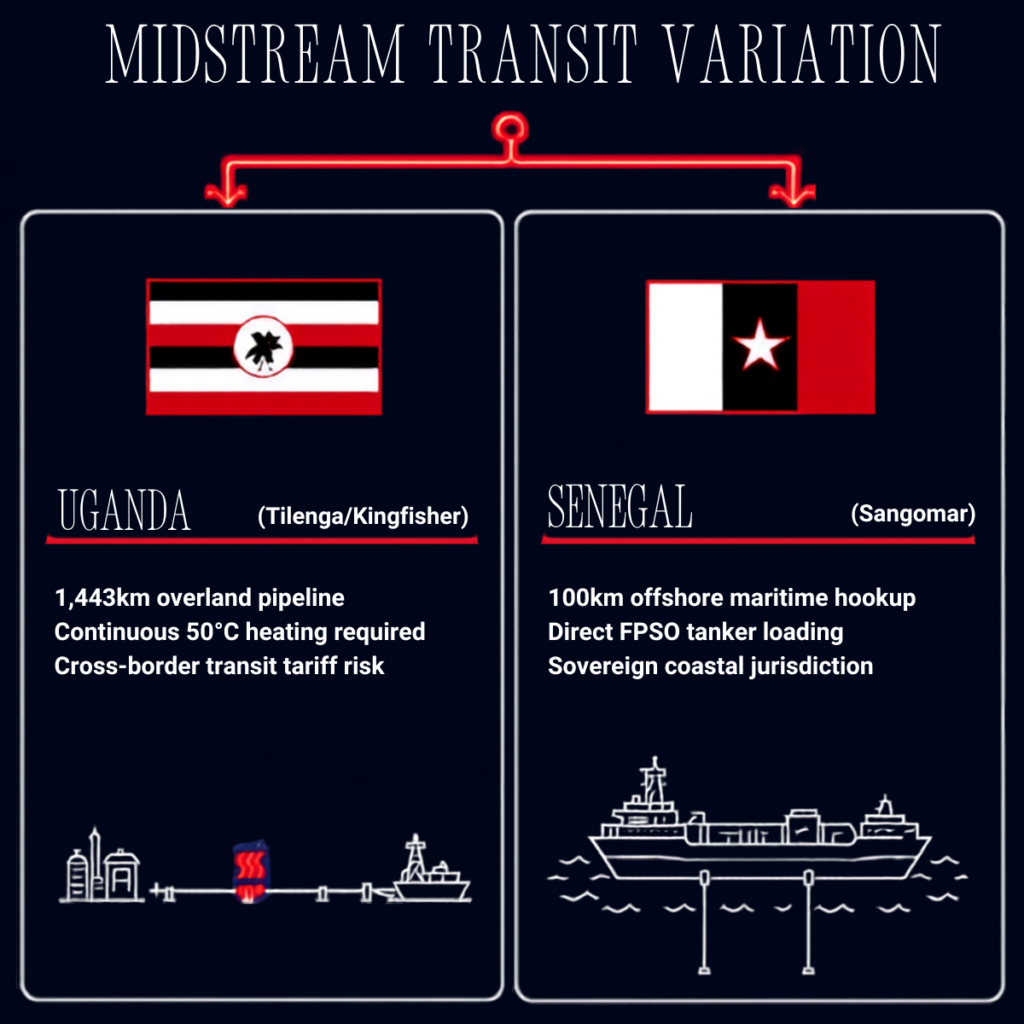
The waxy consistency of Albertine crude requires a continuous heating baseline of 50 degrees Celsius along the entire transit route. The East African Crude Oil Pipeline is a 1,443km insulated steel corridor, currently tracking at 92.7% overall completion, running from western Uganda to the marine loading terminal at Tanga port in Tanzania. Principal repayments on the project’s $1.33 billion in loans are scheduled to begin in December 2026, meaning transport tariffs must flow swiftly ahead of the new mid-2027 commercial window.
A parallel deployment on the Atlantic coast demonstrates the structural advantage of deepwater maritime assets. Off the coast of Dakar, the Sangomar field utilizes a permanently moored Floating Production Storage and Offloading vessel to cycle output directly into international shipping lanes. The offshore model eliminates the requirement for overland midstream corridors, community displacement management, and multi-state pipeline security agreements. Woodside Energy reached first oil at Sangomar within four years of project sanction, using maritime infrastructure to bypass terrestrial logistics entirely.
The completion of the heated pipeline corridor remains the absolute determinant of East African market entry. Uganda expects its first commercial export volumes to clear the Tanga marine terminal by the conclusion of the updated production window in June 2027. The contrast between the terrestrial engineering gridlock of the river basin and the rapid maritime deployment of the Senegalese shelf will determine how international capital assesses the risk profile of the next generation of African upstream projects.