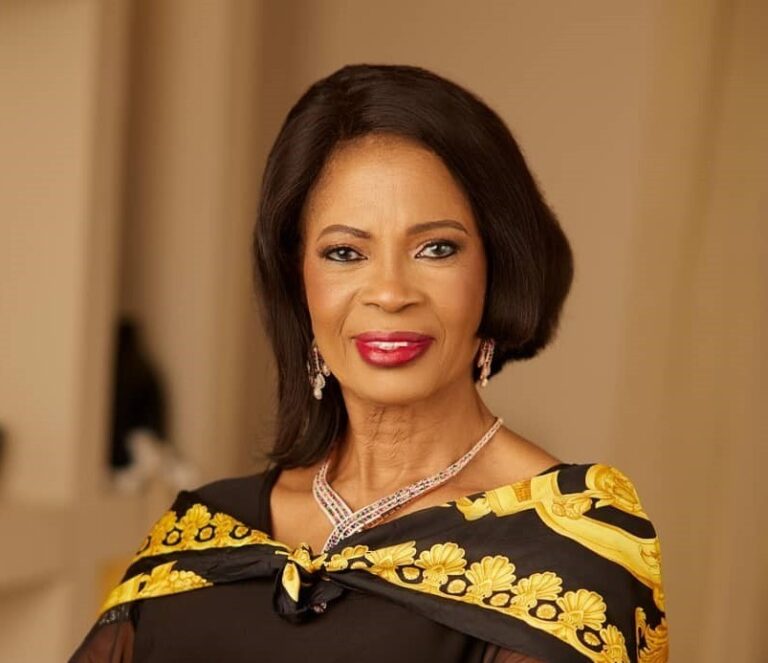
EXCLUSIVE: WIMIN’s Janet Adeyemi wants Nigerian women to own a stake in the mine-to-market chain
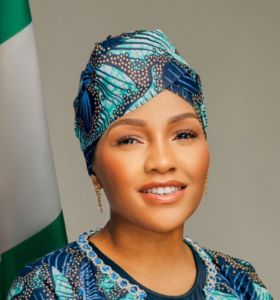
ENN’s Women’s Voices series puts the same three questions to women making the decisions in Nigerian energy and mining. Janet Adeyemi, National President of Women in Mining Nigeria, answers from the experience of more than 3,000 women in the sector, telling ENN why investors should see them as partners across Nigeria’s minerals value chain.
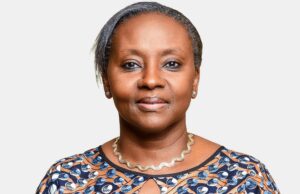
Janet Adeyemi’s answers to ENN draw on the experience of more than 3,000 women across Nigeria’s mining sector. As National President of Women in Mining Nigeria (WIMIN), who also sits on the board of the Association of Women in Mining in Africa, she has moved the association’s own conversation from “women in mining” to “women as economic actors across the mining value chain”.
Her message to investors follows from that change of language and asks them to see the women of Nigerian mining differently. “Don’t see women merely as beneficiaries of mining investment. See them as investors, entrepreneurs, suppliers, professionals, processors, exporters and partners,” she says. “That is where I believe the next phase of Nigeria’s mining story can become genuinely transformative.”
Getting women into the rooms where decisions are made has, in WIMIN’s experience, depended on preparing them to bring something substantial and then deliberately opening the door, with capacity and confidence as the starting point. WIMIN’s training covers leadership as well as the technical work of mining, and it teaches the business side of the industry too, because “when a woman understands the technical and commercial language of the industry, it becomes much harder to dismiss her contribution”.
Training on its own does not create inclusion, she adds, if a woman is then left without the capital and the market to use what she has learned, and WIMIN’s aim is to move women “from participation to ownership and value creation”. Seats on boards and negotiating teams have nothing to do with charity in her view, since “you cannot build a modern mining industry while systematically excluding half of the population from the decisions that shape it”.
Host communities matter just as much to her, because a mining project cannot be sustainable, in her view, if the community around it sees it “as something being done to them rather than something in which they have a legitimate stake”. “Early community engagement, transparent benefit-sharing and local employment should therefore be part of project development from the beginning, not something brought in after a conflict emerges,” she says.
Most of the delay she sees comes between an investment announced and a project ready to build. After agreements are signed and licences obtained, the road to construction can be “painfully slow”, held back by regulatory uncertainty, land access, community relations, security, infrastructure, power, finance and too little reliable geological data.
Her first change would be a single project-development pathway, a one-stop route in which an investor knows exactly which approvals are needed, which agency is responsible, how long each step takes and what government is providing to de-risk the project. Alongside it she would have the state make bankable geological data progressively available for sale and build shared infrastructure, with energy corridors for the larger mining companies and formalisation and clusters for artisanal and small-scale miners.
Nigeria has made it clear, she says, that the era of exporting minerals in their raw form must change, though she is careful about what takes its place. “We must not replace an export-of-raw-materials problem with a processing-without-competitiveness problem,” she warns. For that, she wants investors to have reliable geological information and regulation that stays predictable, free of policy “somersaulting”, with government also providing the infrastructure and access to markets that a processing business depends on.
Janet sees a parallel between the two halves of her argument, since she describes mining and women alike as full of untapped potential, with mining shifting constantly under economic, social, environmental and technological pressures and women bringing a diversity of strengths, resilience and creativity that she says are frequently underestimated. In her view neither should be judged by visible contribution alone but by the value that follows when their full potential is realised.
That same logic runs through her case for Africa, where she believes minerals have to be explored, responsibly extracted and processed to drive industrialisation, and women have to be supported through education, skills, finance, technology, leadership opportunities and enterprise ownership. Responsible mineral development combined with women’s participation across the whole value chain can, she says, accelerate industrialisation and create decent jobs while reducing poverty and strengthening local economies, with the aim of turning mineral wealth into shared prosperity and putting women forward as owners and leaders of that change.
The strongest opening of the next two years, as she sees it, lies in the value chains built around Nigerian minerals, from processing and refining to the infrastructure that takes minerals to market. She calls the investment case “mine-to-market”, with a significant first-mover advantage for “whoever can build commercially viable value chains around Nigerian minerals, and bring Nigerian women and young people into those value chains”.