EXCLUSIVE: NMGS’s Rose Ndong points investors to Nigeria’s lithium processing chain
Rose Ndong, President of the Nigerian Mining and Geosciences Society (NMGS), tells ENN for its women’s voices series that lithium processing is Nigeria’s most investable opportunity now that unprocessed minerals can no longer be exported, and sets out how a single approval window could move projects from licence to construction faster.
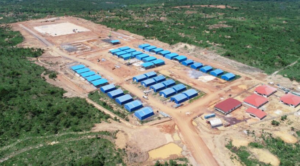
Lithium and the processing chain that grows around it would be Rose Ndong’s focus over the next two years, and she points to investment that is already arriving. “Nigeria has significant lithium potential and global demand for critical minerals continues to grow,” she told ENN. “More importantly, we are already seeing major investment in lithium processing, including a major processing plant commissioned in Nasarawa in 2026.”
“The opportunity itself is not simply in mining lithium, but in its beneficiation, refining, laboratory services, equipment supply and eventually battery-related manufacturing,” Ndong said. Her advice to investors is to favour projects with proven geological resources, reliable power, responsible mining practices and secure feedstock, because “the broader opportunity is to build processing capacity that links Nigerian minerals to Nigerian industries”.
Once a licence has been granted, investors still have to raise the money, and Ndong said the longest delays tend to fall at that stage. “The biggest delays often occur after licensing, when investors must source funding,” she said, with permits, infrastructure, land access and community agreements adding to the wait, constraints she noted Nigeria’s own mining roadmap identifies.
Her first change would be “a genuinely coordinated, time-bound project approval process”, a single window linking the federal and state agencies involved, with clear responsibilities and predictable timelines, alongside better roads and power to mining corridors. “This would reduce uncertainty, lower project costs and give investors greater confidence to move from exploration and licensing into construction,” she said.
Bringing more women into the rooms where these decisions are made has come down to giving them real openings, according to Ndong. “What has worked most is moving from advocacy to practical opportunities,” she said, pointing to mentorship and technical training that give women a voice in professional and policy discussions, and to WIMIN’s mentoring and its Girls for Mining programme as proof of the value of building the pipeline early.
For NMGS, she said, the next step is to see women in committees and leadership roles on the basis of competence, with young women given access to mentors and professional networks. “Representation must become part of how we develop talent, rather than an occasional intervention.”