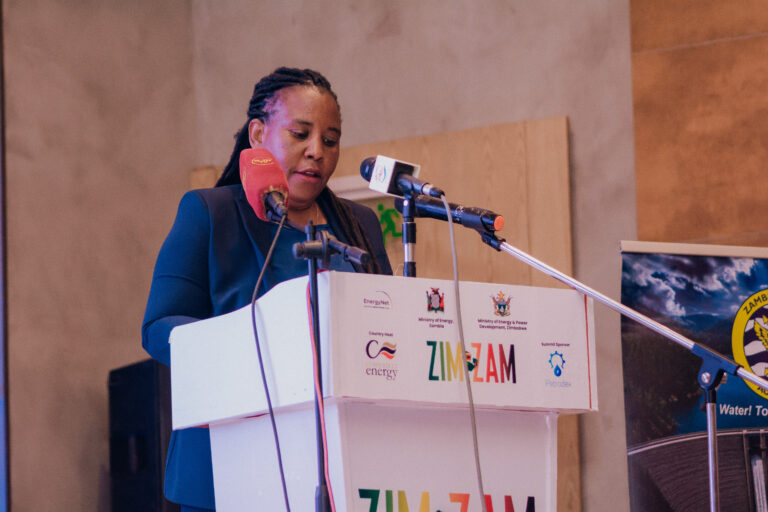
Deputy Energy Minister Yeukai Simbanegavi opens ZimZam with a target to end Zimbabwe’s power imports by 2027
Opening the third Zimbabwe-Zambia Energy Projects Summit in Livingstone, Zimbabwe’s Deputy Minister of Energy and Power Development, Yeukai Simbanegavi, set a target to end power imports by the end of 2027, resting on 1,365MW of private generation in the pipeline and licensing reforms that have cut the application fee for a generation licence to US$20.
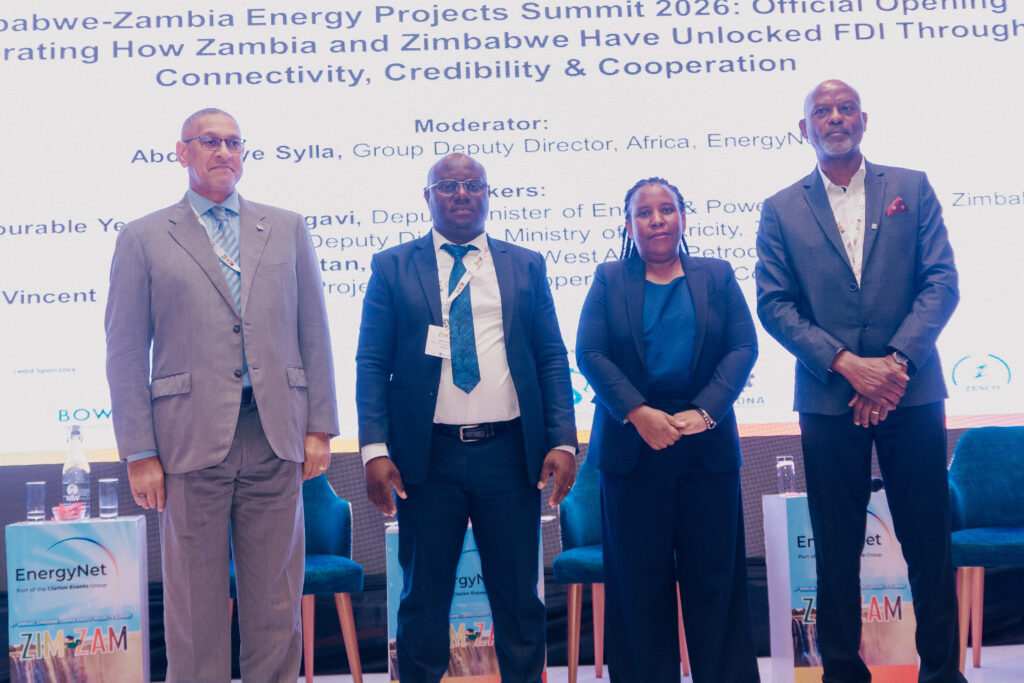
Zimbabwe expects to stop importing power by the end of 2027 on the strength of 1,365MW of private generation that is either under construction or heading for financial close, Deputy Minister of Energy and Power Development Yeukai Simbanegavi told delegates as she opened the third Zimbabwe-Zambia Energy Projects Summit in Livingstone on 3 November.
Of that pipeline, 635MW is being built and 730MW is progressing towards financial close, according to figures that ZESA chief executive Cletus Nyachowe gave Parliament’s Public Accounts Committee in May, with mining companies and industry developing most of it. Coal accounts for the bulk of the new capacity, she said, though she expects solar to exceed its targets as existing utility-scale plants are upgraded and new ones are built.
Developers now pay far less to apply for a licence under Statutory Instrument 125 of 2026, which took effect in July and replaced fees of US2,500forgreenfieldandUS2,000 for brownfield projects with a single US$20 application fee, while commercial renewable projects below 10MW and renewable projects built for a company’s own consumption pay no generation licence fee at all.
Competitive bidding is being built into procurement with World Bank help, through a technical assistance agreement from December 2025 that provides for at least 140MW of grid-connected solar within a wider pilot reported at about 370MW, which Simbanegavi said would move the market “away from speculative and unsolicited project proposals towards transparent competition, credible developers and bankable projects”.
The 30MW Vungu Solar Project in the Midlands was her example of contracts following policy, after the government signed a Government Project Support Agreement with its developer in June 2025 and ZETDC signed a 25-year power purchase agreement in January 2026, an approach she said was now being extended to other qualifying projects.
Under the second National Development Strategy, which runs from 2026 to 2030, the government aims to raise generation capacity from about 2,950MW to 6,000MW and to extend the transmission network by 1,715km, including the Hwange B to Sherwood B 330kV line, while Zimbabwe’s National Energy Compact under Mission 300 seeks to mobilise more than US9bn,overUS4.42bn of it from the private sector.
El Niño is expected to bring below-normal rainfall, she warned, and the Zambezi River Authority has already announced a cut of about 36% in the water allocated for generation next year, which in her words “demands an aggressive drive towards increasing non-hydro generation projects such as solar and wind generated power plants” as well as faster progress on the Batoka Gorge Hydro Electric Scheme that Zimbabwe shares with Zambia.
Zimbabwe is also advancing the ZIZABONA interconnector with Zambia, Botswana and Namibia and the MOZISA interconnector with Mozambique, and Simbanegavi closed on what binds the two countries across the Zambezi. “The veins that knit us together are stronger than the borders that demarcate us,” she said.