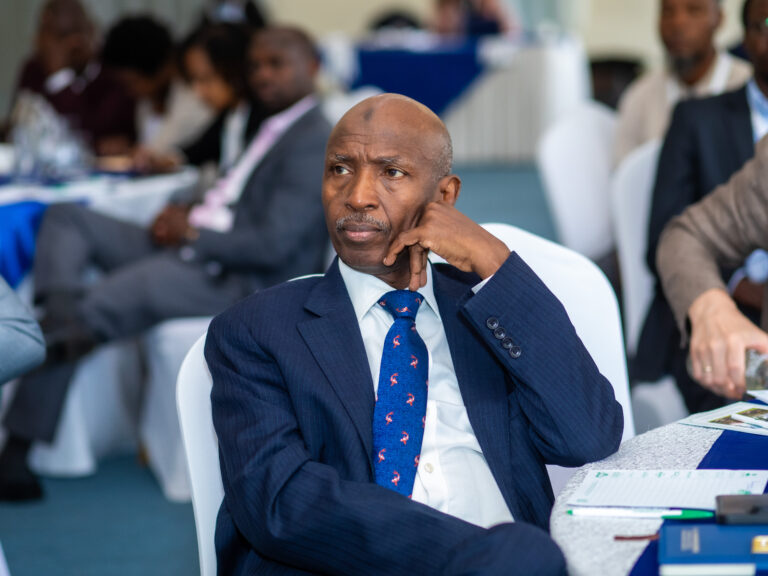
EXCLUSIVE: Africa gas infrastructure is the strongest energy investment, says Dr Omar Farouk Ibrahim
Dr Omar Farouk Ibrahim, Regional Chair for Africa at the World Energy Council, tells ENN that Africa’s strongest energy investment in 2027 and 2028 is the infrastructure that brings gas already discovered to African industry, and sets out the programme that would put Nigeria’s reserves to work at home.
Nigeria’s Obiafu-Obrikom-Oben gas pipeline has reached physical completion and is being prepared for first gas, while the Ajaokuta-Kaduna-Kano line is about 95% complete, by the government figures that Dr Omar Farouk Ibrahim cites in his answers to ENN. Writing from Abuja ahead of Nigeria NOW! at the Transcorp Hilton on 19 November, Ibrahim names gas infrastructure as the strongest energy investment in Africa over the next two years, and in particular “gas gathering, processing, transportation and gas-to-power projects serving African domestic markets”.
Producing more energy for export has been Africa’s model “for about a century”, he says, and the greater opportunity now is to turn the continent’s abundant resources “into reliable and affordable energy for African industries, businesses and households”, starting with the infrastructure that connects existing reserves and producing fields to processing plants and on to power stations and industry.
Exploration for new gas would mean carrying the full geological risk, and Ibrahim’s case for building infrastructure first rests on the substantial reserves several African countries have already discovered without the means to monetise them. “Gas processing plants, pipelines and industrial supply projects can generate relatively predictable revenues,” he says, in a continent of about 1.6 billion people that he expects to reach 2.5 billion in less than a quarter of a century, and over a two-year horizon he backs that infrastructure over new production “not because it will necessarily deliver the highest percentage return over only two years, but because it reflects the combination of unmet demand, productive use of existing resources, industrial impact and the potential to build long-lived cash-generating assets”.
Nigeria, in his view, should stop seeing gas as a way of earning foreign exchange “with which it imports the good, the bad and the ugly” and use it to industrialise the economy and lift the living standards of its people. The Nigerian Upstream Petroleum Regulatory Commission put the country’s proven gas reserves at 215.19 trillion cubic feet at the start of 2026, and with that much gas found, Ibrahim says, “what it needs more urgently is an integrated system that connects gas resources to gas markets, which must be conscientiously and strategically developed”.
Connecting existing producing fields and stranded gas to power plants and industry is the immediate opportunity, he says, alongside industrial clusters where gas can produce the greatest economic value. Nigeria’s domestic lenders and development partners could build financing packages for domestic gas infrastructure with the newly established Africa Energy Bank, pairing blended finance for strategic pipelines and processing plants with credit guarantees for industrial gas buyers, and Nigerian pension funds could take equity, subject to appropriate safeguards.
The Midstream and Downstream Gas Infrastructure Fund already provides a platform, by his account, and figures the fund gave in September show ₦671bn deployed through it drawing about ₦1.6trn of private investment across 31 projects. “It would be advisable to build on this approach, with greater emphasis on projects that can demonstrate measurable increases in domestic gas delivery and industrial output,” he says.
NNPC Ltd’s Gas Master Plan 2026 aims to raise national gas production to 10 billion cubic feet a day by 2027 and 12 billion by 2030, and Ibrahim notes that “these are targets, not assured outcomes”. His own programme for 2027 and 2028 would restore reliable gas supply to existing power plants, measured in the electricity they actually generate, and improve payment security in the power sector until overdue balances to gas suppliers come down. Modular processing projects would be financed with their capacity tied to firm customers, and wider capture of associated gas would show up in lower routine flaring.
“The critical next step is to translate construction progress into actual, sustained gas deliveries,” he says of the Obiafu-Obrikom-Oben and Ajaokuta-Kaduna-Kano pipelines, and he proposes a coordinated agreement between the Federal Government, NNPC Limited, gas producers, power generators, industrial consumers and financiers, with one central objective, “to make domestic gas commercialisation commercially profitable, technically feasible and economically transformative”.