
Botswana’s EU energy programme buys advisers rather than megawatts
ASPIRE runs from February 2026 to January 2030 on EUR 5.5 million of European Union funding, and none of it builds generation. The three outcomes are institutional capacity and regulatory frameworks, energy efficiency, and renewable access. It arrives a month before Botswana’s first utility-scale solar plant secured $100 million from a commercial bank.
Botswana’s first utility-scale solar plant secured $100 million in August, arranged and underwritten by Rand Merchant Bank on a market view into the Southern African Power Pool. A month earlier the government launched a four-year programme carrying EUR 5.5 million, and none of it will build a power station.
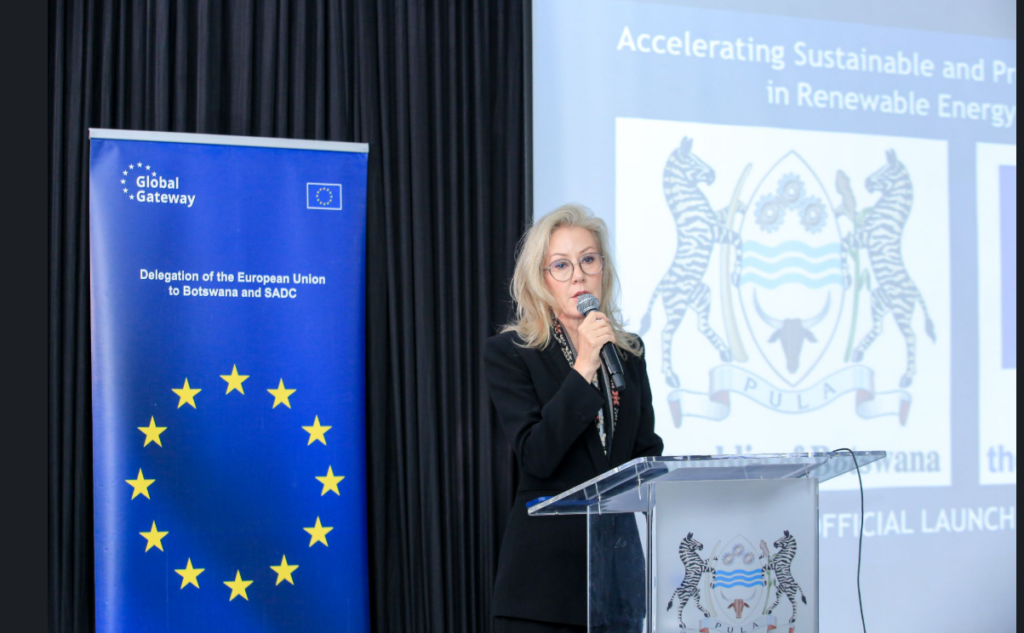
ASPIRE, Accelerating Sustainable and Productive Investment in Renewable Energy and Energy Efficiency, runs from February 2026 to January 2030, funded by the European Union in partnership with the Government of Botswana and the EU Delegation to Botswana and SADC. It was launched at the Protea Hotel in Gaborone.
The three outcomes are institutional capacity and regulatory frameworks, energy efficiency, and increased renewable generation alongside more inclusive access. Technical assistance, capacity building and policy support are what the money pays for.
Minister of Minerals and Energy Bogolo Joy Kenewendo has put the emphasis on conditions rather than capacity. “This initiative is about more than renewable energy generation,” she said in announcing the programme. “It is about creating the right environment for investment, strengthening our institutions, improving energy efficiency and building the skills that will power Botswana’s future economy.”
NIRAS International Consulting leads technical implementation alongside the Ministry of Minerals and Energy and the EU Delegation, working with Multiconsult, IROKO Africa, PlanetSoar and Women in Energy Botswana. IROKO Africa carries the energy efficiency pillar.
Botswana has been a net importer for years, dependent on purchased power and diesel through breakdowns at Morupule B, and its operating generation capacity sits well below what is installed. Its targets are 15% renewable by 2030, 36% by 2036 and 50% by 2040, with access having risen from 67.4% of the population in 2017 to 76% in 2023 on African Development Bank figures.
Tati shows what commercial capital will do when the terms work. Developed by Etavi Renewables, part of Shumba Energy, it is contracted into the regional pool rather than to a single domestic offtaker, which routes around the balance sheet problem rather than through it.
ASPIRE ends in January 2030. Botswana’s 15% renewable target arrives in the same year.
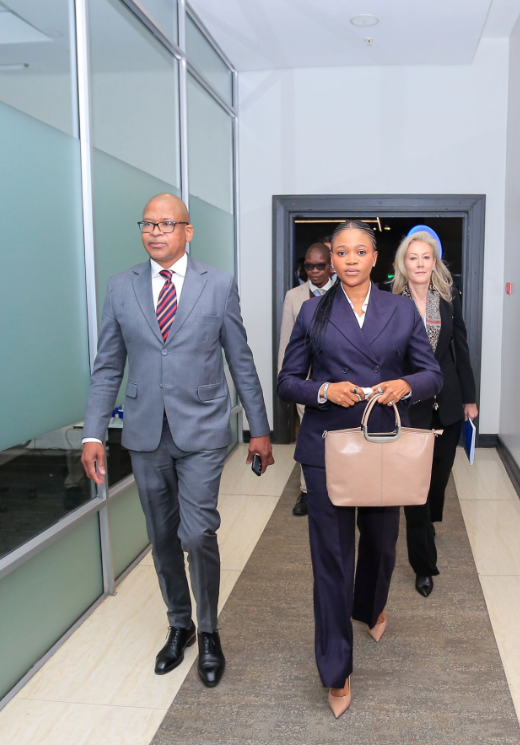
Photo Credit: Bogolo Joy Kenewendo