Eskom coal decommissioning decision on five stations due by end of September
Camden, Grootvlei, Hendrina, Arnot and Kriel hold emissions exemptions to 31 March 2030. Eskom will say by the end of September whether they shut, repower or run on, and chief executive Dan Marokane has said the answer turns on new capacity being contractually secured. The Energy Council of South Africa leads the work on what follows 2030.
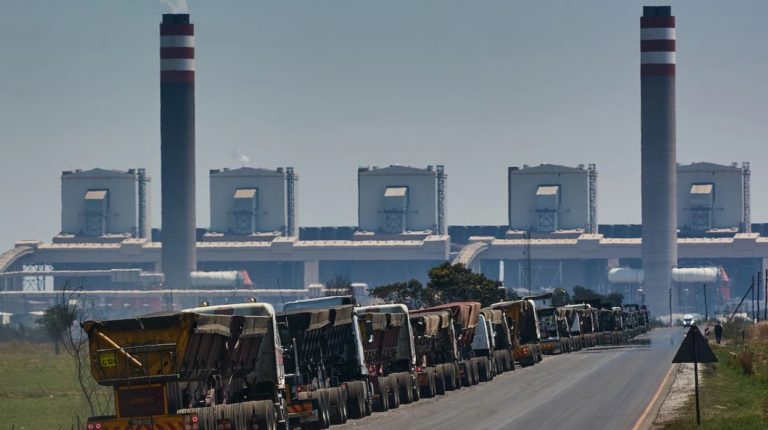
Five coal stations in Mpumalanga are running on borrowed time that ends on 31 March 2030. Camden, Grootvlei and Hendrina were scheduled to close between 2023 and 2027, and with Arnot and Kriel they were granted minimum emission standards exemptions in 2024 to keep operating. Eskom has said it will decide by the end of September whether each is shut down in an orderly way, repowered or repurposed.
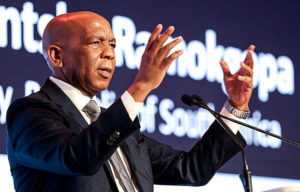
The condition was set in July. Speaking at the Coal and Energy Transition Day in Johannesburg on 22 July, Marokane said the decision must be informed by evidence, by system adequacy, by the progress of new generation and by the readiness of the grid. A closure timetable without capacity contractually secured and demonstrably available, he argued, is not a transition plan but a “timetable to a supply crunch”.
Eskom’s winter outlook, published in April, projected no load shedding between 1 April and 31 August on a 6GW surplus in peak capacity. The energy availability factor reached 65.35% in the 2026 financial year against 54.55% in 2023. Diesel spend on the open-cycle gas turbines fell to about R6.4 billion, R26.9 billion below 2023, and S&P Global Ratings upgraded the utility for the first time in more than a decade.
The same outlook carried the reason the decision is not simple. Only about half of the renewable projects awarded grid allocation and offtake agreements since IRP 2019 have been built. Eskom called that a critical risk to supply adequacy between 2029 and 2030, in line with the National Transmission Company’s medium-term system adequacy outlook, and singled out dispatchable gas-to-power as the enabler for large-scale renewable integration. Chris Yelland of EE Business Intelligence warned in February that load shedding could return around 2030 if the gas stations run late, with Eskom planning to close about 5,260MW of coal by 2029 and add 6,000MW of gas around 2030.
Beyond the five, six larger stations, Kendal, Lethabo, Majuba, Matimba, Medupi and Tutuka, hold five-year exemptions to 1 April 2030, and Duvha and Matla have nine-year exemptions to their planned closure in 2034. Marokane said Eskom would set out its approach to decommissioning beyond 2030 in September, and that the utility is part of a broader discussion led by the Energy Council of South Africa on how the system is carried through that period.
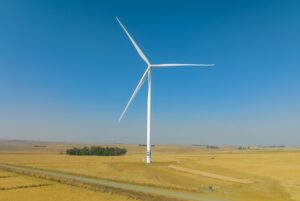
Komati, retired in 2022 with 1,140MW, remains the only Eskom coal station closed to date, and the utility envisions the site eventually carrying 370MW of solar, wind and battery storage. Large-scale renewable development has already begun at Camden, Hendrina and Grootvlei, so the repowering half of the September decision is under way at three of the five sites whose future it settles.
“Our task is therefore not to abandon coal irresponsibly. Our task is to reduce emissions while building technologies, infrastructure, and market mechanisms that enable a lower-carbon future,” Marokane said in July. “We’ll pronounce ourselves by September.”
Photo credit: Biz News