
Mineral beneficiation in Africa: Guinea builds three refineries on a 1,000MW grid
Guinea is building three alumina refineries on a grid of about 1,000MW, and as NJ Ayuk takes up the question Elias Pungong asks in Mining the Future, whether Africa keeps exporting raw ore or builds the industries it could power, governments and financiers are putting reliable power at the centre of processing at home.
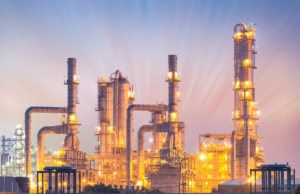
Three alumina refineries are under construction in Guinea, which recently overtook Australia as the world’s largest bauxite producer and exporter, according to a Reuters analysis in October. The government wants five refineries running by 2030, with combined capacity of about 7 to 8 million tonnes a year, and aluminium smelters to follow. Guinea generates about 1,000MW, mostly from hydropower, and Daouda Diakité, a senior adviser to the mines minister, told Reuters that wider industrialisation would need 5,000 to 10,000MW and that “the main issue is infrastructure and energy, mostly energy”.
In Mining the Future, his book on the global race for Africa’s critical minerals, the Cameroonian business leader Elias Pungong asks whether the continent will keep exporting its raw ore or build the industries those minerals could power, and NJ Ayuk, Executive Chairman of the African Energy Chamber, builds his op-ed of 11 November around that question. Ayuk describes Pungong as a chartered accountant and veteran energy and mining adviser who has chaired the UK-Cameroon Chamber of Commerce, a man who “understands that a mine is never merely a hole in the ground with a balance sheet attached”, and calls the book “a timely, clear-eyed blueprint for policymakers and investors alike”.
Ayuk’s own case puts power at the centre of mineral beneficiation in Africa, arguing for processing at home and for gas developed alongside renewables to supply the baseload heavy industry needs, and he writes that “Africa cannot manufacture the future on an unreliable grid”. Africa, in his view, must “negotiate like seasoned dealmakers, demanding enforceable contracts”, and a mining project, he concludes, “is a success only when lasting opportunity stays behind”.
South Africa holds more than 70% of the world’s known chrome reserves, and fewer than 12 of its 66 ferrochrome smelters are still operating, by the industry figures Reuters cited, with power costs up roughly tenfold since 2008. “The number one lesson is how important energy supply reliability and affordability are to industrialisation,” said Mzila Mthenjane, Chief Executive of the Minerals Council South Africa.
South32 placed the Mozal aluminium smelter in Mozambique on care and maintenance in March, after about 25 years of operation. Six years of talks with the Mozambican government and Eskom had not secured affordable power beyond that month, Africa Briefing reported, and drought had cut regional hydropower as well.
Local processing has a stronger emphasis in Nigeria under the current administration, in the words of Felicia Dairo, Executive Director of the Nigerian Indigenous Women in Mining and Natural Resource Organisation, who told ENN that investors could look to the infrastructure it depends on, “including reliable energy, transportation, mineral testing laboratories and other services required to make processing commercially viable”. “While investment commitments are important, they do not move the needle unless they translate into concrete action on the ground,” she said.
Listing what a processing project needs, Franklin Edochie, deputy director and head of mining at the Africa Finance Corporation, said that “energy is one of them, feedstock and capital are another one”, and that “we always have buyers”, in remarks Reuters reported. Mohamed Zada, Egypt’s deputy minister for strategic industries, was quoted in the same analysis saying that “we cannot focus on one and ignore the four pillars that are very important to be moving together”.
At least 13 African countries have enacted export curbs on minerals since 2023, Climate Home News reported in March, and Silas Olan’g, Africa energy transition advisor at the Natural Resource Governance Institute, told it that “experience shows that bans alone rarely deliver the desired outcomes”. Obert Bore of the Zimbabwe Environmental Law Organisation said that half of Zimbabwe’s electricity is already used by the mining sector.
Zimbabwe’s ban on exporting lithium concentrate is due to take effect in January 2027, after a temporary suspension of all raw mineral exports in February, and its mines minister, Polite Kambamura, told Reuters in July that “the January 2027 deadline is still on”. Sinomine’s Bikita Minerals and Kamativi Mining Company, the Zimbabwean unit of China’s Yahua Group, are building lithium sulphate plants that Reuters reported are unlikely to be ready by then, and the country’s one completed plant, at Huayou’s Prospect Lithium Zimbabwe, is sized for the concentrate from its own operation.