Zambia sets out its path to three million tonnes of copper in a World Bank compact
Zambia’s Metals and Minerals Country Compact with the World Bank Group sets out how the country means to reach three million tonnes of copper a year by 2031, with expansions at Lumwana and Kansanshi leading the growth and $11.6bn of energy investment planned by 2030 for the grid that has to power them.
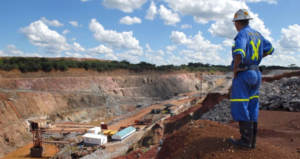
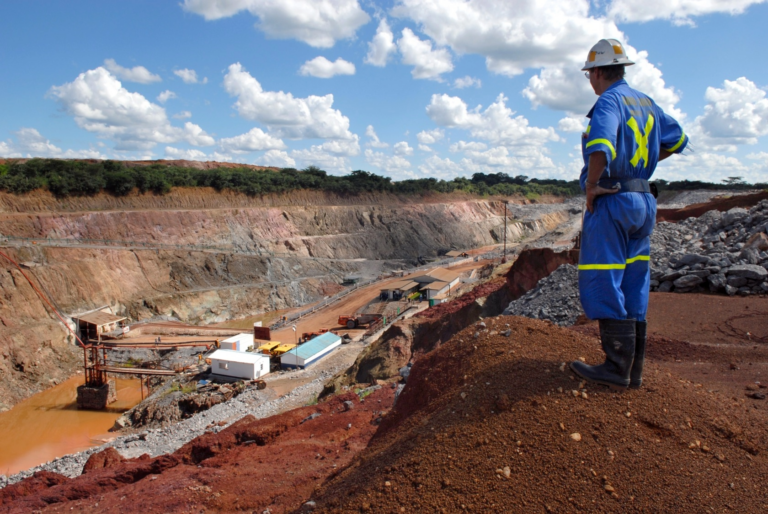
At Lumwana in North-Western Province, Barrick’s expansion of about $2bn is taking the mine to 240,000 tonnes of copper a year, and it is one of the projects in Zambia’s ten-year minerals compact with the World Bank Group, which sets out how the country means to reach three million tonnes a year by 2031, from about 890,000 tonnes in 2025.
The Metals and Minerals Country Compact, drawn up by the Ministry of Mines and Minerals Development and launched at the IMF and World Bank Group Annual Meetings in Bangkok on 16 October, runs from 2026 to 2036 and names the other projects carrying that growth, among them First Quantum’s expansion of about $1.25bn at Kansanshi to 200,000 tonnes a year and KoBold Metals’ Mingomba, put at more than $2bn with potential for 300,000 tonnes a year.
The compact looks for about $20bn of private capital for mining and $10bn more for the infrastructure around it, with energy investment of $11.6bn planned by 2030 for a grid of 3,811MW that is 83% hydropower and where demand is projected to rise by 131% over the same period. Its value-addition goals include at least one new smelter or refinery by 2036 and more copper wire and cable manufacturing by 2029, beyond the nine facilities that make them today.
Most of the World Bank Group’s support named in the compact is already in place, including the $270m TRACER grant for the Dar es Salaam corridor and the $80m STRIVE skills programme running to 2031, while ASCENT Zambia brings $200m for energy access. A further $80m of IDA financing for mining is still being designed, and the IFC is mapping the Lobito Corridor.
Zambia’s side of the bargain runs through digital mining licences and fully online geological data by the end of 2028, an operational Minerals Regulation Commission, a mining stabilisation fund and a Lobito Corridor strategy by 2028. On the power side it commits to open access and cost-reflective tariffs under its Mission 300 energy compact, with more independent power producers on the grid.
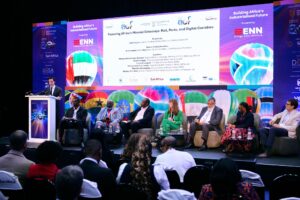
Speaking at the launch, where seven other countries also announced compacts or partnerships with the World Bank Group, Finance Minister Situmbeko Musokotwane said that “the world needs more critical minerals” and that Zambia has them, “more especially copper”. The World Bank Group plans to raise its support for metals and minerals fivefold to $19bn between its 2026 and 2030 financial years.
The compact sets 250,000 jobs by 2031 as its measure, 100,000 of them directly in mining, and the Ministry of Mines that drew it up has been led since 28 October by Brenda Tambatamba, appointed in President Hakainde Hichilema’s new cabinet.
Images: Bloomberg