
EXCLUSIVE: ‘The financing pathway should follow the business’
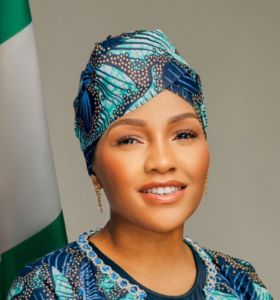
Rebecca Agadumo, Programme Development and Delivery Specialist, tells ENN in the final interview of its Women’s Voices Nigeria series what young cleantech companies in Nigeria are building, from fuel cells supplying healthcare facilities to Nigeria’s first reverse vending machine, and why a solution designed without women’s active contribution is never complete.
A company using proton exchange membrane fuel cells to supply Nigerian healthcare facilities with electricity and medical-grade oxygen is one of the startups Rebecca Agadumo points to when she describes what is coming through the Global Cleantech Innovation Programme (GCIP) in Nigeria.
GCIP is coordinated by the United Nations Industrial Development Organization (UNIDO) and funded by the Global Environment Facility, with the Rural Electrification Agency among the partners running it in Nigeria. Agadumo answered ENN’s questions in writing for its women’s voices series, in which every guest takes the same three questions, shaped to her own work, in the run-up to Nigeria NOW! and YES! Nigeria in Abuja on 19 November.
What are the Nigerian cleantech companies coming through GCIP actually building, and where is the strongest opportunity for investors over the next two years?
Through the Global Cleantech Innovation Programme (GCIP) Nigeria, we have supported startups developing solutions across renewable energy, energy efficiency, waste recycling, e-mobility, water efficiency, green buildings, and advanced materials.
What I find particularly interesting is the range of problems these founders are trying to solve. Newdigit, for example, delivers reliable electricity and medical-grade oxygen to healthcare facilities using Proton Exchange Membrane (PEM) fuel cells. Another founder leads Ecobarter, which launched Nigeria’s first reverse vending machine, creating another pathway for people to return recyclable materials and participate in the circular economy.
Over the next two years, I believe some of the strongest opportunities for investors lie in businesses that can demonstrate demand beyond the pilot stage. In Nigeria, this includes decentralised energy solutions, particularly where reliable power can help businesses and essential services operate more effectively.
I also see opportunities across the e-mobility value chain, extending beyond electric vehicles to the businesses providing the infrastructure and services that make their adoption possible. This could include battery-swapping networks, charging infrastructure, battery lifecycle management, and other supporting services that address practical barriers to adoption.
Ultimately, the opportunity is not simply to identify promising technologies, but to recognise businesses that are solving real problems in ways that can be commercially sustained and scaled.
What stops a promising young company getting from an idea to something that can be financed, and what would you change first?
One of the hardest truths about building a business is that having a solution and having a business that someone is willing to finance are two very different things.
A founder may have developed a technology that works, but a good technology alone does not make a company investment-ready. Can the technology perform reliably outside a controlled environment? Does the problem matter enough for customers to pay for a solution? Can the business deliver at a cost that makes commercial sense? Is there enough evidence to demonstrate that the model can work beyond the first few customers?
For idea-stage founders, answering these questions can be particularly expensive. A founder may need to test a technology, run a pilot, secure regulatory approvals or demonstrate commercial demand before an investor is willing to take the risk. Yet getting to that point often requires capital they do not already have.
To address this, we need to build more deliberate pathways from technical validation to commercial traction and, eventually, financing. That means connecting founders to the expertise, pilot opportunities, early customers and appropriate funding instruments they need at each stage of their development.
It also means recognising that not every company needs venture capital. Some need grants to validate a technology; others need debt financing or commercial partnerships. The financing pathway should follow the business, its stage of development and the evidence it can demonstrate, not the other way around.
Women are still a minority in the rooms where these decisions get made. What has actually worked to change that?
First off, I believe there is an important distinction to make when we talk about women’s participation in climate innovation, or climate action more broadly.
We have had many conversations about getting women into the room. But if those conversations are only about headcounts, then we are not talking about real change.
I believe the first step is recognising the different factors that prevent women from accessing these spaces and actively contributing to the solutions that emerge from them. Access is only one piece of the puzzle. Societal and cultural expectations, as well as the structures within which women are expected to operate, can all influence how much they are able to participate, the opportunities available to them, and how far they can go.
With that in mind, we need to ask a more fundamental question: Are women being brought into the room after the solutions or interventions have already been designed, with the expectation that they will simply help make them work for women? Or are they brought in from the very beginning, when the ideas are still taking shape, when the foundations are being laid and the building blocks are still being put together? That distinction matters.
A solution designed without women’s active contribution or intervention is never complete.
It is not enough to bring women in to implement decisions they had no hand in making. We must recognise them as people who should be shaping the problems we prioritise, the solutions we design, and the outcomes we work towards.
But getting women involved early is only part of the answer. An enabling environment is one in which women can not only enter the room, but also speak, influence decisions, access resources, and act on the ideas they bring to the table.
Ultimately, the goal is not simply to get more women into the room. It is to build an ecosystem where women have the opportunity to shape what happens in that room and influence the decisions being made.