United Arab Emirates quits OPEC
The United Arab Emirates (UAE)leaves the Organization of the Petroleum Exporting Countries (OPEC) on 1 May 2026 following a comprehensive review of its production policy and future capacity. It announced the move on 28 April.
According to the Emirates News Agency, the decision reflects the UAE’s “long-term strategic and economic vision and evolving energy profile, including accelerated investment in domestic energy production, and reinforces its commitment to a responsible, reliable and forward-looking role in the global energy markets”.[i]
OPEC sets oil-production quotas for its members and in recent years the UAE has clashed with Saudi Arabia – the group’s biggest oil producer – about its production quota.
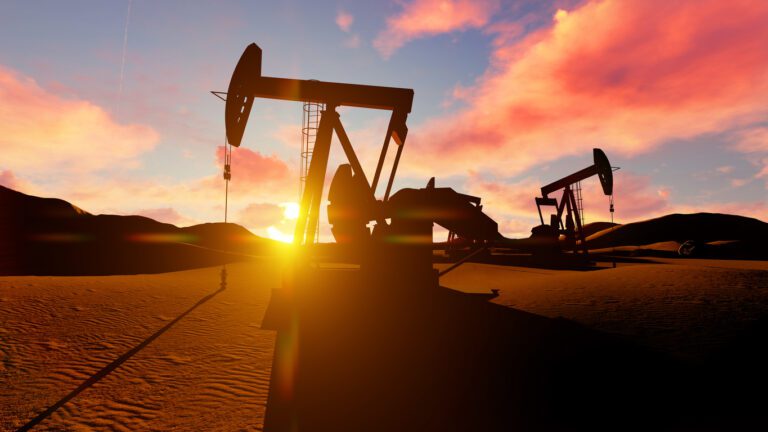
Production is typically restricted or increased to control the price of oil during energy shocks. The UAE is known to have spare oil-production capacity and needs a lower price per barrel than does Saudi Arabia to break even.[ii] Leaving OPEC opens the door for the UAE to increase production.
Analysts told the Financial Times the move could signal wider fragmentation within OPEC. The energy analyst Saul Kavonic of MST Financial said the Financial Times (FT): “This is the beginning of the end of OPEC,” and that “We could see other members follow suit”.[iii]
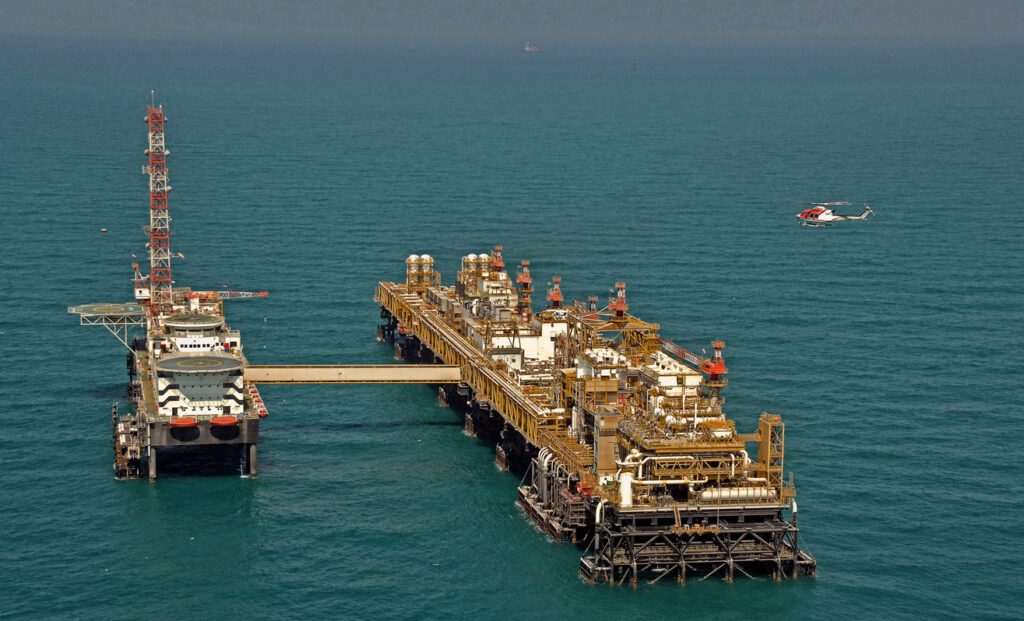
The UAE threatened to leave OPEC in 2021, before it subsequently secured a bigger production quota, and there had been recent speculation that it could freeze its membership.[iv] Today, it accounts for about 12% of OPEC’s output, making it the third-largest member.[v]
The UAE’s exit of OPEC coincides with the biggest energy crisis in decades, triggered by the US-Israeli war with Iran and the closure of the Strait of Hormuz. About one-fifth of the world’s oil supply normally passes through the Strait, which was first closed by Iran on February 28. This has cut global oil supplies, pushed up prices by more than 50%, according to the World Bank,[vi] and left the UAE exporting about half its usual volumes.[vii]
The UAE’s energy minister, Suhail al-Mazrouei, told the FT that the timing “is right because it has a minimum impact on all of the producers”. However, the impact is unlikely to become clear until after the Strait is reopened.
OPEC was founded in 1960 by Iraq, Iran, Kuwait, Venezuela and Saudi Arabia. Today it has 12 members – the founding five and Algeria, Republic of Congo, Equatorial Guinea, Gabon, Libya, Nigeria and the UAE, which joined in 1967. OPEC+, an allied group of oil-producing countries founded in 2016, includes Russia, Azerbaijan, Kazakhstan, Bahrain, Brunei, Malaysia, Mexico, Oman, South Sudan, Sudan and Brazil.[viii]
In peacetime, OPEC and OPEC+ account for roughly 50%[ix] of global oil and oil liquids. After the UAE leaves, they will account for around 40% of oil output.[x]
This article is based on reporting from Reuters, the Financial Times, World Bank and WAM.
[i] https://www.wam.ae/en/article/bzxzuh7-uae-announces-decision-exit-opec-opec%2B
[ii] https://www.ft.com/content/cf427766-a13e-4eb2-ab70-d9ee7ea5bed1?syn-25a6b1a6=1
[iii] https://www.ft.com/content/cf427766-a13e-4eb2-ab70-d9ee7ea5bed1?syn-25a6b1a6=1
[iv] https://www.ft.com/content/8c354f2d-3e66-47f1-aad4-9b4aa30e386d?syn-25a6b1a6=1
[v] https://www.ft.com/content/8c354f2d-3e66-47f1-aad4-9b4aa30e386d?syn-25a6b1a6=1
[vi] https://www.worldbank.org/en/news/press-release/2026/04/28/commodity-markets-outlook-april-2026-press-release#:~:text=Attacks%20on%20energy%20infrastructure%20and,$69%20a%20barrel%20in%202025.
[vii] https://www.ft.com/content/8c354f2d-3e66-47f1-aad4-9b4aa30e386d?syn-25a6b1a6=1
[viii] https://www.aljazeera.com/news/2026/4/28/what-are-opec-and-opec-and-why-has-the-uae-quit
[ix] https://www.reuters.com/business/energy/what-is-opec-how-does-it-affect-oil-prices-2026-04-28/
[x] https://www.ft.com/content/cf427766-a13e-4eb2-ab70-d9ee7ea5bed1?syn-25a6b1a6=1