Off-grid solar rewrites its own scorecard
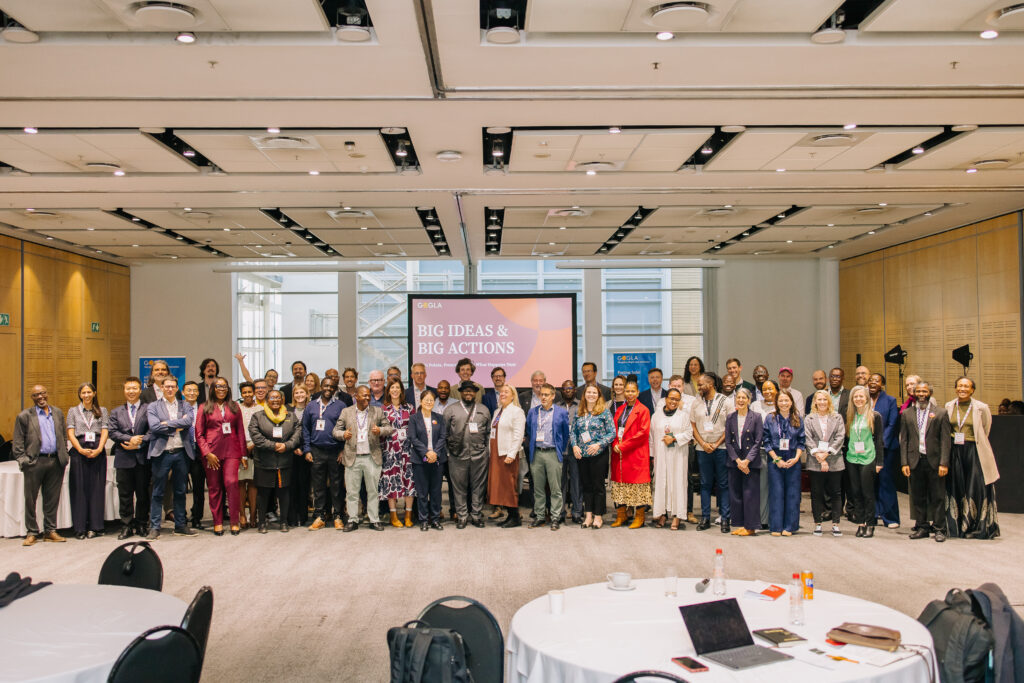
GOGLA’s annual general meeting ran alongside June’s Africa Energy Forum in Cape Town. The global off-grid solar association has published what it is carrying forward from the event. Durability is to stand beside connection counts as the measure that matters, backed by calls for governance over subsidy design and the shared data that would let investors price the market.
The energy access community counts its progress in connections, and the off-grid solar industry has contributed hundreds of millions of them. At the industry’s annual general meeting, held in Cape Town alongside the Africa Energy Forum in June, the sector argued for a harder measure of itself. GOGLA’s recap of the two days, published this week, sets the shift out directly. Reach is to be supplemented by durability for customers and commercial sustainability for the companies serving them, with profitability and sustained repayment standing alongside the quality of service after the sale.
The industry itself is scaling and consolidating, with steady capital investment concentrated among fewer players. The markets served by off-grid solar remain diverse enough to need local operators and large ones working together. GOGLA’s membership was equally direct about its own habits. Pay-as-you-go is consumer finance and energy-as-a-service is infrastructure finance, each drawing on different capital, and the association was asked to push back on the framing that sets one against the other, since public criticism of either model deters funders from both.
The clearest successes named in the room came from governance rather than financial engineering, with Rwanda and Togo cited repeatedly as proof that credible government commitment outperforms clever subsidy design. What companies asked of governments was transparent national electrification strategies with accountability metrics attached, and a working channel into the regulatory decisions that make or break a market. Members also converged on a simple principle for who pays. Where a market can support commercial returns, private companies should compete and profit, and where affordability puts returns out of reach, closing that gap is a public responsibility, with operators paid for delivering the service rather than left to fund it from their own margins.
Results-based financing drew the most practical reform list. Verification and disbursement run too slowly, and pre-qualified verifiers with remote digital checks could cut the wait from months to weeks. Flat national subsidy rates were judged not to work, with Nigeria’s tiered model, weighting support where capital risk is highest, held up as a better alternative, tapering as markets mature. Members also want programmes to recognise the working capital companies commit before any disbursement arrives, a gap local banks could bridge if brought in early, and to reward lasting outcomes rather than the sale alone. Those recommendations, coupled with GOGLA’s evidence-based RBF review, are now feeding directly into World Bank guidance on RBF design.
The gap named most often was data related to impact. Granular information exists across companies, investors and countries, but it does not always connect, leaving the sector with a blurrier picture than any single participant holds. The recap puts forward a shared credit-profiling tool built on GOGLA’s aggregated dataset, giving investors a consistent basis for risk, and a push towards outcome-based measures that the same tool would make workable.
The association’s working groups now carry the mandate forward, from the shared data resource to the governance case studies governments can act on. The conversation resumes at the Global Off-Grid Solar Forum and Expo in Kigali in October, where the measure of success on the table will be the one the sector has just written for itself.