Nigeria lithium processing, what the value-addition rule means for investors
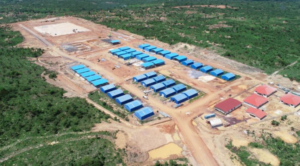
A lithium plant at Endo in Nasarawa State, commissioned on 2 July, processes 6,000 tonnes of ore a day on around $250m of investment. It is the first working demonstration of Nigeria’s rule that minerals should be refined at home before they leave, and of what accepting that rule produces.
At Endo, in Nasarawa Local Government Area, a plant takes in 6,000 metric tonnes of lithium ore a day, close to 3 million tonnes across a year. President Bola Tinubu commissioned it on 2 July, represented by Vice President Kashim Shettima. Diamond New Energy built it on roughly $250m, and Nasarawa governor Abdullahi Sule put the employment at more than 1,000 direct jobs with over 2,000 indirect.
The plant is Nigeria’s minerals policy in physical form. Minister of Solid Minerals Development Dr Dele Alake has made local processing an expectation attached to mining, on the argument that ore refined at home carries jobs, technology and tax revenue with it. He put the objective at mining better, regulating better and retaining more of the value inside Nigeria.
Further capacity is already committed. Alongside Endo, Alake has pointed to an $800m processing investment, a $600m facility also in Nasarawa, a $200m plant near Abuja awaiting commissioning and a $1bn iron ore-to-steel project in Kogi State. He has said companies from China put around $1.3bn into Nigerian lithium processing capacity between 2023 and 2025.
Investors have been direct about why they came. Yu Chongqiang, chairman and chief executive of Jiuling and Canmax, the companies behind Diamond New Energy, said Nigeria was chosen as their first location in Africa on the strength of the security situation and government policy. He described Endo as the largest lithium processing project operating in West Africa and said the company was built on the conviction that Nigeria should lead the global minerals market rather than simply take part in it.
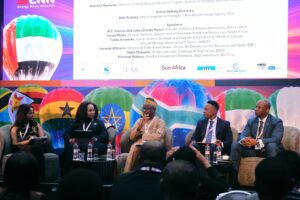
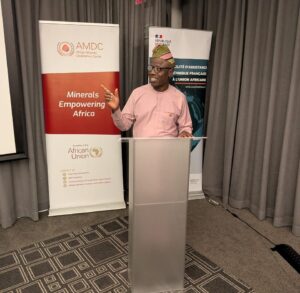
Exploration has moved alongside the processing. Alake announced at the fifth African Natural Resources and Energy Investment Summit that the Nigerian Geological Survey Department had confirmed a polymetallic province in Kaduna State holding gold, nickel, copper and lithium with platinum group metals. As chairman of the Africa Mineral Strategy Group he says more than 30 countries are working towards a shared continental position on value addition, and he has called for African ownership of the data and technical systems underneath it.
For an investor arriving in Abuja this year the proposition has changed shape. A processing expectation attached to a licence raises the entry cost, and it also places the investor inside a domestic industrial build rather than at the end of an export line. Sule has been open in inviting more of it, pointing to Nasarawa’s lead, zinc, copper and gold alongside its lithium, and to the state’s proximity to the Federal Capital Territory. Endo is the first working answer to what the condition produces.