Batoka Gorge moves toward formal procurement with $440m of state equity behind it
The Zambezi River Authority held a market sounding session for the 2,400MW scheme at the Africa Energy Forum in June, described as preparation for the formal procurement process. Zambia and Zimbabwe have each committed $220 million from their 2026 budgets, and a second Zambezi scheme is now in prefeasibility behind it.
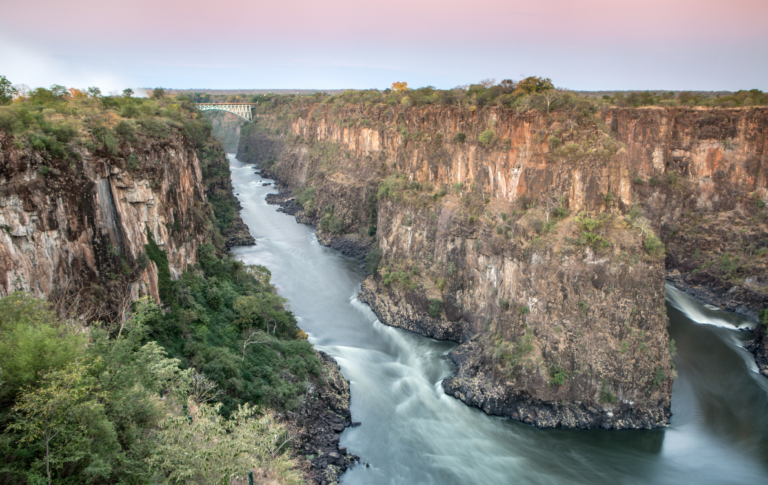
Zambia and Zimbabwe have each put $220 million into their 2026 budget cycles for the dam at Batoka Gorge, which is the first time either country has committed public equity to a scheme first conceived in 1972.
The Zambezi River Authority’s Council of Ministers approved the contributions at its 43rd meeting in December 2025, alongside a resource mobilisation committee led by the finance ministers of both countries to raise the rest of the publicly owned dam infrastructure component. The same communiqué directed that project timelines be revised in line with what Presidents Emmerson Mnangagwa and Hakainde Hichilema agreed at the Bi-National Commission in Zimbabwe the month before, with the stated aim of accelerating implementation.
What follows is a formal procurement. The ZRA, together with both governments and implementing partners ZESCO Limited and ZESA Holdings, held a market sounding session for the scheme at the Africa Energy Forum in Cape Town on 17 June, which the Authority described as part of preparations for that process. AFRY has been updating key studies since December.
The structural change matters more than the money. Batoka has shifted to a public-private partnership model exploring equity partnerships to improve bankability, rather than relying on debt alone. The previous approach produced a 2019 award to General Electric and PowerChina that Zambia withdrew from in 2023, citing procurement irregularities, and the scheme has been retendering since. State equity in the dam changes what a private developer is being asked to carry.
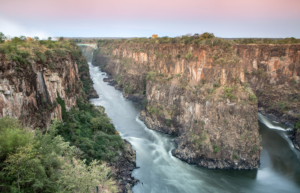
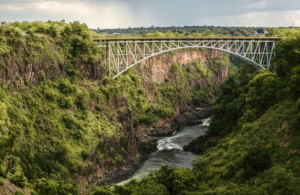
The design is a 181-metre arch-gravity dam with two surface power plants, one on each bank, giving a combined 2,400MW split equally between the two countries. UNESCO granted permission for the project to proceed in late 2023 despite objections over its proximity to Victoria Falls, roughly 47 to 54km upstream. Against a shared shortfall of around 1,500MW, the scheme would close it twice over.
A second Zambezi project sits behind it. The Devils Gorge Hydro-Electric Scheme is undergoing prefeasibility work by Tractebel Engineering, which has delivered an inception report along with environmental and social screening. Two schemes on the same river under the same authority is a different proposition to one, since a river basin with a pipeline attracts developers that a single project does not.
Not everyone agrees the economics work. Eddie Cross, a former Zimbabwean legislator and adviser to the Reserve Bank of Zimbabwe, has argued that Batoka will be expensive to operate and that sites on the lower Zambezi in Mozambique are more productive, boosted by inflows from the Kafue, Luangwa and Shire. That argument gets tested by whoever bids, which is what makes the procurement worth watching rather than the announcement.