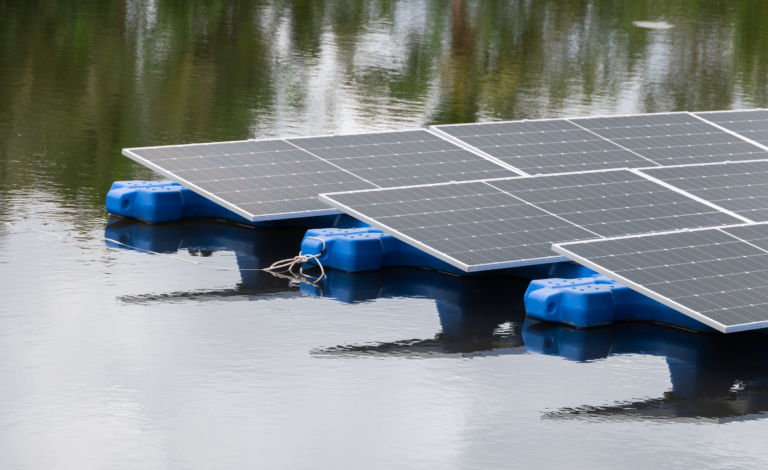
Kariba floating solar targets October financial close on a US$400 million package
Green Hybrid Power, a vehicle established by Zimbabwe’s Intensive Energy Users Group, has taken preparatory work as far as a US$4.4 million Afreximbank facility allows. Energy minister July Moyo has said he hopes to close the financing by October, with panels floating on the reservoir alongside the hydro station rather than replacing it.
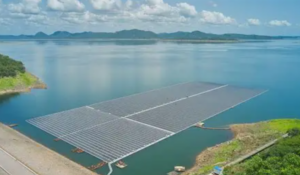
The water behind the Kariba wall has driven turbines since 1960. It is now scheduled to carry solar panels as well, floating on the reservoir surface and feeding the same grid the hydro station feeds, under a package reported at around US$400 million.
Preparatory work has run on a US$4.4 million facility from Afreximbank covering feasibility studies and advisory work on bankability. Energy and Power Development Minister July Moyo, speaking at the Southern Africa Eco-Infrastructure Summit in Victoria Falls, said he hopes to reach financial close by October, with engineering design, budget preparation and grid integration in their final stages.
Reported capacity for the first phase varies across accounts, from around 250MW to 500MW, against a scheme designed to reach roughly 600MW in total. Moyo’s own framing gives the clearest picture of how it gets there. The question the studies had to answer, he said, was whether a Kariba grid already carrying about 1,050MW could accommodate another 600MW even if built in phases of 150MW at a time. Two years of technical, engineering and hydrology work concluded that it can.
Who is building it matters as much as what is being built. Green Hybrid Power is a special purpose vehicle established by the Intensive Energy Users Group, the body representing Zimbabwe’s largest mining and industrial electricity consumers, and the plant is designed primarily to supply those consumers while strengthening the national grid. The heaviest users on the system are funding new capacity rather than waiting to be allocated some.
The case for it is written in the reservoir levels. Kariba’s output has been cut repeatedly by low water, and the African Development Bank has recorded more frequent and more severe droughts across Southern Africa in recent years. Zimbabwe and Zambia have both rationed power and bought expensive emergency imports as a result. Solar on the same body of water uses the same evacuation infrastructure and produces when the sun is up rather than when the rains have been good.
Moyo placed the project inside Zimbabwe’s National Renewable Energy Policy, which is built around public-private partnership, and pointed to the same logic on the Kumbe River, where mini-hydro stations are arranged so water leaving one station feeds another downstream, with private investors working on a further 30MW. For the region the question Kariba answers is whether a hydro reservoir under climate stress becomes a liability or a platform, and October is when that stops being a question of intent.