
EXCLUSIVE: AEDC wants investors in Abuja’s first waste-to-power plant, says Chijioke Okwuokenye
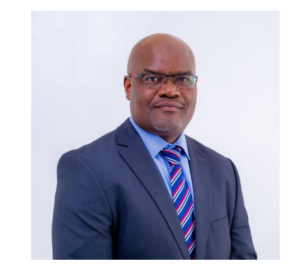
Engr. Chijioke Okwuokenye, Managing Director and Chief Executive of Abuja Electricity Distribution Plc, on the waste-to-power plant AEDC has begun discussing with the Federal Capital Development Authority and its plan to close its metering gap by the first quarter of 2028, as demand around Abuja grows faster than the network built to carry it.
High-rise buildings are going up in Maitama, a district of Abuja whose electricity network was designed for low-density homes, and for Chijioke Okwuokenye, who runs Abuja Electricity Distribution Plc (AEDC), that one neighbourhood shows how quickly the capital has outgrown the infrastructure laid for it.
“Originally, Maitama was a high-brow, low-density area, and infrastructure was developed to suit that design,” he told ENN for its One Minute With series ahead of Nigeria NOW! in Abuja. “Today, Maitama is gradually becoming a high-density area, with high-rise buildings coming up, and that alone is putting constraints on the existing infrastructure.”
The city is spreading outwards at the same time, and Okwuokenye said the pace of that expansion has left Abuja with a transmission constraint. “You can see what the FCT Minister is doing around Apo, Lokogoma, and Kuje,” he said. “The city is expanding massively, and we need transmission infrastructure to expand as quickly as the city is growing.” Most people, he added, would describe Abuja as a new city with new infrastructure, “but the rate of development of the city has outgrown the infrastructure that has been deployed”.
Demand is also arriving in the states around the capital, where investment in mining is growing with the government’s focus on the sector. “There is a lot of expansion and investment in mining, and the surrounding states, including Kogi, Niger, and Nasarawa, are mining states,” Okwuokenye said. “Automatically, places where you would never have expected demand to grow are already experiencing demand, and there is a call for power.”
Okwuokenye names the speed of that growth as the biggest constraint on AEDC’s network, and he said the company is sizing and expanding its infrastructure to meet it, in the hope that the Transmission Company of Nigeria (TCN) will expand high-voltage infrastructure alongside it. “The speed at which demand is growing is the biggest constraint, but we are up to the challenge,” he said.
AEDC has started a number of interconnected mini-grids, in which the investment goes into clearing bottlenecks in the surrounding network as well as into solar generation, so that the power generated is fully accounted for. “The end result is that the revenue from the project can pay for the entire value chain and cover all the investments that have gone into it,” he said. The model follows the least-cost route of reducing battery use and eliminating diesel by integrating more solar power with the grid. “This enables you to provide uninterrupted and reliable power supply to customers,” Okwuokenye said.
Conversations have just started with the Federal Capital Development Authority (FCDA) on what Okwuokenye described as the first waste-to-power plant in Abuja, bringing the FCDA and AEDC together with a developer to “solve the issue of waste flooding in Abuja” while producing power for productive use. “As many investors as possible are invited to join that initiative,” he said, adding that he looks forward to more partnerships of this kind across both projects.
Every AEDC customer should have a meter, in Okwuokenye’s view, and he said AEDC has deployed among the highest number of meters of any distribution company under the Presidential Metering Initiative, the federal programme to roll out 7 million meters. “We really believe that 100% metering of all our customers is a must. We don’t believe that customers should be billed through estimation,” he said. He cautioned that “metering is not a silver bullet for the entire problem in the Nigerian power sector, but it goes a very long way in creating the right framework or platform for the power sector to grow and thrive”, and said that it “brings credibility, transparency, and accountability”.
Meters are capital-intensive, and AEDC is working with partners across the sector on meters that are cost-effective and meet its technical requirements, because its programmes are “quite peculiar in Nigeria compared to what you find in China and other places”. The company is building a solution for its own needs in metering and loss reduction, and once that is in place, Okwuokenye said, “we plan to close our metering gap by the first quarter of 2028”.
The electricity markets that Nigeria’s states are now building bring “increased complexity and regulatory uncertainty, but there is also opportunity”, he said, and AEDC is working with each state to understand its market and define its scope, so that regulatory instruments, especially tariff orders, support the growth the state wants. Its people in those states are engaging with state regulators and customers on strategies that meet their requirements. “Every month, there is a new issue to discuss. You’re discussing tariffs, energy offtake, and how to price energy properly in the various states,” Okwuokenye said, adding that he hopes the period settles “sooner rather than later” into something that benefits the entire market.
For investors coming to Abuja, his first point is that distribution “is one that has come to stay”, privatised and not going back to the government, with the aim of growing the economy and improving people’s lives through energy, and that Abuja leads the way with “huge room for investment, growth, and profitability”. He set out the arithmetic for a network where losses run above 30%. “Imagine places where customers have just 12 hours of electricity supply and losses are at 30%. Imagine what an additional 12 hours of supply and losses of less than 10% would mean in terms of revenue,” he said. “The margins are good, so investors should come and invest.”
AEDC calls itself one of the most collaborative distribution companies in Nigeria, and Okwuokenye said the value it wants investors to share is about more than profit, with the aim of an Abuja “where we can count months and years without interruption, as is the case in other, more developed places”. He pointed to the clusters where AEDC has already shown how that value can be created, which it wants to repeat across its whole network, and said that “the evidence is already there, and the results are showing”.