Zimbabwe’s first utility-scale wind farm is planned as a 228MW hybrid at Guruve-Mazowe
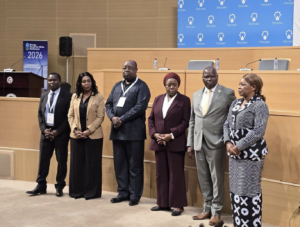
Modaso Energy, part of MISA Group, and Zimbabwean developer Tatanga Energy announced at the Zimbabwe-Zambia Energy Projects Summit that they will develop the Guruve-Mazowe Hybrid Renewable Energy project in Mashonaland Central, pairing 128MW of wind with solar and battery storage behind one 100MW grid connection, with ZESA set as its main buyer.
Tatanga Energy, the Zimbabwean and Zambian developer that originated the project, has led the work on the ground, from land to permits, since that measurement campaign began, while Modaso Energy, a MISA Group company, redesigned the original wind-only scheme to add solar and battery storage. Additionally MISA Group has put its balance sheet and banking connections to work to connect the project to international lenders, investors and risk-cover providers.
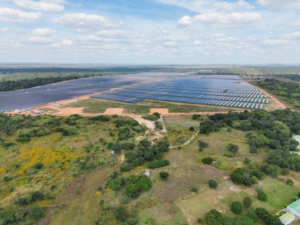
The project now combines 128MW of wind from 16 turbines with 100MWac of solar and a 50MW/100MWh battery behind a single 100MW connection to the 132kV Mutorashanga-Horseshoe line, three kilometres away, and is expected to generate about 550GWh a year, roughly 5% of Zimbabwe’s current generation.
Pairing the technologies gives the plant a capacity factor above 60%, against 35% for wind alone and 24% for solar alone, according to the developers, along with about 40% more energy from the same grid connection than wind would produce on its own. “Most renewable projects give you power only during the day, from solar,” said Ramy Lotfy, co-founder and chief executive of Modaso Energy. “Because of our hybrid technology, our site, wind and solar complement each other while BESS ensures consistent supply to the grid.”
Its output does not depend on rainfall or on water levels at Kariba, where the Zambezi River Authority has cut the allocation for power generation in 2027, and Memory Mashingaidze, co-founder and director of Tatanga Energy, said wind fits the gaps in Zimbabwe’s supply. “Zimbabwe has a lot of hydro, and the wind is windiest when water levels are actually quite low,” she said.
ZESA, the national utility, is set to be the project’s primary buyer, with negotiations on the power purchase agreement and a use-of-system agreement in progress, and Africa GreenCo’s Zimbabwean subsidiary, ZimGreenCo, has signed heads of terms to buy a share of the output under a long-term contract, with further power available for sale into the Southern African Power Pool.
Standard Bank has been appointed to arrange the project financing, with Stanbic Bank Zimbabwe alongside it in the country, and the term sheet has been agreed, for an investment the partners put at about US$300m, with financial close targeted for mid-2027 and commercial operation for 2029. “There are lots of developers in the region, but very few with the development capital and deep expertise to take a project all the way to final investment decision,” said Guy Hacking, CEO of MISA Group, the Geneva-based investor that anchors the sponsor group and owns Modaso Energy. “Africa is not under-resourced, it’s under-invested, and we exist to change that.”
Getting 182-metre rotors to the ridge has already been planned, and about $2m of road upgrades to be paid for by the project and left for public use. The developers expect around 1,000 jobs during construction, with local preference for general labour.
Zimbabwe’s peak demand is forecast to reach 5,177MW by 2030, up from about 1,950MW today, according to World Bank figures cited by the developers, and Guruve-Mazowe would supply about 11% of the national target of 2,100MW of renewable capacity by 2030.
The wind site already holds its environmental certificate, with land secured through the Ministry of Lands, and three international construction consortia have submitted bids that are now under evaluation. “The heavy lifting has been done,” said Mashingaidze, whose company Tatanga Energy put the first mast on the ridge five years ago.