
Walvis Bay at the centre of Dangote’s Southern African fuel ambitions
Aliko Dangote has launched a $2.5bn fuel storage and pipeline project in Namibia, anchored by a planned 600-million-litre terminal at Walvis Bay. A proposed 1,700km pipeline could extend its reach into neighbouring markets, creating a new distribution route for refined petroleum products across Southern Africa.
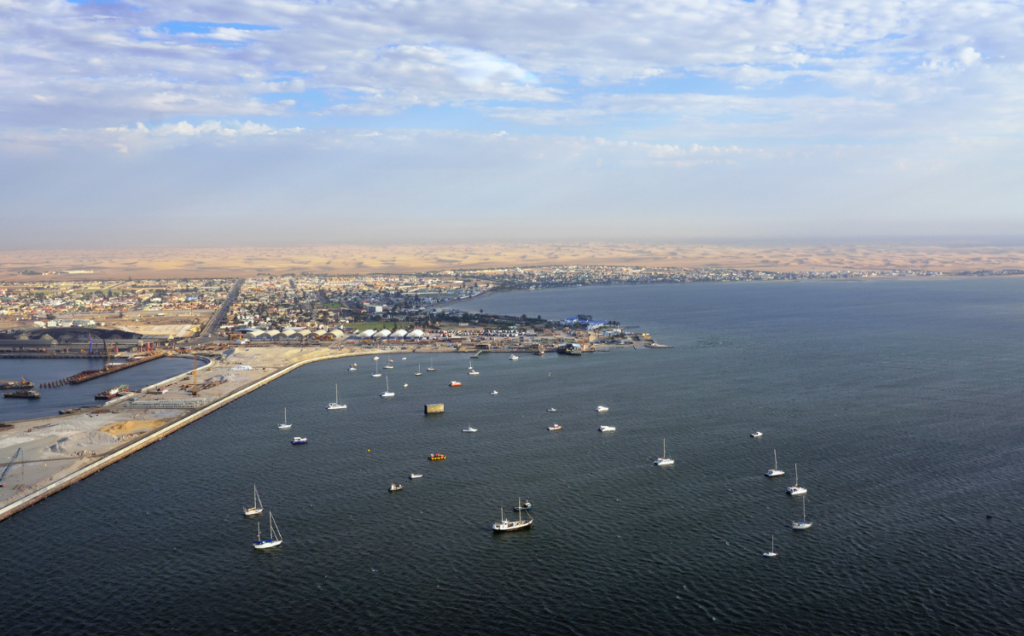
At Walvis Bay on Namibia’s Atlantic coast, Nigerian industrialist Aliko Dangote has launched a $2.5bn fuel infrastructure project centred on a storage terminal with capacity for approximately 600 million litres. The development also envisages a regional pipeline network that could connect the port with landlocked markets across Southern Africa.
The tank farm will have capacity for approximately four million barrels of petroleum products, comprising 360 million litres of diesel and the remaining 240 million litres of petrol. Once completed, its storage capacity will be eight times that of Namibia’s existing 75-million-litre National Oil Storage Facility, operated by state-owned Namibia National Petroleum Corporation (Namcor), according to Reuters.
Dangote, whose group operates Africa’s largest refinery in Nigeria, told reporters that the project was expected to be completed within 18 to 20 months. Speaking at the launch ceremony, attended by Namibian President Netumbo Nandi-Ndaitwah, he said the infrastructure would help establish Walvis Bay as a regional fuel logistics hub.
“For Namibia it is expected to moderate logistical vulnerabilities, high shipping costs and severe energy insecurity while promoting infrastructure warehousing,” Dangote said.
The proposed pipeline is expected to extend approximately 1,700km inland, with potential connections to Botswana, Zimbabwe and Zambia, as well as a possible extension into the Democratic Republic of Congo. Dangote described the wider network as a means of strengthening fuel supply security across the region, although the proposed connections should be distinguished from the terminal itself.
For landlocked countries that depend on imported petroleum products, additional storage and distribution infrastructure could offer another route into regional fuel markets. Walvis Bay’s position on the Atlantic coast gives the project a potential role in moving refined products inland, with the terminal designed to accommodate both diesel and petrol.
The investment also forms part of Dangote Group’s wider strategy to expand the markets for its Nigerian refinery’s output. The facility currently has a capacity of 700,000 barrels per day, and the group is pursuing further expansion in Nigeria alongside plans for a refinery in Kenya.
Gerrit van Rooyen, a senior economist at Oxford Economics Africa, told Reuters that the proposed distribution network would help Dangote diversify the markets for its refined fuel exports. He pointed to the longer-term prospect of moderating petroleum demand in Europe and East Asia as the energy transition progresses, making the development of African markets increasingly relevant to the group’s expansion strategy.
For Namibia, the immediate development is a substantial increase in domestic fuel storage capacity. The wider ambition is to position Walvis Bay as a distribution point for petroleum products moving into the region, with the proposed pipeline determining how far that ambition can extend.
Images: AFP