EXCLUSIVE: Wale Shonibare on financing Nigerian power
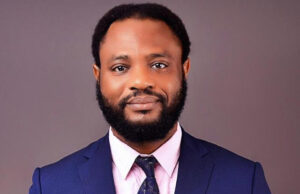
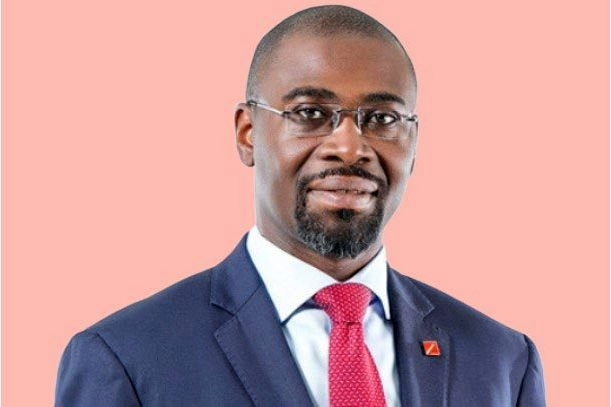
Wale Shonibare, Director of Energy Financial Solutions, Policy and Regulations at the African Development Bank, tells ENN that much of the money for Nigerian power is already in the country, and sets out where the 16 states running their own electricity markets are opening to investors ahead of Nigeria NOW! in Abuja.
A ₦4.64 billion 15-year bond placed with domestic investors and a ₦9.2 billion seven-year loan from the Bank of Industry, both backed by an InfraCredit guarantee, are financing the 40MW Victoria Island power project in Lagos, and for Wale Shonibare, Director of Energy Financial Solutions, Policy and Regulations at the African Development Bank, the plant shows the Bank’s financing tools “working together”. The Bank has backed both InfraCredit and the funds of ARM-Harith, the project’s development partner and equity investor, and Shonibare told ENN ahead of Nigeria NOW! in Abuja on 19 November that “borrowing in Naira over long tenors protects projects that earn Naira revenues from exchange rate movements and eases pressure on early cash flows”.
Domestic institutional savings are already moving into Nigerian power through platforms such as InfraCredit, whose guarantees let pension funds invest in North South Power’s ₦8.5 billion Naira green bond for the Shiroro hydropower plant, and the Nigeria Infrastructure Debt Fund, which held about ₦138 billion of assets by the end of 2025. In Shonibare’s words, “the capital largely exists”, and what Nigeria needs is “the right structure, with long term Naira finance, credible contracts, appropriate credit support and dependable regulation”.
Sixteen states now regulate their own electricity markets under the Electricity Act 2023, after the Nigerian Electricity Regulatory Commission (NERC) transferred oversight to them by July 2026, and Shonibare sees the strongest openings in those that have gone furthest, with Lagos “the clearest example”. Its regulator approved 14 licences and permits in May 2026 and licensed the Victoria Island project in September, and the state has restructured its power purchase agreements with three independent power producers so that payment is tied to metered supply. “The immediate opportunities lie in distribution and retail, in embedded and distributed generation, and in the local networks that connect supply to customers,” he said, and with about 4.7 million active customers, more than a third of the total, still unmetered in August 2026, metering is a further opening.
Investors are still waiting for clarity on how state markets deal with the national grid, on which most states rely for bulk supply, and for “arrangements that prevent new arrears from building up”, he said, because distribution companies collected about ₦2.32 trillion of the ₦2.99 trillion they billed in 2025, “and that gap passes up the chain to generators and their suppliers”.
Over the next two years he wants regulators to give investors “a credible path to cost reflective tariffs”, with incentives to cut distribution losses, which averaged about 37% in 2025 against the 20.5% allowed in the tariff framework, and “a clearly communicated transition” as the Federal Government phases out a subsidy obligation that stood at about ₦1.93 trillion in 2025. Coherent implementation of the Electricity Act across federal and state jurisdictions, he said, “will determine whether the openings in states such as Lagos, Abia and Ondo can be replicated across the 16 states that now regulate their own markets”.
The African Development Bank is backing Nigeria’s National Energy Compact under Mission 300 with resources ranging from technical assistance to financing and guarantees. The Compact aims to raise annual growth in electricity access from 4% to 9% with about $32.8 billion of total investment needs, $15.5 billion of it private.
To support Mission 300 targets, the Bank is at an advanced stage of implementing its $200 million package for the Nigeria Electrification Project, run by the Rural Electrification Agency, that is designed to reach more than 500,000 people. Under the Energizing Education Programme, it is financing 36.5MW of solar hybrid capacity at eight federal universities and a teaching hospital, and at the University of Port Harcourt, which has reported that monthly electricity spending has fallen from about ₦150 million to about ₦100 million, Shonibare said.
For distributed renewable energy companies, patient equity matters most, he said, “because companies need capital to grow before their revenues mature”, and the Bank and its Sustainable Energy Fund for Africa have committed $40 million to Zafiri, including $10 million of junior equity that absorbs early risk. The Bank’s attention will now increasingly turn, he said, to the financial sustainability of utilities, the remaining pillar of the Compact, “on which the durability of every other investment in the sector ultimately depends”.
Shonibare wants people leaving Abuja after Nigeria NOW! to take away that “Nigeria is opening more routes to invest in electricity, and the opportunity is increasingly connected to the country’s productive economy”. “Progress will differ across states, but the direction is clear,” he said.