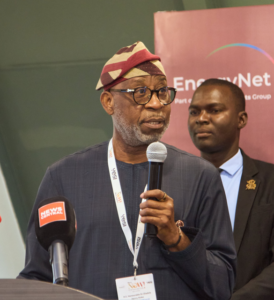
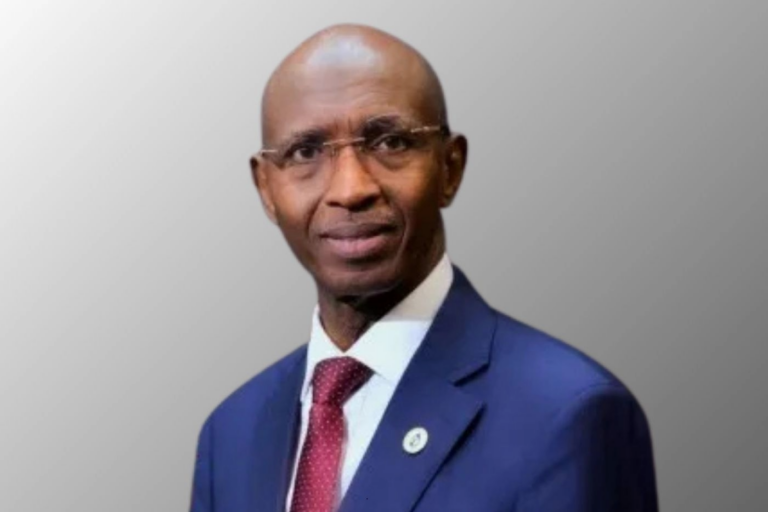
EXCLUSIVE: Africa energy partnership is what the continent seeks, says Dr Omar Farouk Ibrahim
Dr Omar Farouk Ibrahim, Regional Chair for Africa at the World Energy Council, tells ENN what Africa’s energy leaders want from international partners in finance and technology, with the Africa Energy Bank now established in Abuja, and why he believes Africa should set out more clearly what it offers the world in return.
Afreximbank and the African Petroleum Producers’ Organization established the Africa Energy Bank in Abuja at the end of October with $5bn of authorised capital, and Dr Omar Farouk Ibrahim calls its takeoff “a great milestone towards the achievement of African energy security”. What Africa’s energy leaders want from the rest of the world, he tells ENN, is “a fairer, more pragmatic and more equitable global energy partnership”. “Africa is not asking the world to choose between energy security and climate responsibility,” he says, “it is asking for the opportunity and resources to achieve both while industrialising its economies.”
For many African governments that means keeping natural gas “as a transition and development fuel” while expanding renewable energy, he says, because Africa’s transition “cannot simply replicate the pathways of industrialised economies” in a continent where many countries still depend on traditional biomass for cooking.
Affordable finance is perhaps the most consistent demand, and at the African Union’s meeting of heads of state on climate change in Addis Ababa in February, Kenya’s President William Ruto noted that Africa received less than 2% of the record $2.3trn invested in the global energy transition in 2025. The Chairperson of the African Union Commission, Mahmoud Ali Youssouf, said less than 3% of global climate finance reaches sub-Saharan Africa each year. “Africa cannot achieve energy security, universal access and a successful energy transition without a substantial increase in affordable investment,” Ibrahim says, and he wants that investment matched by technology transfer and local manufacturing so that Africa does not “remain permanently dependent on importing the technologies required to develop its own energy resources”.
African countries do not all hold the same position on fossil fuels, Ibrahim says, with some emphasising natural gas and hydrocarbons as development resources while others place greater emphasis on “renewable energy, climate resilience and green industrialisation”. “The shared principle is that the transition must not deepen energy poverty or undermine development,” he says.
Growing African ownership is one of the most important changes in the continent’s energy diplomacy, in his reading, as African institutions ask to help design projects and mobilise capital, and he sees the Africa Energy Bank as part of that move towards African-led financing. International partners, he argues, should work with African institutions so that African countries are not left with limited influence over their own energy development.
Responsibility runs both ways in the reciprocal partnership he describes through the World Energy Council’s Energy Trilemma, and Africa “must accept responsibility for creating predictable regulatory environments, improving governance, developing bankable projects, strengthening regional energy markets and mobilising its own capital”. In return, he says, the international community “should support Africa with fair financing conditions, appropriate technology, equitable market access and respect for its development circumstances”, in a relationship “based on mutual economic interests rather than aid dependency”.
“Africa is not asking the world for permission to develop its energy resources,” Ibrahim says in a message to international energy leaders. “Nor is Africa asking to be exempted from the responsibility of protecting our planet. We are asking for fairness, partnership and recognition of our circumstances.” Africa, he says, “does not want to be merely a supplier of energy resources to the rest of the world” and “wants to become a major producer, consumer, innovator and industrial participant in the global energy economy”.
With “its energy resources, critical minerals, renewable potential, growing markets and young population”, Africa holds significant negotiating strengths, in Ibrahim’s view, and should set out more clearly what it offers the world. “The challenge is to convert those strengths into mutually beneficial investment and industrial partnerships,” he says. “That, in my assessment, is the direction in which African energy diplomacy should increasingly move during 2027-2028.”