Rwanda carbon market goes to Antalya with 29 projects on its register
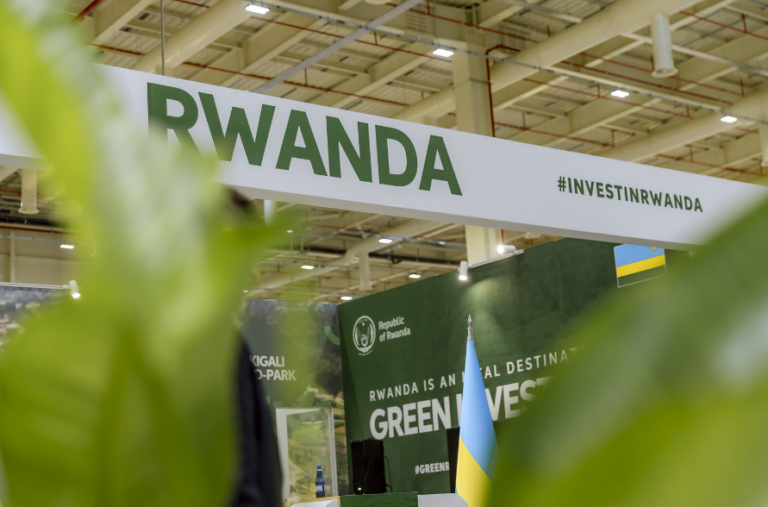
Rwanda has registered 29 carbon market projects and opened its Article 6 agreement with Singapore to renewable energy and clean cooking proposals, and at COP31 in Antalya, where Prime Minister Justin Nsengiyumva leads the delegation, its pavilion programme includes the launch of a carbon registry and a distributed renewable energy fund.
Credits from Rwandan carbon projects have sold at between $14 and $45 a tonne and brought in about $1.5 million, the Rwanda Environment Management Authority (REMA) said in September, from a register of 29 projects running across renewable energy, electric mobility, forestry, waste management, agriculture and land conservation. Some of those projects are already selling credits and others are with external auditors for verification, according to REMA, whose Deputy Director General, Faustin Munyazikwiye, said the projects “are at different stages of development”.
Rwanda became Singapore’s first East African partner under Article 6 when the two governments signed an implementation agreement on 6 May 2025, Singapore’s sixth such agreement overall, under which Singapore-based companies can use eligible Rwandan credits to offset up to 5% of their taxable emissions. Singapore will put the value of 5% of the authorised credits towards adaptation in Rwanda and cancel 2% at first issuance, and the call for proposals that opened on 30 January covers renewable energy and efficiency alongside clean cooking, electric mobility, waste management and improved forest management. The joint committee overseeing the agreement, which Munyazikwiye co-chairs, met in Kigali on 16 October to speed up approvals, and the lessons from it are the subject of a session at Rwanda’s COP31 pavilion that will also launch the country’s carbon registry.
At the same pavilion the Rwanda Green Fund is launching its Distributed Renewable Energy Fund, the first fund of its investment arm, the Ministry of Environment said on 10 November, alongside a biodiversity window and the Cabinet-endorsed Country Platform for Climate and Development, which coordinates national climate priorities with the investment raised for them.
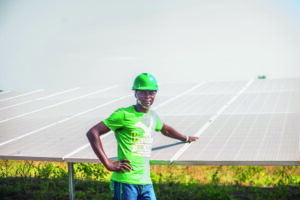
Household electricity access reached 85.4% by the end of 2025, with 60.1% of households on the national grid and 25.3% relying on solar, according to Rwanda Energy Group, and the government’s target is universal access by 2029. The World Bank’s Renewable Energy Fund project, which runs subsidies and loans for solar home systems through local savings and credit cooperatives, aims to connect at least 445,000 households from a $15 million subsidy window, and Franz Drees-Gross, the World Bank Group’s Regional Director for Infrastructure in Western and Central Africa, called Rwanda “a shining example for Africa of what it takes to electrify a country”, The New Times reported in October.
Under its third nationally determined contribution, submitted last year, Rwanda commits to a 53% cut in greenhouse gas emissions by 2035, about 14.86 million tonnes, with 7% of the reduction to come from its own resources and 46% depending on external finance or technical support, against a total finance need of $12 billion to 2035. Its delegation is asking COP31 for a clear roadmap to the $300 billion a year climate finance goal agreed at COP29, and for high-integrity carbon markets under Article 6.
Rwanda will also use COP31 to call for universal ratification of the Kigali Amendment, which commits countries to cut their use of climate-warming hydrofluorocarbons by 80% by 2047, after Kigali hosted the 38th Meeting of the Parties to the Montreal Protocol from 2 November on the amendment’s tenth anniversary. Full implementation could avoid up to 0.5°C of warming by 2100, and close to 1°C with more efficient cooling, and the Minister of Environment, Dr Bernadette Arakwiye, told the Kigali meeting that “signals only matter when they are backed by clear rules”.
Speaking in Kigali in October, Arakwiye said the government is studying whether “a share of the proceeds from carbon transactions can be recycled through the Rwanda Green Fund”, so that the credits Rwanda sells now pay for the feasibility studies and baseline data its next projects need before investors will look at them.
Images: Rwanda Gov