EXCLUSIVE: Bids close in December for Tunisia’s first grid battery at Béni Mhira
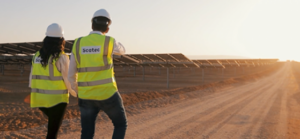
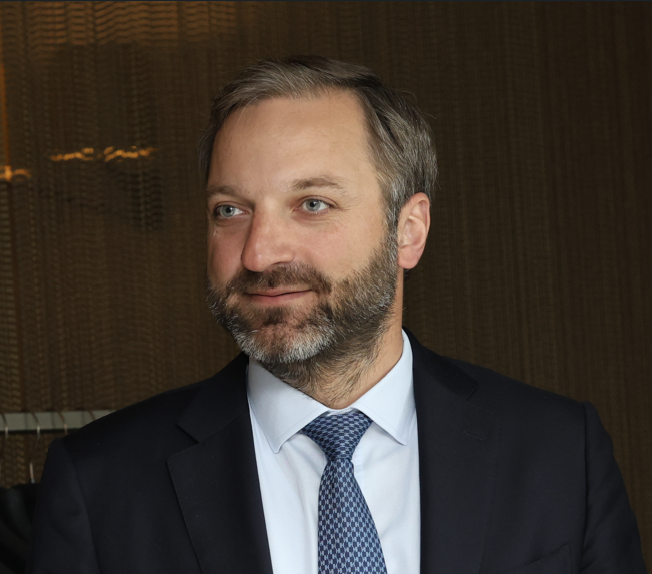
Bids for the turnkey contract at Béni Mhira in Tataouine, where a 50MWac solar plant will charge Tunisia’s first utility-scale battery, are due in December, and George Akhalkatsi, the EBRD’s Head of Tunisia, tells ENN how the project is financed and what STEG plans to build after it.
STEG put the Béni Mhira contract out to international tender in October under EBRD procurement rules, as a single turnkey package to design and build the 50MWac solar plant in Tataouine together with Tunisia’s first utility-scale battery, a 10MW/20MWh system that the plant will charge, and Akhalkatsi told ENN that the bank hopes for “strong competition from experienced international contractors with a proven track record in both solar and battery storage”.
The money behind it combines a €30m EBRD loan with €20m from the Climate Investment Funds’ Clean Technology Fund, drawn from its Global Energy Storage Program, and Akhalkatsi said the affordability of the Clean Technology Fund loan “plays a decisive role” because a first project of this kind brings new technology and new ways of operating to a market.
Once the bids are in, construction is expected to start in the first quarter of 2027 and the plant to be commissioned in summer 2028, after which the battery will take in solar power when output is high and give it back for about two hours at full output when generation drops or demand climbs. Southern Tunisia has excellent solar resources and land available, and in Akhalkatsi’s words “the challenge now is not simply to add capacity, but to ensure the grid can absorb it effectively”, so STEG will be learning to run storage on the national grid as the plant comes on, with EBRD technical cooperation supporting that work.
Those skills are what he expects STEG to carry into the larger projects already in preparation, among them a 600MWh programme of batteries at STEG substations around the country and a 350MW solar plant with 540MWh of storage that the government is taking forward at Bazma in Kebili as a private concession with EBRD support. Private investors will need rules they can rely on first, since Tunisia, as Akhalkatsi put it, “has so far lacked the regulatory and commercial framework needed to enable private investment in battery storage”, and he expects the Béni Mhira pilot to help establish one.
Next year’s budget plans for around 1,700MW of new renewable capacity, roughly 1,100MW of it to be offered to investors through concessions and licensing rounds, in a system where STEG’s fleet of about 6GW still runs mostly on gas. Demand peaked at 6,400MW in July, with intense heat putting additional pressure on the power system by both increasing demand and reducing the generation capacity of CCGTs. Reaching the 2030 target of 4,850MW of operating renewables will take several gigawatts more, and how much storage that needs will come out of grid studies and the low carbon pathway the EBRD is preparing with STEG and the Ministry of Industry, Mines and Energy.
STEG, for its part, is refocusing on its role as transmission system operator, and Akhalkatsi points to the ELMED interconnector with Italy and the Southern Backbone transmission lines as the grid investments that private generators coming into the market will depend on.