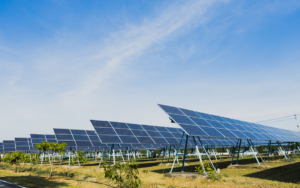

Nag Hammadi’s 2GW solar and 2,000MWh battery, priced in Egyptian pounds
Egypt approved Kemet’s land agreements in February for 2,000MW of solar and a 2,000MWh battery at Nag Hammadi, with the power bought in local currency. By April the state buyer had signed for four Kemet schemes due in 2027, a different model from the dollar contract behind Scatec’s Obelisk.
Egypt’s government approved land usufruct agreements in February between Kemet and state bodies including the New and Renewable Energy Authority and the Future of Egypt for Sustainable Development Authority, clearing the way for 2,000MW of solar and a standalone battery of 2,000MWh at Nag Hammadi.
Power purchase and grid connection agreements with the Egyptian Electricity Transmission Company were to be finalised in local currency under the approval, which places Kemet’s plants on different terms from the 25-year dollar-denominated contract that Scatec’s Obelisk signed with the same buyer under a sovereign guarantee.
By April the transmission company had signed purchase agreements with Kemet for three solar schemes and one battery, covering the Nag Hammadi plant and store and two solar projects of 320MW and 400MW at El Owainat, all expected to begin operating in 2027.
Zawya Projects reported the same month that the EBRD was studying $223 million of financing for what it described as Egypt’s first utility-scale storage projects, as the country pursues a 42% renewable share of its electricity mix by 2030 and 65% by 2040.
Kemet is building a supply chain behind the plants as well, through a $500 million agreement with GCL Group for a solar cell complex and a $200 million battery factory with Cornex designed to produce 5GWh a year.