Tamba Solar in Senegal: FMO weighs up to €146.5m of senior debt
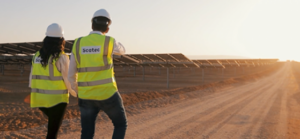
FMO is considering up to €146.5m of senior debt for Tamba Solar, a 100MWp plant in Tambacounda whose 180MWh battery would hold two and a half times the storage of AXIAN’s Kolda project, with its output contracted to Senelec for 25 years under a sovereign guarantee.
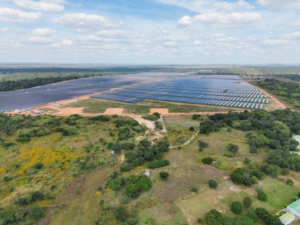
Up to €146.5 million ($164 million) of senior debt is under consideration at FMO for Tamba Solar in Senegal, a 100MWp solar plant in Tambacounda paired with a battery system rated at 60MW and 180MWh, according to a disclosure the Dutch development bank published on 4 November. As much as €89 million, about 61% of the total, would come from FMO’s own balance sheet and the remaining €57.5 million from other lenders, and FMO, noting that the disclosure “does not constitute a firm commitment”, is taking public comment on the proposal until 3 January 2027.
Taranis Operations holds 90% of the project company through its ownership structure, with the Senegalese company Amar Energies also a partner, and the plant’s output is contracted to the national utility, Senelec, under a 25-year power purchase agreement signed in December 2024 and backed by a sovereign guarantee. Taranis, the investment arm of the Perenco Group, already runs the 50MWp Kita solar farm across the border in Mali’s Kayes Region through its Energy for Africa fund, a plant that first fed power to the grid in March 2020 and came with Taranis’s purchase of Akuo Energy’s African business.
Running at its full 60MW, the Tamba battery could discharge for three hours, and its 180MWh would be two and a half times the 72MWh that AXIAN Energy is installing alongside 60MWp of solar at NEA Kolda in southern Senegal, where development lenders including FMO closed €72 million of financing in April and commissioning is due at the end of November. Tamba would also hold nine times the 20MWh at Walo Storage in Bokhol, in the north of the country, a 16MWp plant with a 10MW battery that Africa REN built for €40 million with debt from FMO and the Emerging Africa & Asia Infrastructure Fund. Walo entered commercial operation in July 2025 and was inaugurated in January, billed as the first grid-connected solar-plus-storage plant in West Africa dedicated to frequency regulation, and Senelec takes its output under a 20-year take-or-pay contract, while Kolda sells to the utility under a 25-year agreement.
Tambacounda’s substation is the Senegalese end of a 285.3km, 225kV line from Kayes in Mali, built as a project of the Senegal River Basin Development Organisation (OMVS) with $91.5 million of World Bank financing through IDA. When the bank visited the region in October 2023, it reported that the textile company Sodefitex had run its plants on generators for 704 hours in 2018 and for 70 hours across all five of them in 2022.
Senelec went to market in March for a further 500MW of solar at two sites, 200MW at Linguère and 300MW at Kolda, with 100MW and 400MWh of battery storage attached, under an EPC-plus-finance model in which the winning bidders arrange the funding and build within 24 months of award. The government is working towards 40% of its electricity from renewables by 2030, and its National Energy Pact aims for universal access by 2029.
Elsewhere in the region, Taranis is developing the 26MW Newton solar project about 20 miles from Freetown in Sierra Leone, and its Energy for Africa fund has set itself a goal of 1,000MW of renewable capacity in operation by 2030.
Images: Africa Energy Portal