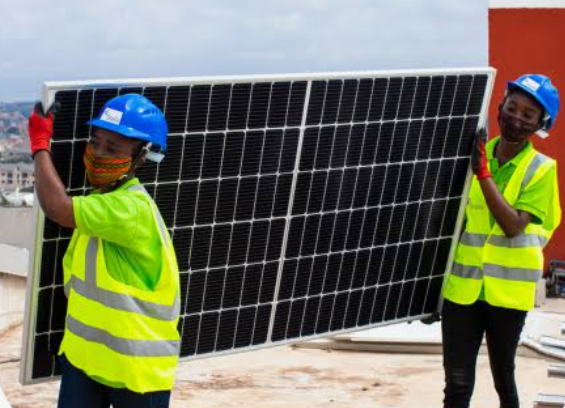
Clean captive energy in Africa, what UNEP learned from six CICSA pilots
Six pilot installations under CICSA Phase I put clean captive power into hospitals and cold storage across Kenya, Ghana, Nigeria and South Africa. UNEP’s Carolina Merighi and the Frankfurt School’s Yamini Jain tell ENN what they want to see in the applications now the call is open across the whole of sub-Saharan Africa.
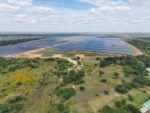
At the Eye Foundation Centre in Ogun State, 180 kilowatt-peak of solar and 182 kilowatt-hours of battery storage now meet around 96% of a Nigerian hospital’s electricity needs and have cut its costs by roughly 43%. PowerGen built it under a ten-year power purchase agreement, replacing grid supply and diesel.
“For the hospital, it is not only a climate story,” said Yamini Jain of the Frankfurt School. “It is also reliable power and lower costs and reduced dependence on diesel.” Carolina Merighi, who manages the programme at the United Nations Environment Programme (UNEP), takes it further into the building. “The fact that a hospital can operate in a rural area, because blackouts are a reality. The fact that doctors can keep operating, or that vaccines and medicines can be kept at different temperatures and can then be used. It is a very powerful story that impacts a whole community.” Ogun State was one of six pilots under the first phase of Clean Captive Installations for Industrial Clients in Sub-Saharan Africa, three in Kenya and one each in Ghana, Nigeria and South Africa. They were chosen to be unalike. Solar-powered cold room storage for urban meat markets in Kenya, healthcare facilities in Ghana and Nigeria, and financing structures running from local currency arrangements through blended finance to carbon monetisation.
Food security and health infrastructure came through as the strongest sectors, though Merighi is clear the programme takes whatever commercial and industrial applicants bring. “By definition, the call for proposals is that companies come to us with the challenges and the problems they are trying to solve on the ground. All markets are different and local realities are different. What might work in one might not necessarily be the same in another. “
Solar itself never troubled anyone. “The technology itself is hardly a challenge, ” Jain said. “The installation, solar particularly, is already proven. However, the things around it, the transaction costs, the legal structuring, the financial structuring, permitting, due diligence, managing offtaker risk, all of these are the more challenging bit, which comes during the pre-development phase. “
Ghana produced the neatest answer to that. Small rural hospitals could not afford the tariff, so the developers monetised the carbon at a scale nobody had attempted for systems that size.” This solves two issues. It creates additional revenue streams and it makes the clean energy affordable for these small hospitals in Ghana. ” Jain declined to single out a project that nearly failed, and named the quality that carried all six through instead.
“Phase one showed us the importance of flexibility. When developers start from a project idea on a PowerPoint versus when they start working towards implementation and financial flows, they encounter a lot of challenges. The key is being adaptable and not fixating on the original idea. Adapting the original concept to the new market realities is very important.”
Phase II runs across the whole of sub-Saharan Africa and adds a policy component alongside the grant funding and technical assistance. “We are very curious to see the different applications that come in from all the different sectors and geographies, ” Merighi said. Applicants are also expected to put their own money in. “We do expect that the company has what we call skin in the game.”
What Jain wants demonstrated is what survives the grant. “Phase one taught us that proving one good project is not enough. For phase two, we want to look at how projects would work beyond the kickstart support. A phase two proposal isn’t necessarily the biggest one, but it should have a targeted kickstart support where it can remove a critical barrier and then unlock something larger and replicable.”
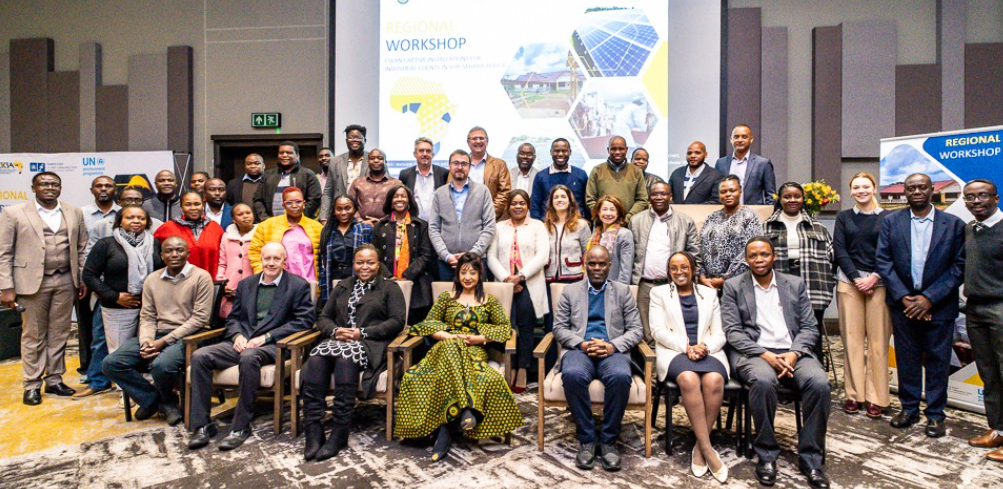
Governments have already moved. The first phase closed with a regional workshop in Pretoria that brought together regional economic communities from across sub-Saharan Africa and roduced the Pretoria Statement.
“Governments and regional economic communities are all behind it,” Merighi said. “What we are
waiting for is the private sector to come in and really fill that gap.”
Apply here before applications close on 20 September.]
CICSA is led by UNEP, the United Nations’ leading global authority on the environment, driving transformational change on the triple planetary crisis of climate change, nature and biodiversity loss, and pollution and waste. The implementing partner is the Frankfurt School – UNEP Collaborating Centre for Climate & Sustainable Energy Finance. CICSA is supported by the German Federal Ministry for the Environment, Nature Conservation and Nuclear Safety (BMUKN) as part of the International Climate Initiative (IKI) of the Federal Government of Germany.