Why Africa is done exporting its minerals raw
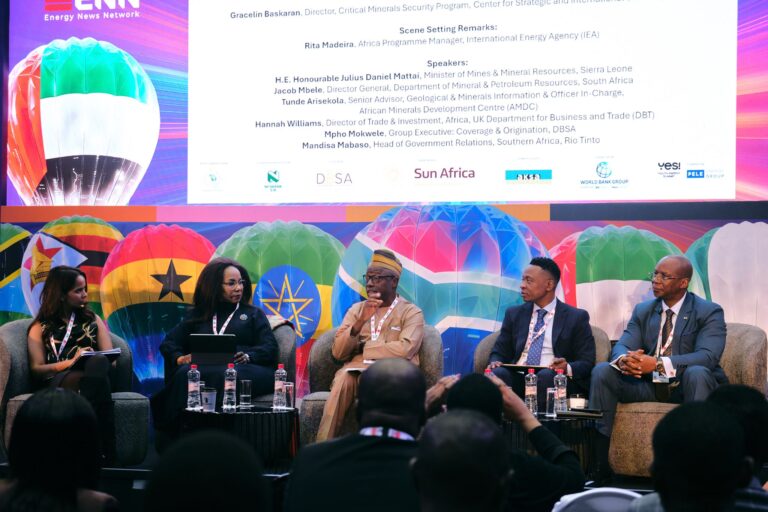
Africa holds much of the world’s critical minerals yet captures under one per cent of the value created when they are refined into products. At AEF 2026 in Cape Town, the IEA’s Rita Madeira, CSIS’s Gracelin Baskaran and ministers from across the continent set out the policies and processing capacity that would keep more of that value at home.
According to the IEA’s numbers, Africa accounts for a meaningful share of the world’s critical mineral mining and less than one per cent of the value added when those minerals are turned into the magnets and battery materials the energy transition runs on. At the Africa Energy Forum, the case for closing that gap came from ministers, financiers and analysts in turn, and it was a case about industry rather than extraction.
Rita Madeira of the International Energy Agency put the prize in figures. The market value of Africa’s key minerals could rise from around 69 billion dollars in 2024 to 120 billion by 2040, she said, if more of the processing happens on the continent. “Africa countries play a significant role in energy technology supply chains at the mining step for some minerals, but account for less than 1% of the value generated at the manufacturing step.”
Gracelin Baskaran of the Center for Strategic and International Studies framed where the value actually sits. “Value addition is not in continuing the traditional model of extraction and export, but in developing supply chains,” she said, work that on the continent means jobs and a wider economy built around each mine.
The policy is already moving that way. South Africa published a Critical Minerals and Metals Strategy in 2025 built around local beneficiation, Zimbabwe has restricted raw lithium exports to push refining onshore, and Gabon has set a 2029 date to stop exporting raw manganese. The constraint the panels kept returning to was capacity. Mpho Mokwele of the DBSA put the exploration gap at close to a third of the world’s critical minerals against around a tenth of global exploration spend, on his figures, and the smelting and refining base to process at scale remains thin.
Julius Mattai, Sierra Leone’s Minister of Mines and Mineral Resources, put the stakes in a line. “The age of digital minerals can become the age of African industrialisation,” he told the forum, “and transform our geographic advantage.”