
Turning Ambition into Action: How RFCC and ATP are Collaborating to Support Mission 300 Delivery
Mission 300 has set an ambitious goal: connect 300 million people across Africa to electricity by 2030.
Across the continent, governments have developed National Energy Compacts that set out the reforms, investments, and delivery priorities required to achieve this vision. Yet translating these plans into results requires more than financing. It requires implementation capacity.
As governments move from planning to delivery, highly specific technical bottlenecks inevitably emerge – from regulatory reform and electrification planning to data systems, monitoring frameworks, and decentralized renewable energy deployment. These challenges often require niche expertise that is difficult to mobilize through traditional procurement processes or long-term staffing models.
Recognizing this need, The Rockefeller Foundation’s public charity, RF Catalytic Capital Inc. (RFCC), has established funding for a US$450,000 Expert Roster Technical Assistance Facility, to be deployed through Allied Talent Partners (ATP), to provide rapid access to specialist expertise in support of Mission 300 implementation. Designed to operate over the next 12–24 months, the facility aims to quickly enable highly specialized experts to provide technical assistance to governments and Compact Delivery and Monitoring Units (CDMUs), helping address critical implementation bottlenecks before they slow progress.
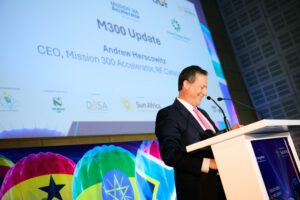
As Andrew Herscowitz, CEO of the Mission 300 Accelerator, has noted:
“Mission 300 is one of the most critical and ambitious development efforts of our generation. It is about bringing electricity and jobs to the African continent, unlocking growth for decades to come. This is truly African-led, with countries driving their own priority mandates and partners supporting delivery.”
The facility builds on an existing collaboration between RFCC and ATP that is already supporting such technical assistance in Zambia, Côte d’Ivoire, Senegal, and Nigeria. Experts deployed through ATP are supporting legislative reform, strengthening monitoring and reporting systems, advancing electrification planning, and enhancing data-driven decision making and distributed energy deployment.
These experts are not advisors operating at arm’s length. Their specialized support is directly helping governments solve practical challenges, strengthen systems, and accelerate implementation.
The new Expert Roster Facility expands this approach by creating a flexible mechanism through which projects that are approved by the World Bank and African Development Bank can rapidly access highly specialized expertise when new challenges emerge. Unlike longer-term CDMU positions, the facility is designed for short- to medium-term deployments of niche experts whose skills are needed to address specific technical, financial, regulatory, or operational constraints. Examples could include tariff specialists, transmission planners, battery storage experts, clean cooking specialists, or other market-specific expertise required to unlock progress.
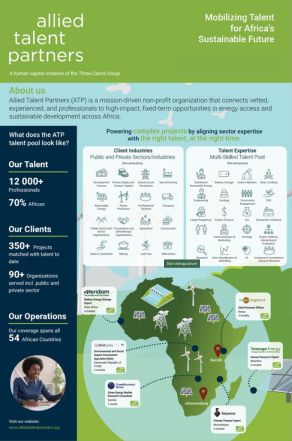
ATP’s role is to manage the end-to-end deployment process – maintaining the expert roster, sourcing and vetting candidates, contracting experts, managing compliance and payroll, and mobilizing talent rapidly once requests are approved. By creating a pre-funded mechanism, the facility significantly reduces the time and administrative burden typically associated with securing technical assistance, ensuring that governments can access the right expertise when it is needed most.
For ATP, this work reflects a core belief: ambitious development goals are only achieved when the right people are in place to deliver them.
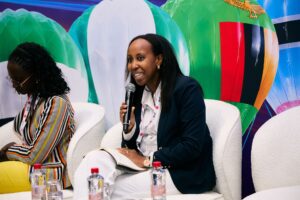
As Sarah McNeilly, Managing Director of Allied Talent Partners, explains:
“Across Africa, there is no shortage of ambition, ideas, or investment. Too often, however, delivery slows because critical technical expertise is not available at the moment when it is needed. Our role is to create access to talent that helps organizations move from ambition to action – ensuring that implementation keeps pace with vision.”
Mission 300’s success will ultimately be measured by connections delivered, communities reached, and economic opportunities unlocked. Achieving those outcomes will require not only capital and policy reform, but also the people capable of turning plans into progress.
That is the role the Mission 300 Expert Roster Facility is designed to play